


Supreme Court Upholds UAPA Bail Threshold, Grants Bail To Five Accused While Declining Bail To Two Alleged Masterminds
 Copy Link
 Share
 Save
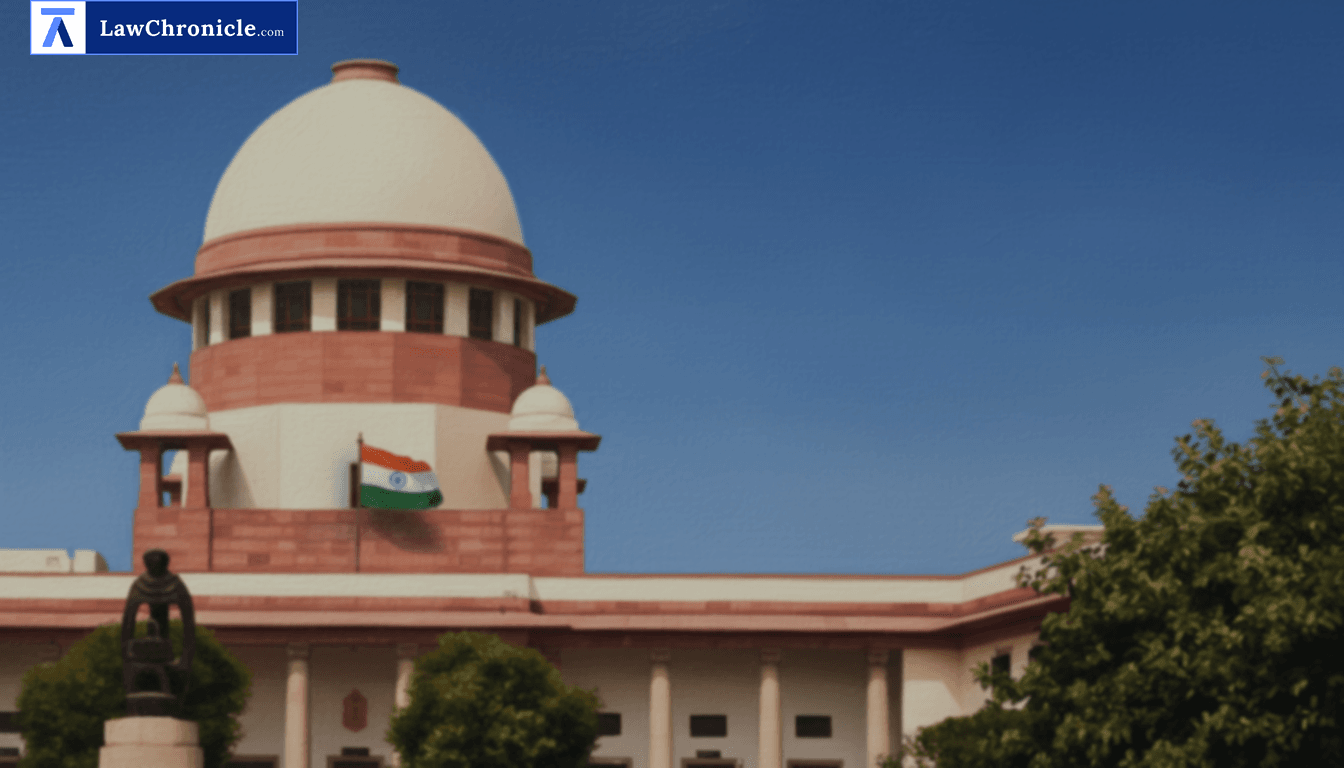
A bench of Justices Aravind Kumar and N.V. Anjaria heard a cluster of appeals arising from FIR No. 59 of 2020 (Crime Branch, Delhi) linked to the February 2020 Delhi riots. The Court addressed challenges to High Court orders refusing bail to several accused arraigned under multiple provisions of the IPC and the Unlawful Activities (Prevention) Act, 1967 (UAPA), and considered broader questions on the interplay between Section 43D(5) UAPA and Article 21 (prolonged incarceration and speedy trial).
The Court summarised its principal holdings: it declined bail to the two accused whose roles the prosecution prima facie traced to planning and strategic direction — the appeals concerning those two were dismissed — while it granted bail to five other appellants after an accused‑specific assessment of role and material. The Court emphasised that delay and prolonged custody engaged Article 21 but did not automatically trump a statute enacted for national security; judicial scrutiny must be disciplined and accused‑specific. The Court, in its reasoning, observed: “From the foregoing discussion, certain propositions governing the application of Section 43D(5) emerge with clarity. First, the provision embodies a deliberate legislative departure from ordinary bail jurisprudence... Second, the expression ‘prima facie true’ mandates a threshold judicial inquiry which is neither perfunctory nor adjudicatory, requiring the Court to examine whether the prosecution material, taken at face value, discloses the essential statutory ingredients of the alleged offence. Third, the inquiry is necessarily accused‑specific... Fourth, the bail stage under Section 43D(5) is not a forum for evaluating defences, weighing evidence, or conducting a mini‑trial...” The Court directed expedited trial progress and preserved the ability to revisit bail where the trial stagnated.
Background
The prosecution alleged a pre‑planned conspiracy beginning after December 2019 that culminated in coordinated “chakka jam”‑style blockades and widespread communal violence across parts of North‑East Delhi on 22–25 February 2020. FIR No. 59 of 2020 and multiple supplementary charge‑sheets implicated numerous accused in offences under Sections of the IPC and Sections 13, 16, 17, 18 and 43D read with Section 15 (definition of “terrorist act”) of the UAPA. The charge‑sheets alleged planning, digital coordination through WhatsApp groups, pamphleteering, mobilisation of protest sites (Shaheen Bagh, Seelampur, Jafrabad, Chand Bagh, etc.), and stockpiling of implements; the record spoke of 54 fatalities and extensive property damage. The Trial Court and the Delhi High Court had earlier rejected bail applications by several accused, applying the Section 43D(5) “prima facie true” standard as developed in precedents such as NIA v. Zahoor Ahmad Shah Watali and Union of India v. K.A. Najeeb, while also noting that prolonged detention engaged Article 21. This Court reiterated that delay could trigger constitutional relief but must be assessed in context — including the nature of allegations, the statutory field, the accused’s individual role and the realistic prospect of trial conclusion. The Supreme Court allowed bail for Gulfisha Fatima, Meeran Haider, Shifa‑ur‑Rehman, Mohd. Saleem Khan and Shadab Ahmed subject to stringent conditions (personal bond and sureties of ₹2 lakh, surrender of passport, reporting twice weekly to Crime Branch, prohibition on contacting witnesses or participating in related public activity, and other restraints), and declined bail to the appellants the Court found prima facie central to planning and mobilisation. It gave liberty to the two principal accused to renew bail applications after completion of prosecution’s protected witness testimony or after one year, and directed the Trial Court to prioritise and avoid undue adjournments.
Case Details:
Case No.: 2026 INSC 2
Case Title: Gulfisha Fatima v. State (Government of NCT of Delhi) & Ors.
Appearances:
For the Petitioner(s): Kapil Sibal (Senior Counsel), Abhishek Manu Singhvi (Senior Counsel), Salman Khurshid (Senior Counsel), Siddharth Luthra (Senior Counsel), Siddhartha Dave (Senior Counsel), Siddharth Aggarwal (Senior Counsel), Gautam Khazanchi (Advocate) and others.
For the Respondent(s): Tushar Mehta, Solicitor General of India; S.V. Raju, Additional Solicitor General; assisted by officers of the Crime Branch, Delhi Police.
(Reported judgment authored by Justice Aravind Kumar, with a concurring opinion by Justice N.V. Anjaria; order dated January 5, 2026. The Court stressed that its observations on the merits were confined to the bail stage and did not prejudice trial adjudication.)
Similar Articles
 Breaking News


