


Unauthorized LPG Cylinder Storage Constitutes Confiscation under Essential Commodities Act: Chhattisgarh HC
 Copy Link
 Share
 Save
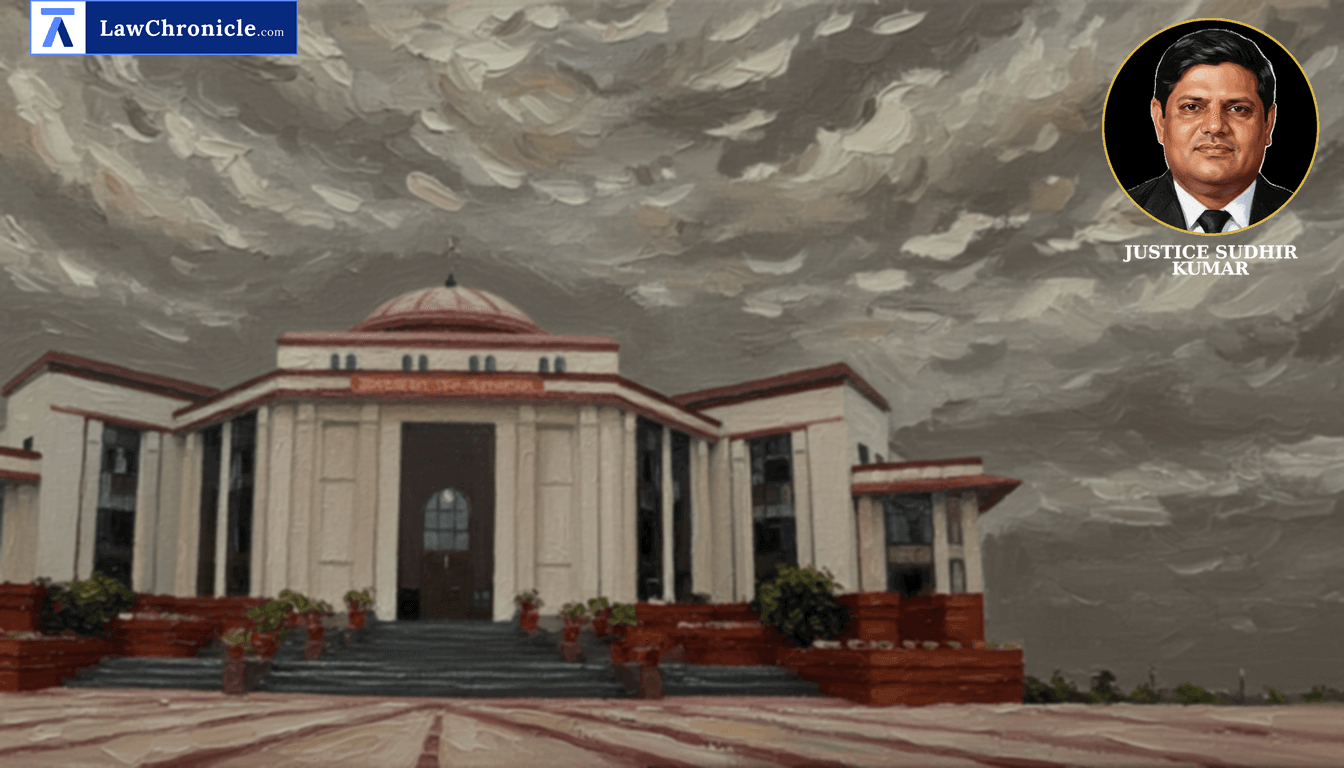
The Chhattisgarh High Court has solidified the state's power to penalize the black-marketing of domestic fuels, affirming that the failure to produce valid licensing for bulk LPG storage warrants immediate confiscation. By dismissing a revision petition against the seizure of cylinders found in a mobile shop, the Court has signaled a zero-tolerance approach toward the unauthorized diversion of public distribution resources.
Justice Sudhir Kumar adjudicated the matter, dealing with a challenge against the concurrent findings of the Sessions Court and the District Collector regarding the illegal possession and sale of domestic LPG cylinders. The proceedings highlight the rigorous compliance required under consumer protection laws governing essential supplies.
Key Takeaways
Strict Licensing Compliance
Possession of domestic LPG cylinders without a valid explosive license or authority letter constitutes a punishable violation, leading to mandatory confiscation.
Evidentiary Burden on Accused
Claiming personal ownership of seized essential commodities is insufficient unless supported by documentary evidence during the initial adjudication process.
Zero Tolerance for Black-Marketing
Charging consumers over the prescribed price for LPG cylinders intended for the public distribution system justifies the invocation of seizure powers under the [Essential Commodities Act, 1955.
Confiscation Validated Amidst Licensing Failure
The Chhattisgarh High Court observed that during the inspection of the applicant's premises, eight LPG cylinders were discovered without any supporting documentation. The Additional Collector, Bilaspur, had ordered the confiscation of these cylinders under Section 6-A of the Essential Commodities Act, 1955, a decision that was subsequently upheld by the Sessions Court. The Chhattisgarh High Court further added that “...upon perusal of the record and the reply submitted by the Applicant, it is vivid that the Applicant did not produce any document before the Additional Collector, Bilaspur in support of his claim of ownership of any of the eight cylinders... the order passed by the learned Sessions Court, Bilaspur in the Appeal does not suffer from any illegality or infirmity warranting interference by this Court in exercise of its revisional jurisdiction and same is in accordance with law.”
Ratio
In proceedings for confiscation under the Essential Commodities Act, the mere assertion of ownership or personal use by a party is legally untenable if not corroborated by valid licenses or purchase documents. A revisional court will not interfere with concurrent findings of lower authorities when the applicant fails to discharge the burden of proving lawful possession of regulated essential commodities.
Background
The case originated on September 8, 2011, when a Food Inspector inspected a mobile shop in Sirgitti and discovered eight LPG cylinders in an adjoining room. The applicant admitted to charging an additional Rs. 10-20 per cylinder and failed to produce a valid license or authority letter. This led to a report alleging violation of the LPG (Regulation of Supply and Distribution) Order, 2000.
Initially, the Collector ordered confiscation on March 12, 2013, which was set aside and remanded by the Third Additional Sessions Judge for fresh adjudication. Upon remand, the Collector again ordered confiscation on September 29, 2016. This order was challenged in a criminal appeal under Section 6-C of the Essential Commodities Act, 1955, which was dismissed by the Sessions Judge on January 25, 2020. The Chhattisgarh High Court, in the present revision, found no merit in the applicant's argument that the lower courts relied solely on the Food Inspector's statement, noting the applicant's complete failure to produce ownership documents.
Case Details:
Case No.: Criminal Revision No.267 of 2020
Neutral Citation: 2026:CGHC:42568
Case Title: Surjit Singh v. State Of Chhattisgarh
Appearances:
For the Petitioner(s): Shri Amartya Bajpai appears on behalf of Shri Ankit Singhal, Advocates
For the Respondent(s): Shri Saumya Rai, Dy. G.A.
Source: 2026 CaseBase(CTH) 19573
Similar Articles


 Breaking News


