Vague Allegations Against In-Laws Constitute Abuse of Law: Jharkhand HC Quashes Proceedings
 Copy Link
 Share
 Save
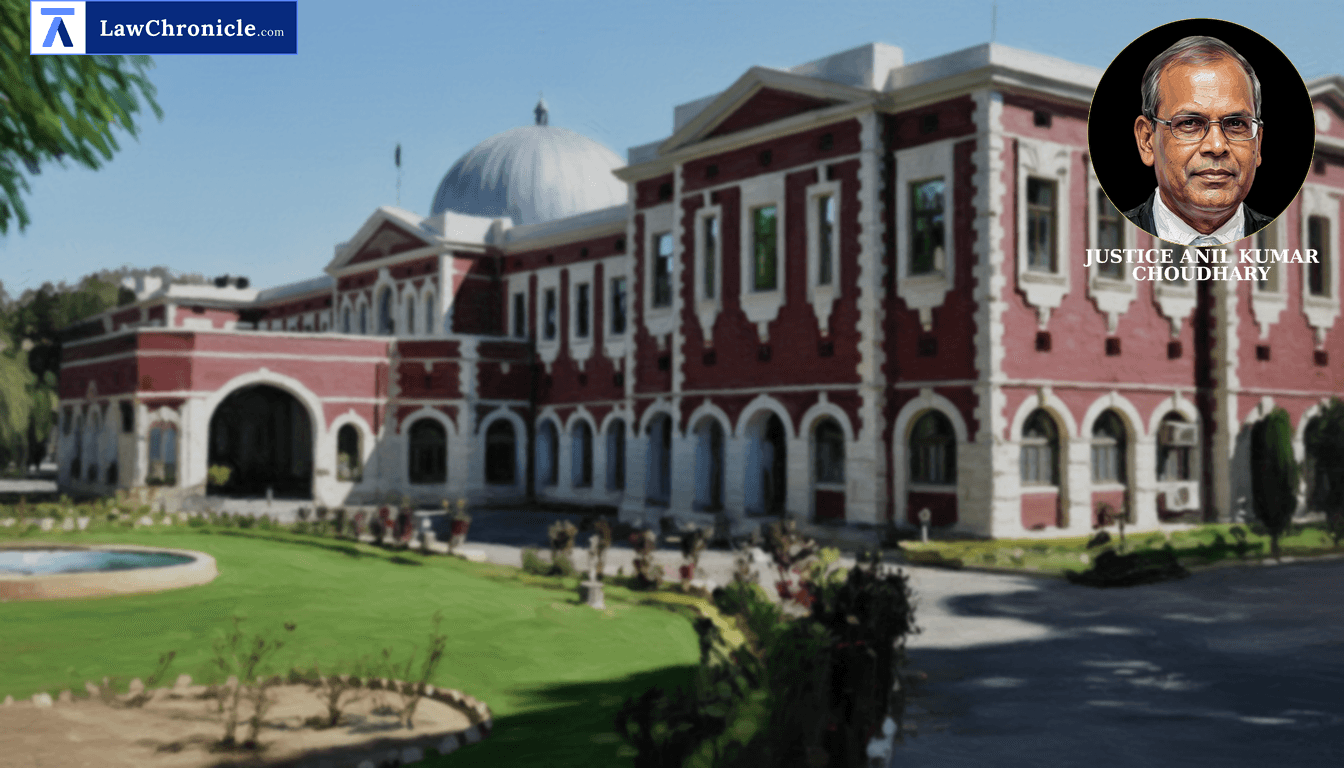
The Jharkhand High Court has delivered a stern warning against the weaponization of matrimonial laws, ruling that subjecting aged in-laws to criminal trial based on omnibus and vague allegations is a fatal abuse of the judicial process. Quashing the charges, the Court clarified that mere denial of entry into a matrimonial home does not satisfy the stringent legal threshold for cruelty or criminal intimidation under the new penal code.
A Single Judge Bench of Hon’ble Mr. Justice Anil Kumar Choudhary heard the criminal miscellaneous petition filed under Section 528 of B.N.S.S., 2023. The petitioners, a 69-year-old mother-in-law and a sister-in-law, sought the quashing of cognizance and charge-framing orders passed by the Chief Judicial Magistrate, Lohardaga, in a case involving alleged matrimonial discord and dowry demands.
Key Takeaways
Curbing Frivolous Prosecution of Relatives
By quashing proceedings based on general allegations, the Court has reinforced a shield for extended family members against being unnecessarily dragged into matrimonial disputes.
Standard of 'Cruelty' Clarified
The judgment establishes that not every act of domestic friction, such as denying entry to a house, constitutes 'cruelty' as defined under the new penal provisions without evidence of wilful conduct likely to cause grave injury.
Mandatory Precision in Complaints
Litigants must now ensure that complaints contain specific roles and precise acts for each accused, as vague mentions of sections will no longer suffice to sustain a criminal trial.
Court Observations on Statutory Ingredients
The Court meticulously analyzed the charges framed under the B.N.S., 2023. Regarding Section 115(2), the Court found no evidence of voluntarily causing bodily pain, noting that the allegations of assault were exclusively directed at the husband. Similarly, for the charge of criminal intimidation under Section 351(2), the Court observed that the threats were allegedly made by a third party, not the petitioners.
Addressing the charge of cruelty under Section 85 of B.N.S., 2023, the Court relied on the principles laid down in Sushil Kumar vs. Union of India, emphasizing that cruelty must involve conduct likely to drive a woman to suicide or meet unlawful property demands. The Court remarked that the informant's claim of being insulted or denied entry was insufficient to meet this bar.
The Court, in its reasoning, observed: "In order to lodge a proper complaint, mere mention of the sections and the language of those sections is not the be all and end all of the matter. What is required to be brought to the notice of the court is the particulars of the offence committed by each and every accused and the role played by each and every accused in committing of that offence... it would be an abuse of the process of law to allow the prosecution to continue against the aged parents... on the basis of a vague and general complaint which is silent about the precise acts of the appellants."
The Court has the following directions:
"The entire criminal proceeding including the order dated 21.08.2025 passed by the learned Chief Judicial Magistrate, Lohardaga in connection with Lohardaga Mahila P.S. Case No. 23 of 2024, corresponding to G.R. No. 311 of 2025 as also the order dated 10.08.2026 passed by the learned Chief Judicial Magistrate, Lohardaga in connection with the said case is quashed and set aside qua the petitioners."
Ratio
The inherent power of the High Court under Section 528 of B.N.S.S., 2023 must be exercised to quash proceedings where the allegations, even if accepted in their entirety, fail to disclose the essential ingredients of the alleged offences or where the complaint is manifestly vague and fails to attribute specific roles to individual accused persons, thereby preventing the abuse of the process of any Court.
Background
The dispute originated from a written report by the informant (Opposite Party No. 2) alleging that her husband and his relatives subjected her to harassment. While the husband faced allegations of assault and dowry demands, the petitioners his mother and sister were accused of insulting the informant and preventing her from entering the matrimonial home at Lowadih.
The police filed a charge sheet under Sections 85, 115(2), 126(2), 352, and 351(2) of B.N.S., 2023. The petitioners moved the High Court arguing that the allegations were "general and omnibus" in nature. The Court examined precedents including Preeti Gupta & Anr. vs. State of Jharkhand & Anr. ( "(2010) 7 SCC 667": 2010 CaseBase(SC) 1262), which cited R.P. Kapur vs. State of Punjab ( "AIR 1960 SC 866": 1960 CaseBase(SC) 30), to reiterate that proceedings must be quashed when no legal evidence exists to prove the charges. The Court also applied the ruling in Neelu Chopra & Another vs. Bharti to protect the aged relatives from a "sadly vague" complaint. Consequently, the High Court allowed the petition and set aside the lower court's orders against the petitioners.
Case Details:
Case No.: Cr.M.P. No. 942 of 2026
Neutral Citation: 2026:JHHC:32186
Case Title: Ursila Toppo & Anr. Versus The State of Jharkhand & Anr.
Appearances:
For the Petitioner(s): Mr. Suraj Verma, Advocate; Mr. Anjani Kumar, Advocate
For the Respondent(s): Mr. Shailendra Kr. Tiwari, Spl. P.P.
Source: 2026 CaseBase(JHKD) 3385
 Breaking News