


Vague Omnibus Allegations Against In-Laws In Dowry Cases To Be Nipped In The Bud: Patna HC
 Copy Link
 Share
 Save
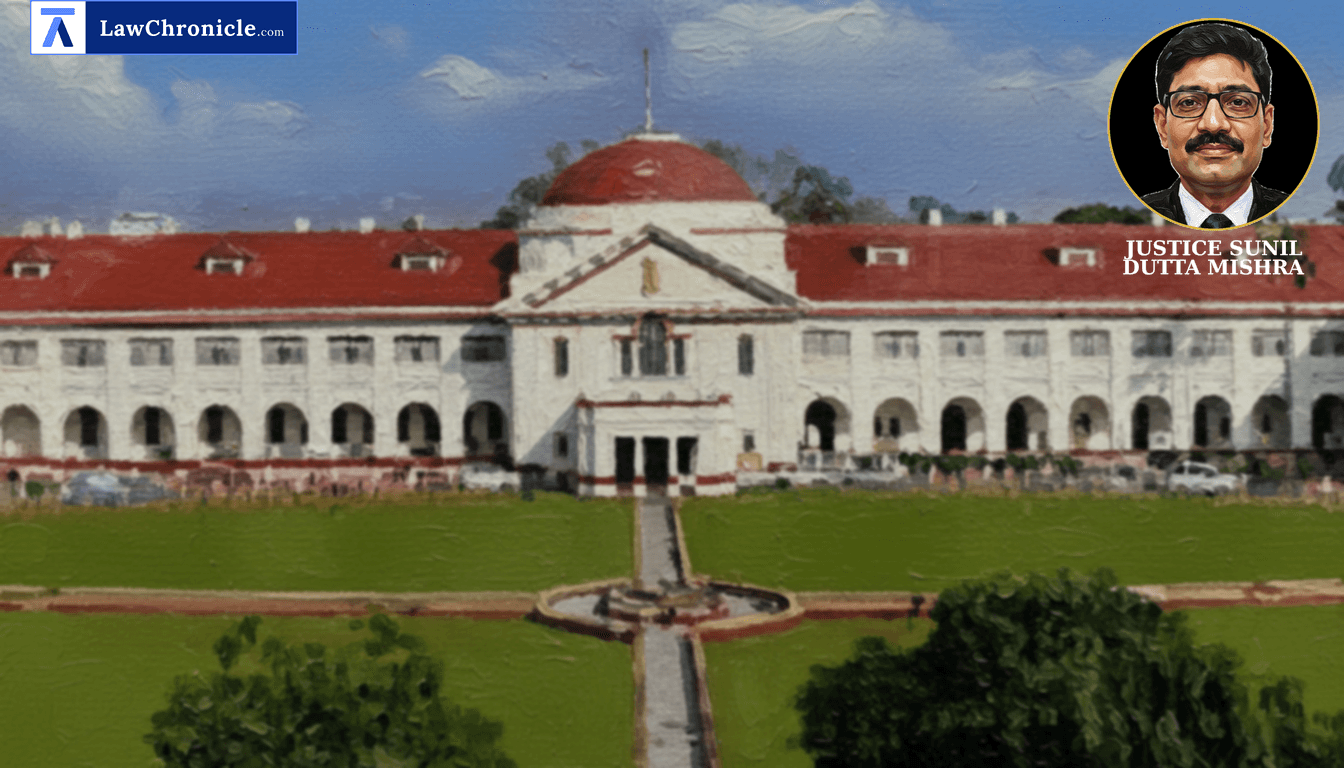
In a decisive check against the misuse of matrimonial laws, the Patna High Court has quashed criminal proceedings against five in-laws, ruling that sweeping, generalized accusations of dowry harassment without specific overt acts constitute a blatant abuse of judicial process. The Court emphasized that the increasing tendency to implicate an entire family in domestic discords must be curtailed to prevent unnecessary harassment of innocent relatives.
A Single Judge bench of Justice Sunil Dutta Mishra heard the petition filed by the father-in-law, mother-in-law, brother-in-law, and two sisters-in-law of the informant. The petitioners challenged an order of cognizance passed by the Additional Chief Judicial Magistrate-IV, Danapur, involving alleged offences under Section 498A of the Indian Penal Code, 1860 and Sections 3 & 4 of the Dowry Prohibition Act, 1961.
Key Takeaways
Curbing Executive and Judicial Overreach in Matrimonial Disputes
The judgment sets a high bar for magistrates, requiring them to scrutinize whether allegations against relatives are specific or merely a retaliatory 'package' deal to exert pressure.
Protection for Remote Relatives
By quashing proceedings against unmarried sisters-in-law and the brother-in-law, the Court reinforced that mere relationship to the husband does not invite criminal liability without distinct evidence of participation.
Precedence of Specificity Over Narrative
The ruling establishes that 'general and omnibus' allegations, even if accepted as true, cannot sustain a criminal trial if they lack individual roles for each accused.
Court's Rationale on General and Omnibus Allegations
The Court noted that the allegations regarding a demand for Rs. 2,00,000 and luxury items were levelled in a sweeping manner. It observed that the mechanical implication of family members without concrete evidence serves as a tool for harassment rather than a pursuit of justice. The Bench highlighted that the petitioners had previously filed a matrimonial case seeking a declaration of nullity of the marriage, as the husband was a minor at the time of the alleged wedding, suggesting the criminal case was a counter-blast.
The Court, in its reasoning, observed: "A mere reference to the names of family members in a criminal case arising out of a matrimonial dispute, without specific allegations indicating their active involvement should be nipped in the bud. It is a well-recognised fact, borne out of judicial experience, that there is often a tendency to implicate all the members of the husband's family when domestic disputes arise out of a matrimonial discord. Such generalised and sweeping accusations unsupported by concrete evidence or particularised allegations cannot form the basis for criminal prosecution."
The Court has following directions:
"Resultantly, the impugned order dated 11.12.2017 passed by the learned Additional Chief Judicial Magistrate-IV, Danapur, in connection with Bikram P.S. Case No.197 of 2017, taking cognizance of the offences under Section 498A of the IPC and the Sections 3 & 4 of the Dowry Prohibition Act, as well as the consequential criminal proceedings arising therefrom, are hereby quashed and set aside, insofar as the petitioners are concerned."
Ratio
The High Court held that the inherent power under Section 482 of the Code of Criminal Procedure, 1973 must be exercised to quash proceedings when the FIR and investigative materials, taken at face value, fail to disclose specific overt acts or the individual involvement of the husband's relatives, thereby failing to meet the essential ingredients of the alleged offences.
Background
The dispute originated from a complaint filed by Anjali Kumari, who alleged that after her marriage in 2016, her in-laws subjected her to physical and mental cruelty for dowry. The police submitted a charge-sheet, and the Magistrate took cognizance in December 2017. The petitioners argued that the marriage itself was forced upon a 16-year-old minor and that they were being victimized to force an acceptance of the union. Relying on the landmark principles in State of Haryana & Others v. Bhajan Lal & Others and the recent observations in Dara Lakshmi Narayana & Others v. State of Telangana & Another ( "(2025) 3 SCC 735": 2024 CaseBase(SC) 857), the High Court concluded that continuing the trial would be an exercise in futility and a violation of the ends of justice.
Case Details:
Case No.: CRIMINAL MISCELLANEOUS No.45254 of 2018
Case Title: Vidya Singh @ Vidya Nand Sharma & Ors. Versus The State of Bihar & Anr.
Appearances:
For the Petitioner(s): Mr. Indra Mohan Kumar, Advocate
For the Respondent(s): Mr. Ram Bilash Roy Raman, A.P.P.
Source: 2026 CaseBase(PAT) 3977
Similar Articles

 Breaking News


