


Youthful Indiscretion Not Fatal to Employment: Patna High Court
 Copy Link
 Share
 Save
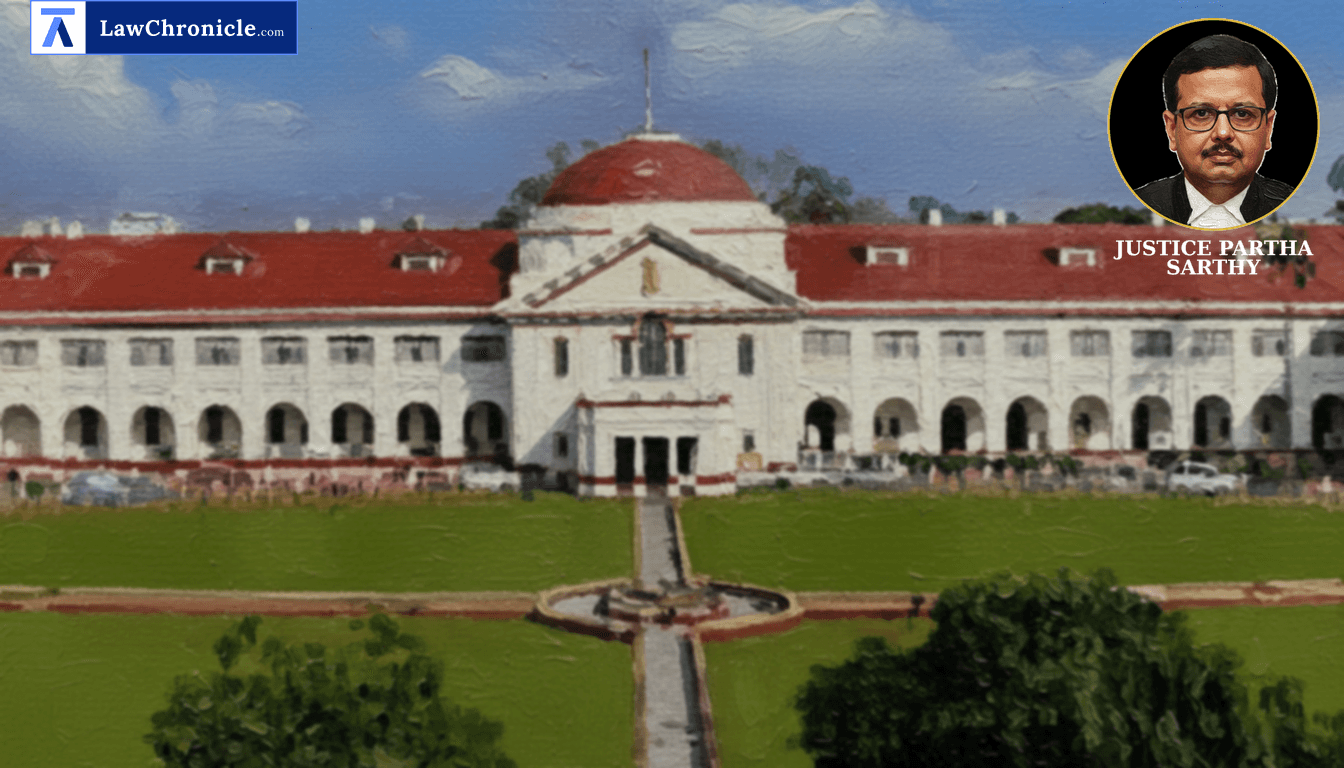
The Patna High Court has dismantled the rigid doctrine of 'automatic disqualification' for non-disclosure of criminal antecedents, ruling that the state cannot brand young citizens as lifelong criminals for trivial juvenile offences. In a significant intervention for restorative justice, the Court emphasized that public employers must look beyond technical suppressions and adopt a reformative approach toward candidates who hail from disciplined backgrounds but faltered due to youthful indiscretions.
Justice Partha Sarthy heard the petition challenging the cancellation of a Constable's appointment. The petitioner, having successfully cleared written and physical examinations for the Bihar Special Armed Police-6, was terminated after a background check revealed he had suppressed his involvement in a 2016 criminal case involving over 150 persons.
Key Takeaways
Restoration of Reformative Justice
Public authorities must prioritize rehabilitation over permanent stigmatization when dealing with juvenile records.
End of 'One-Size-Fits-All' Cancellation
Employers cannot automatically terminate service for non-disclosure; they must objectively evaluate the gravity of the suppressed information.
Protection for Juvenile Candidates
Indiscretions committed during youth, especially those resulting in community-service-based sentences, should not serve as a permanent barrier to government employment.
Requirement of Objective Criteria
Courts must scrutinize whether the suppression was 'material' or merely a result of fear regarding immediate disqualification.
Court's Reasoning on Material Suppression
The Court noted that while the petitioner had indeed answered 'no' regarding his criminal history, the nature of the case and his status as a juvenile were critical factors. The petitioner was one of 85 named accused in Manjhagarh P.S. Case no. 24 of 2016. The Juvenile Justice Board had previously disposed of the matter by directing the petitioner to plant 40 trees, noting his disciplined family background and lack of criminal propensity.
Referring to the legal principles established in Avtar Singh vs. Union of India & Ors ( "(2016) 8 SCC 471": 2016 CaseBase(SC) 405), the Court highlighted that the employer must act with objectivity. It further relied on Ravindra Kumar vs. State of Uttar Pradesh & Ors ( "(2024) 5 SCC 264": 2024 CaseBase(SC) 404), which discussed the need for mercy in cases involving young people who commit errors without inherent dishonesty or vice.
The Court, in its reasoning, observed: "The modern approach should be to reform a person instead of branding him a criminal all his life. Suppression of 'material' information presupposes that what is suppressed 'matters' not every technical or trivial matter. Broad-brushing every non-disclosure as a disqualification, will be unjust and the same will tantamount to being completely oblivious to the ground realities obtaining in this great, vast and diverse country. It can never be a one size fits all scenario."
The Court has following directions:
"The order dated 1.8.2025 (Annexure- P/3) passed by the Commandant, Bihar Special Armed Police- 6, Muzaffarpur, is hereby set aside. The respondents are directed to pass fresh orders, taking into consideration the observations made herein above within a period of four months from the date of receipt/production of a copy of this order."
Ratio
The non-disclosure of a criminal case in a recruitment verification form is not a fatal disqualification if the underlying offence was trivial, committed as a juvenile, and the candidate was dealt with under reformative justice principles. Public employers are mandated to exercise their power of cancellation in a reasonable and objective manner, distinguishing between material suppression of serious crimes and technical omissions born out of a fear of disqualification.
Background
The dispute originated when the petitioner applied for the post of Constable under Advertisement No. 1 of 2023. After joining the Bihar Special Armed Police-6 in June 2025, his appointment was cancelled via a memo dated August 1, 2025, on the grounds that he concealed the pendency of an FIR registered under Sections 147, 148, 149, 351, 323, 504, 329, 294, 153(A), 295(A), 296, 427, and 506 of the Indian Penal Code.
The petitioner argued that the allegations were trivial and that he had been declared a juvenile at the time of the incident. The Juvenile Justice Board had closed the case in 2025 with a direction for community service (tree plantation). The State contended that the suppression was categorical and justified the cancellation. However, the High Court found that the authorities failed to consider the petitioner's age and the nature of the judicial order from the Juvenile Justice Board, eventually setting aside the termination order and allowing the writ application.
Case Details:
Case No.: Civil Writ Jurisdiction Case No.3053 of 2026
Case Title: Rahul Kumar vs. The State of Bihar & Others
Appearances:
For the Petitioner(s): Mr. Akhilesh Dutta Verma, Advocate
For the Respondent(s): Mr. Braj Bhushan Mishra, A.C. to AAG-9; Mr. Sanjay Pandey, Advocate; Mr. Binod Kumar Mishra, Advocate; Mr. Vivek Anand Amritesh, Advocate
Source: 2026 CaseBase(PAT) 3321
Similar Articles


 Breaking News


