


State Cannot Weaponize Umadevi Judgment To Revoke Regularisation: Orissa HC
 Copy Link
 Share
 Save
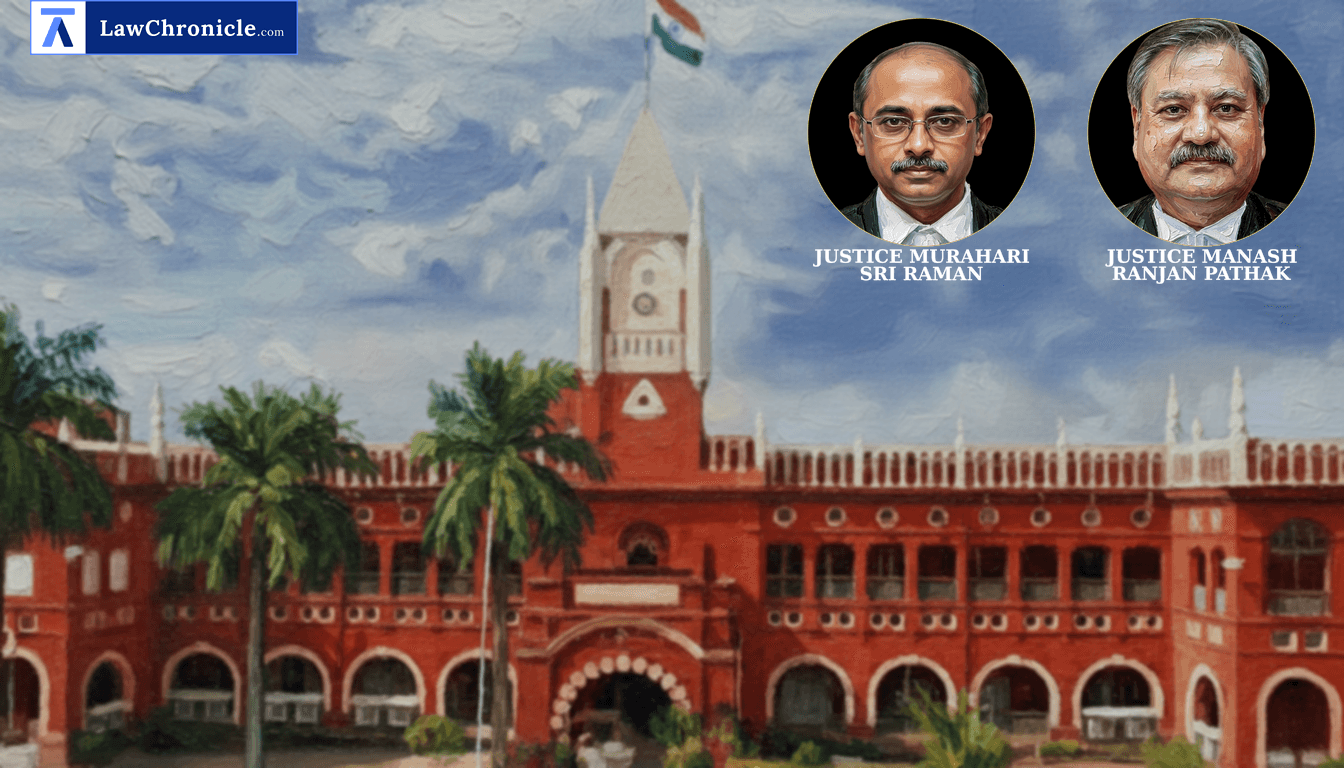
The High Court of Orissa has severely rebuked state authorities for using landmark anti-backdoor entry precedents as a weapon to arbitrarily terminate long-serving lower-rung employees working against duly sanctioned posts. A Division Bench comprising Justice Manash Ranjan Pathak and Justice Murahari Sri Raman dismissed an intra-court appeal filed by the State of Odisha, affirming that long-continued, unblemished service in perennial public functions cannot be summarily discarded without natural justice.
A Division Bench comprising Justice Manash Ranjan Pathak and Justice Murahari Sri Raman was hearing an intra-court appeal preferred by the State of Odisha challenging a Single Judge order that quashed the revocation of regularisation of a Class-IV employee.
Key Takeaways
- Protection Against Misuse of Precedents: The Court held that Secretary, State of Karnataka Vs. Umadevi cannot be weaponized by State departments to deny regularisation to employees in non-illegal, long-serving roles.
- Adherence to Judicial Discipline: Subordinate executive authorities cannot ignore or refuse to implement binding High Court decisions merely because an appeal is pending elsewhere without a stay.
- Retrospective Rule Changes Barred: Accrued regularisation rights cannot be taken away by applying subsequent executive resolutions or rules retrospectively.
Summarizing its key determinations, the Court issued binding rulings on administrative fairness and judicial discipline. The Court has following directions:
"In fine, this Court does not find any infirmity nor illegality in the Order dated 11.08.2023 passed in W.P.(C) No.7974 of 2023 by the learned Single Judge of this Court, but in the circumstances, there shall be no order as to costs."
Evaluating the executive's conduct, the Court, in its reasoning, observed: "While the judgment in Uma Devi (supra) sought to curtail the practice of backdoor entries and ensure appointments adhered to constitutional principles, it is regrettable that its principles are often misinterpreted or misapplied to deny legitimate claims of long-serving employees. This judgment aimed to distinguish between 'illegal' and 'irregular' appointments... However, the laudable intent of the judgment is being subverted when institutions rely on its dicta to indiscriminately reject the claims of employees, even in cases where their appointments are not illegal, but merely lack adherence to procedural formalities."
Ratio
Where an employee is appointed against a duly sanctioned post by the competent authority and continues voluntarily and uninterruptedly for decades performing perennial public duties, the appointment is at best 'irregular' and not 'illegal'. The State, as a model employer under Articles 14 and 16 of the Constitution of India, 1950, cannot retrospectively apply altered eligibility conditions or rely on precedents like Secretary, State of Karnataka Vs. Umadevi as a blanket shield to cancel regularisation orders without affording a hearing.
Background
The dispute arose when Respondent No.1 was appointed as a contractual peon in 2007 against a single sanctioned post created by the Finance Department in the District Small Savings Office, Nuapada. Having completed six years of continuous service, the Collector, Nuapada issued an office order in 2013 regularising his service. However, in 2014, a High Power Committee unilaterally directed the revocation of the regularisation order on the ground that formal recruitment procedures were not shown to have been followed, leading to a revocation order in 2015.
Despite the revocation, the employee continued in service via periodic extensions until March 2023, when the Finance Department issued a single-line letter stating that his further continuance was "regretted". The employee successfully challenged this before a Single Judge, who quashed the revocation and ordered his regularisation by relying on Secretary, State of Karnataka Vs. Umadevi, State of Karnataka Vs. M.L. Kesari, and Patitapaban Dutta Dash Vs. State of Odisha and Others. Aggrieved, the State filed the present intra-court appeal.
The High Court analysed the statutory landscape, including the Rules Of High Court Of Orissa, 1948, and examined precedents like Orissa Power Generation Corporation Ltd. Vs. State of Odisha, Amarendra Kumar Mohapatra Vs. State of Odisha, State of Odisha Vs. Patitapaban Dutta Dash, Kalinga Mining Corpn. Vs. Union of India, Sukhendu Bhattacharjee and Others Vs. The State of Assam and Others, Vibhuti Shankar Pandey Vs. State of Madhya Pradesh, Israr Ahmad Khan Vs. Amarnath Prasad, Tobacco Manufacturers (India) Ltd. Vs. Commissioner of Sales Tax, Bihar, Godrej Sara Lee Ltd. Vs. The Excise and Taxation Officer-cum-Assessing Authority, Orissa Forest Corporation Ltd. Vs. Assistant Collector, N. Karunanidhi Vs. Union of India, Jaggo Vs. Union of India, Shripal Vs. Nagar Nigam, and Dharam Singh Vs. State of U.P.. The Bench affirmed that the original regularisation was lawful under executive resolutions prevailing in 2013 and could not be upset by subsequent standards or administrative drift.
Case Details:
Case No.: W.A. No.2604 of 2023
Neutral Citation: 2026:OHC:16-DB
Case Title: State of Odisha v. Dwitiya Bhoi & Ors.
Appearances:
For the Petitioner(s): Mr. Satyabrata Mohanty, Additional Government Advocate
For the Respondent(s): Ms. Saswati Mohapatra and Niyati Ranjan Samal, Advocates
Source: 2026 CaseBase(ORI) 61
Similar Articles
 Breaking News


