


Ad-Hoc Appointee on Permanent Post Remains Temporary Govt Servant: Allahabad HC
 Copy Link
 Share
 Save
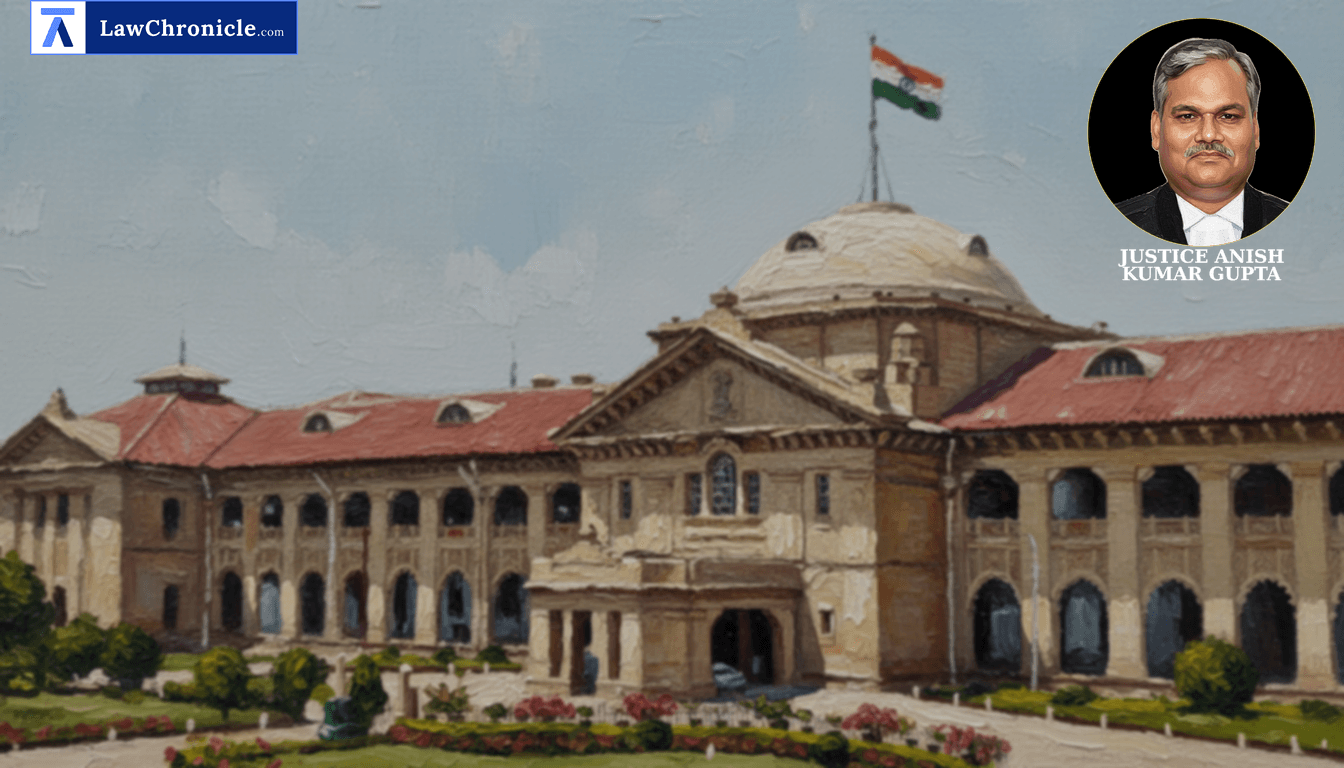
Ad-hoc employees serving on permanent posts possess no inherent right to hold the position, as affirmed by the Allahabad High Court, and their services can be legally terminated without a hearing under prevailing state service rules. The Bench reinforced the principle that until a formal confirmation order is issued, an employee's status remains 'officiating,' rendering them subject to termination simpliciter without the protection of Constitution of India.
In a verdict delivered by Justice Anish Kumar Gupta, the Allahabad High Court dismissed a three-decade-old petition, clarifying that appointments made as a temporary arrangement do not transform into substantive service merely by virtue of being against a permanent post.
Key Takeaways
Ad-Hoc Status Finality
Ad-hoc appointments remain temporary arrangements until a formal confirmation order is passed by the appointing authority.
Applicability of Termination Rules
Service on a permanent post in an officiating capacity falls squarely under the definition of 'temporary service,' allowing the state to invoke termination rules without specific intimation.
Article 311 Protections Limited
Constitutional protections against dismissal without inquiry apply only to punitive orders and not to termination simpliciter for temporary government servants.
Financial Immunity for Litigants
Employees who continue in service solely due to long-standing court interim orders may be protected from recovery of salaries despite their ultimate termination being upheld.
Legal Definition of 'Temporary Service' Upheld
The Allahabad High Court analyzed the scope of Rule 2 of the U.P. Temporary Government Servants (Termination of Service) Rules, 1975, which defines temporary service as officiating or substantive service on a temporary post, or officiating service on a permanent post. The petitioner argued that since his appointment was against a permanent post, he should be treated as a regular employee. However, the Court rejected this, noting that the petitioner was appointed temporarily to start a new institute until regular selections occurred.
The Allahabad High Court reasoned to observe that "The ad hoc appointment remains to be a temporary arrangement till the regular appointments are made. Therefore, such appointments can very well be covered within the definition of officiating service on a permanent post. Thus, the same will remain temporary service and cannot be held to be a substantive service by any stretch of imagination."
Impact of Confirmation Rules
Referring to Uttar Pradesh State Government Servants Confirmation Rules, 1991, the Allahabad High Court noted that a formal order from the appointing authority is a mandatory prerequisite for confirmation. In the absence of such an order, the petitioner’s status never transitioned from temporary to substantive. The Court relied on Ram Sudhar Prasad vs. State of UP and others to establish that the U.P. Temporary Government Servants (Termination of Service) Rules, 1975 remains fully applicable to such appointees.
Ratio
An ad-hoc or temporary appointment against a permanent post constitutes 'officiating service' and falls within the ambit of 'temporary service' under the relevant service rules. Such service does not confer a legal right to the post, and termination simpliciter without an opportunity of hearing is valid and does not violate Constitution of India, provided no formal confirmation order has been issued as per the Uttar Pradesh State Government Servants Confirmation Rules, 1991.
Background
The petitioner was appointed as a Junior Clerk in 1991 at a Government Deaf and Dumb Girls School in Etawah. His appointment letter explicitly stated the position was ad-hoc and temporary, subject to termination without notice. In 1995, the state issued a termination order under the U.P. Temporary Government Servants (Termination of Service) Rules, 1975. The petitioner challenged this, claiming he was a regular employee because the post was permanent and that his termination violated Constitution of India.
Although an interim order allowed him to continue in service for nearly 30 years, reaching the age of 59 by the time of judgment, the Court ultimately found no illegality in the original termination. The Allahabad High Court distinguished between 'substantive' and 'officiating' service, citing Siya Ram vs. State of U.P. and Other to reiterate that temporary employees have no right to hold a post and are not entitled to a hearing before service is dispensed with if the termination is not punitive.
Case Details:
Case No.: WRIT - A No. - 30577 of 1995
Case Title: Ravindra Pal Singh Versus State of U.P. and Others
Appearances:
For the Petitioner(s): Sri M.D. Singh Shekhar, learned Senior Counsel; Sri Vaibhav Goswami, Advocate; Sri Ram Dayal Tiwari, learned counsel
For the Respondent(s): Sri Dileep Kumar Kesarwani, learned Additional Chief Standing Counsel
Source: 2026 CaseBase(ALL) 1346
Similar Articles
 Breaking News


