


Admitting Signature On Stamp Paper Shifts Burden Of Proof To Defendant: MP High Court
 Copy Link
 Share
 Save
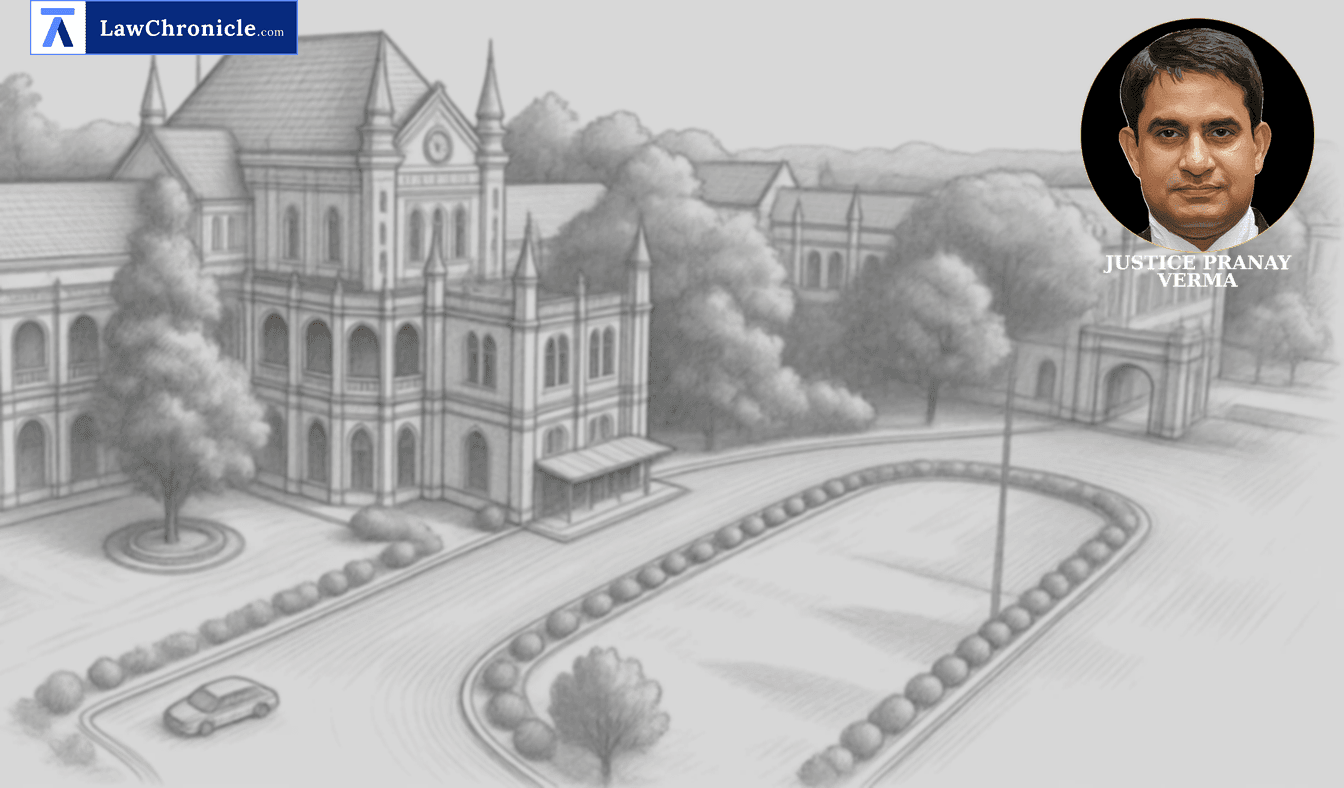
The Madhya Pradesh High Court has reinforced the evidentiary principle that once a party admits their signature on a document, the onus of proving the document's fraudulent nature or specific purpose shifts entirely to them. Dismissing a second appeal, the Court held that a defendant's failure to substantiate claims of signed blank papers being misused for a sale agreement warrants the decree of specific performance in favor of the plaintiffs.
A single-judge bench of Justice Pranay Verma heard the second appeal arising from a dispute over a contract for the sale of land. The appellant, who was the original defendant, challenged the concurrent findings of the lower courts which had decreed the suit for specific performance in favor of the respondents.
Key Takeaways
Evidentiary Shift
Admission of signatures on a stamp paper creates a heavy legal burden on the signatory to prove that the document was not intended for the purpose it reflects.
Proof of Fraud
Mere allegations of signing blank papers for a loan transaction are insufficient to overturn a registered or attested agreement unless supported by cogent evidence of repayment and misuse.
Automatic Readiness and Willingness
Where a defendant denies the very existence of a sale agreement, the plaintiff's plea of readiness and willingness to perform the contract is often considered proved if the agreement's execution is established.
Court Observations and Directions
The Court noted that the plaintiffs had successfully examined attesting witnesses and produced registered documents to prove the execution of the agreement dated 04.12.2014. The appellant's defense that he had borrowed a smaller sum and signed blank papers remained unsubstantiated throughout the trial.
The Court, in its reasoning, observed: "Since the signatures were admitted by defendant No. 1, it was for him to prove as to for what purpose the same were affixed by him, which he has totally failed to do from the evidence brought by him on record. Having admitted his signatures on the stamp and having failed to prove advancement of loan to him by plaintiff No. 2 and repayment by him, it was imperative for him to prove the nature of the document, which he has totally failed to do."
The Court has following directions:
"Consequently, affirming the judgment and decree passed by the Courts below, the appeal stands dismissed in limine."
Ratio
In a suit for specific performance under the Code of Civil Procedure, once the defendant admits signatures on the disputed document, the burden of proof shifts to the defendant to establish that the document was obtained through fraud or was intended for a purpose other than a sale agreement. Failure to prove the underlying loan transaction or the alleged misuse of blank papers results in the affirmation of the contract's validity.
Background
The dispute originated from an agreement to sale executed on December 4, 2014, for a total consideration of Rs. 3,00,000/-. The plaintiffs claimed to have paid Rs. 2,60,000/- as earnest money, with the balance to be paid within two years. When the defendant failed to execute the sale deed despite a legal notice, the plaintiffs approached the civil court.
The defendant contended that the agreement was forged. He claimed he had only borrowed Rs. 1,00,000/- from the second plaintiff and that his signatures were taken on blank papers which were later converted into a sale agreement. However, the trial court and the first appellate court rejected this defense, noting that the defendant failed to prove the loan or its repayment.
In the second appeal before the High Court under Section 100 of the Code of Civil Procedure, the appellant relied on Raja Bhaiya and Others vs. Badal Singh and Others to argue against the decree. Justice Pranay Verma distinguished the cited precedent, noting it was inapplicable because the signatures were admitted in the present case. Finding no substantial question of law, the High Court dismissed the appeal and upheld the decree for specific performance.
Case Details:
Case No.: SECOND APPEAL No. 972 of 2025
Neutral Citation: 2026:MPHC-JBP:85802
Case Title: Arjun Sing Lodhi Versus Fareed Khan And Others
Appearances:
For the Petitioner(s): Shri Sushil Kumar Tiwari - Advocate
For the Respondent(s): Dr. Preeti Pathak Mishra - PL for the respondent No.3/State
Source: 2026 CaseBase(MP) 36529
Similar Articles

 Breaking News


