


Allahabad High Court Directs State To Pay Rs 10 Lakh Compensation For Death In Custody
 Copy Link
 Share
 Save
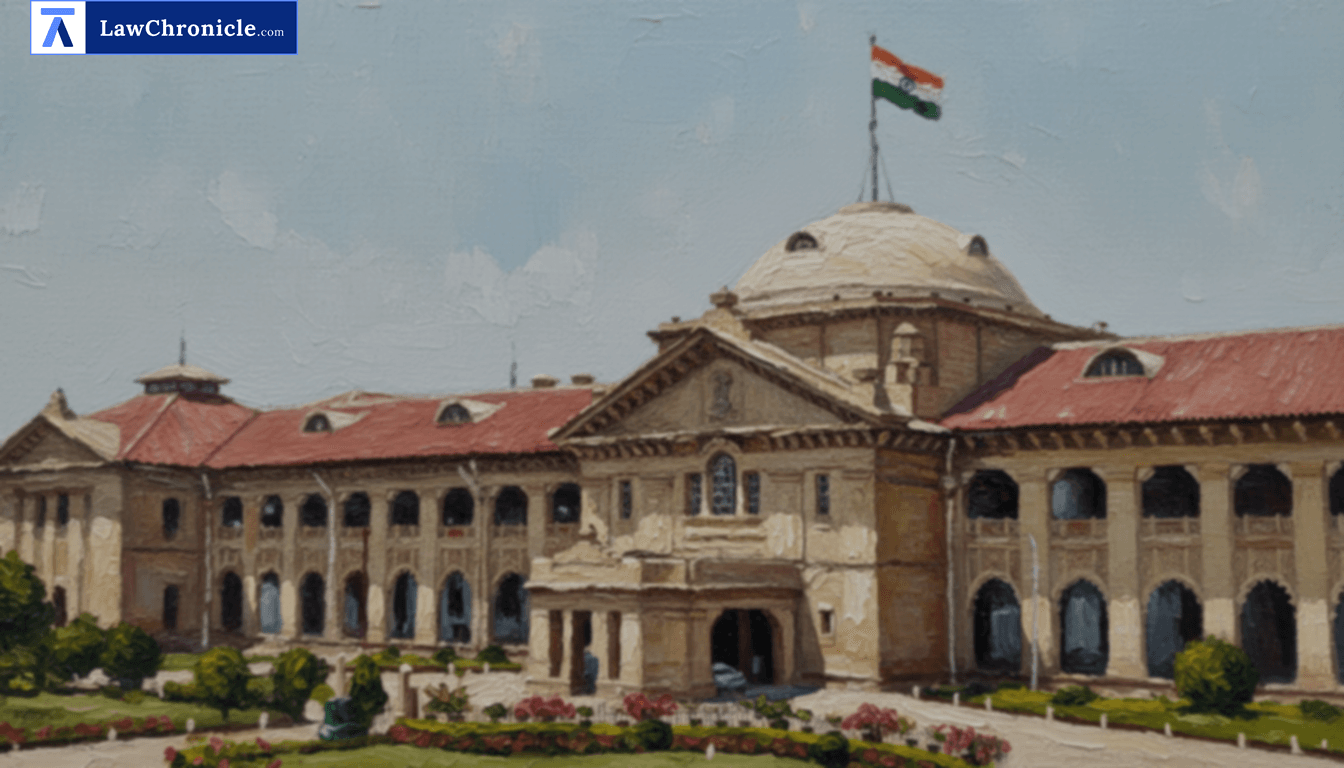
A bench of Justice Shekhar B. Saraf and Justice Manjive Shukla heard a writ petition under Article 226 challenging the failure of State authorities to pay compensation and take action after the death of a minor prisoner in District Jail, Pilibhit on February 20, 2024.
The Court allowed the petition and directed the respondents to pay compensation of Rs.10,00,000 to the legal heirs of the deceased within three weeks, holding that a case of custodial death was made out and that the State bore strict public law liability for the death in custody. The Court recorded that the explanations offered by the State were not sufficient to displace the presumption attaching to deaths in custody and emphasised the State’s amplified duty to safeguard persons in its care. The Court, in its reasoning, observed: "It is undisputed that the deceased was in the custody of the State and had committed suicide. There may have been circumstances surrounding him which drove him to take such an extreme step, resulting in a patently unnatural death. Ergo, the State is absolutely liable for the unnatural death of the deceased, as an amplified duty is cast upon the State for the death of a prisoner in custody of police without any exception. No State can shirk its duties and responsibilities for providing better facilities to prisoners. Accordingly the case of custodial death is made out in the present case." The Court further noted that monetary compensation was a public law remedy available under Article 226 and that such relief was "to apply balm to the wounds" of the bereaved and not to substitute criminal accountability.
Background
The petitioner, mother of the deceased (a minor son, Sukhvinder), filed the writ after her son was arrested on February 7, 2024 on execution of a warrant and died in custody on February 20, 2024. A panchnama prepared on the date of death recorded that the deceased had died by hanging from a muffler tied to a ventilator in the prison toilet; the post mortem concluded cause of death as "asphyxia due to antimortem hanging" with ligature mark on the neck. An inquest under Section 176 CrPC concluded suicide by hanging and recorded absence of external injury sufficient to cause death. The petitioner alleged custodial torture, illegal demands for money and pressure by jail authorities, and sought mandamus for compensation and action against the guilty officials.
The National Human Rights Commission had earlier recommended payment of Rs.3,00,000 to the nearest kin; the State contended that disbursement awaited verification of next of kin and budgetary allocation. The High Court reviewed domestic precedents including Nilabati Behera, D.K. Basu and the Supreme Court’s observations in Re: Inhuman Conditions in 1382 Prisons, and noted international guidance (ICRC) distinguishing natural and unnatural deaths. The Court reiterated that "The right to life and human dignity guaranteed under Article 21 of the Constitution of India is an intrinsic, inviolable and omnipresent right which is extended even to an individual who is illegally arrested and detained by the State." Applying settled public law principles, the Court held that even where death was by suicide while in custody, the State remained liable unless it satisfactorily accounted for the death. The Court directed payment of Rs.10 lakh to the legal heirs within three weeks, observed that the award was without prejudice to civil or criminal proceedings against officials, and recommended that the State frame guidelines to fix compensation using cogent parameters (akin to the multiplier method) and to ensure prompt procedures in custodial death cases including immediate family notification, on-spot panchnama, prompt post-mortem (with mandatory video recording), and prompt judicial inquest.
Case Details:
Case No.: WRIT - C No. - 579 of 2025
Case Title: Prema Devi Versus State of U.P. Thru. its Prin. Secy. Home Deptt. Lko. and 5 others
Appearances:
For the Petitioner(s): Rama Kant Dixit, Uday Kumar
For the Respondent(s): C.S.C.
Source: 2026 CaseBase(ALL) 30
Similar Articles
 Breaking News


