


SC Directs Center to Frame No-Fault Compensation Policy for Vaccine Injuries
 Copy Link
 Share
 Save
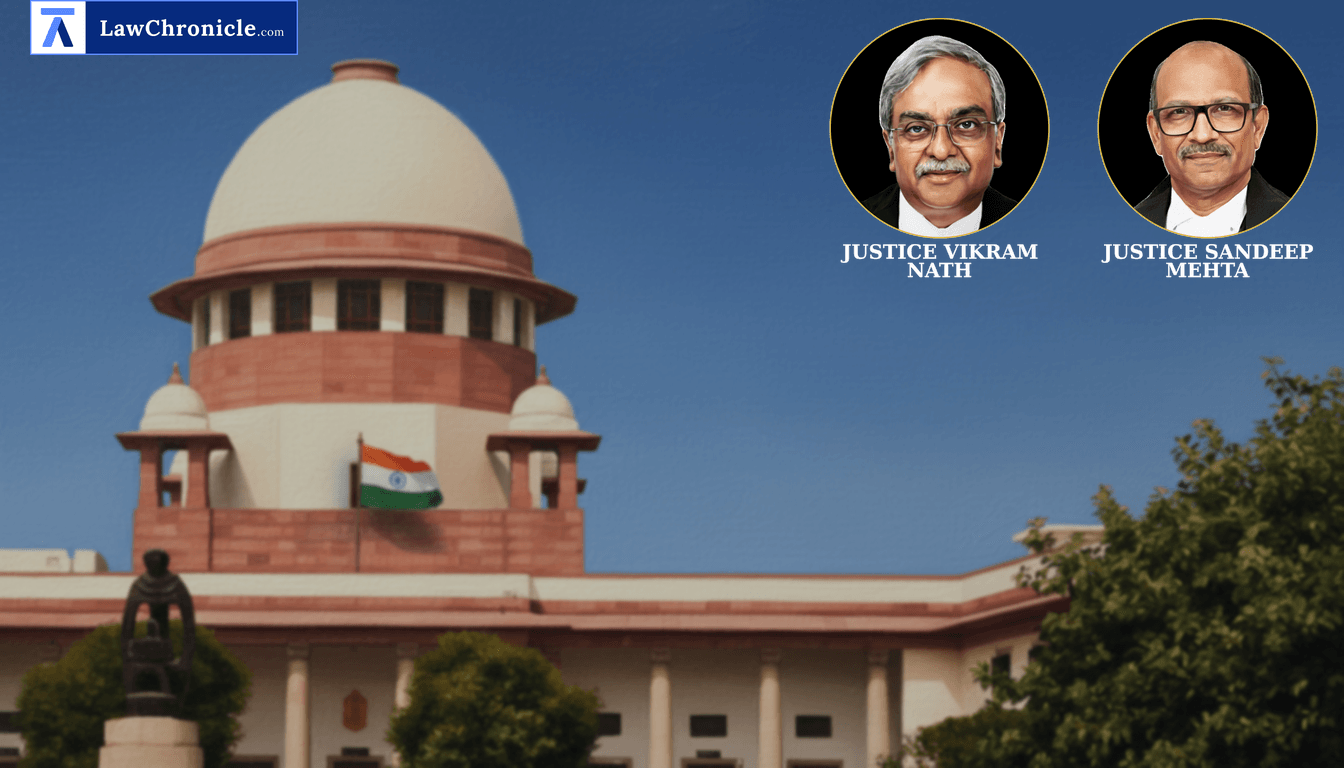
The Supreme Court ruled that the right to health under Article 21 of the Constitution requires an institutional mechanism to compensate citizens who suffered serious adverse events following COVID-19 vaccination.
A bench of Justice Vikram Nath and Justice Sandeep Mehta addressed a batch of petitions filed by grieving parents and family members who lost their kin shortly after the administration of COVID-19 vaccines. The Court highlighted that while the national vaccination program was a vital public health intervention, the State cannot remain a distant spectator to the rare but serious human suffering resulting from such measures.
Establishing the Right to No-Fault Redressal
The Court observed that the absence of a structured framework to address serious adverse events following immunization (AEFI) raised significant constitutional concerns. While the Union Government argued that aggrieved individuals could seek damages through civil courts or consumer fora by proving negligence, the bench found such remedies ill-suited for a mass immunization context.
The Court, in its reasoning, observed: "Where the State undertakes an intervention of this scale in discharging of its duty to protect public health, the right to health under Article 21 of the Constitution would automatically extend to a corresponding obligation of institutional support in cases of grave outcomes, no matter how rare they are."
Directions Issued to the Union Government
Recognizing international precedents such as the COVAX No-Fault Compensation Program and policies in countries like the UK and Japan, the Court emphasized the need for an expeditious and fair avenue of relief in India. The Court has the following directions:
"i. The Union of India shall, through the Ministry of Health and Family Welfare, frame a no-fault compensation policy for serious adverse events following COVID-19 vaccination.
ii. The existing mechanisms for monitoring adverse events following immunisation shall continue, and relevant data shall be periodically placed in the public domain in accordance with the observations in Jacob Puliyel v. Union of India ( "2022 SCC OnLine SC 533": 2022 CaseBase(SC) 1189).
iii. No separate court-appointed expert body is considered necessary in view of the existing mechanisms for scientific assessment of adverse events following immunisation.
iv. It is clarified that this judgment shall not preclude any person from pursuing such other remedies as may be available in law. Equally, the formulation of the no-fault framework shall not be construed as an admission of liability or fault on the part of the Union of India or any authority."
Background: The Struggle for Accountability
The proceedings originated from a writ petition filed under Article 32 of the Constitution by parents whose young daughters died of complications like Cerebral Venous Sinus Thrombosis and Multisystem Inflammatory Syndrome after receiving the vaccine. Simultaneously, several petitions were filed in the High Court of Kerala seeking compensation and the recognition of vaccine-related deaths. The Union of India challenged an interim order of the Kerala High Court that directed the formulation of a compensation policy, leading to the transfer of these cases to the apex court.
The petitioners alleged that the government failed to ensure informed consent and transparency regarding potential side effects like Vaccine-Induced Immune Thrombotic Thrombocytopenia (VITT). They argued that the lack of diagnostic protocols and non-disclosure of AEFI data violated Article 14 and Article 21 of the Constitution.
In its analysis, the Supreme Court relied on precedents like Union Carbide Corpn. v. Union of India and Parmanand Katara v. Union of India to affirm that the State has a positive obligation to safeguard health. While the Court took note of Jacob Puliyel v. Union of India ( "2022 SCC OnLine SC 533": 2022 CaseBase(SC) 1189), which upheld the regulatory approval process of the vaccines, it clarified that surveillance alone is insufficient. Citing State of Punjab v. Mohinder Singh Chawla and State of Punjab v. Ram Lubhaya Bagga ( "(1998) 4 SCC 117": 1998 CaseBase(SC) 396), the bench reiterated that the right to medical facility is a constitutional obligation. The Court also referred to Distribution of Essential Supplies and Services During Pandemic, In re regarding the executive's duty during emergencies and Gaurav Kumar Bansal v. Union of India ( "W.P.(C) No. 539/2021": 2021 CaseBase(SC) 308) which addressed ex-gratia assistance for COVID-19 deaths.
Ultimately, while the Court declined to appoint an independent medical board, it mandated the creation of a no-fault compensation framework to ensure that the constitutional guarantee of a life with dignity is not rendered theoretical for those injured by a state-led health initiative.
Case Details:
Case No.: WRIT PETITION (CIVIL) NO.1220 OF 2021
NeutralCitation: 2026 INSC 218
Case Title: RACHANA GANGU & ANR. VERSUS UNION OF INDIA & ORS.
Source: 2026 CaseBase(SC) 597
Similar Articles
 Breaking News


