


Physical Impairment Not Sole Criterion For Compensation If Injury Halts Vocation: Gujarat HC
 Copy Link
 Share
 Save
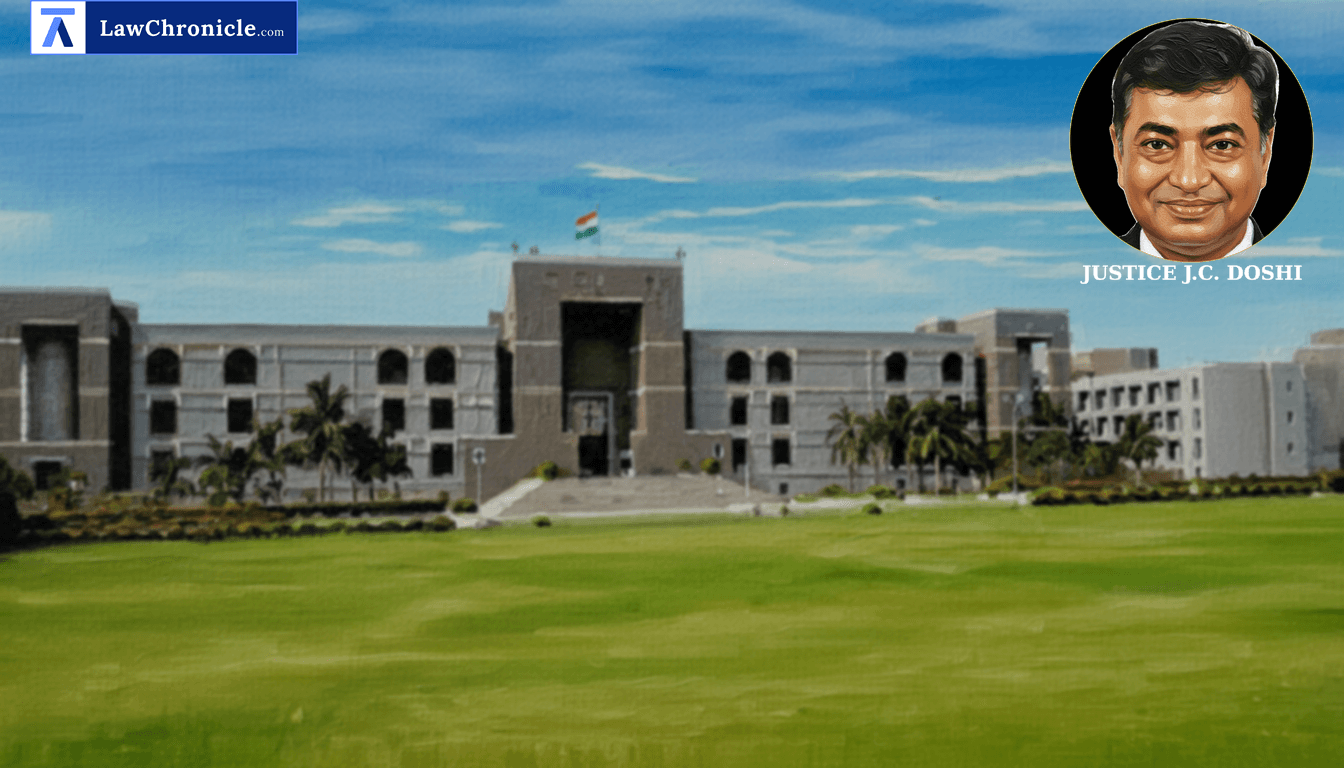
The High Court of Gujarat has redefined the boundaries of 'just compensation' by ruling that a manual labourer’s functional disability must be assessed at 100% if an injury permanently debars them from their primary trade, regardless of lower physical impairment percentages.
Justice J. C. Doshi, presiding over the appeal, addressed the critical intersection of physical injury and vocational survival, emphasizing that the law must account for the reality of manual vocations where the loss of a limb renders a worker 'deadwood' in the eyes of the labour market.
Key Takeaways
Primacy of Functional Disability
Economic loss must be calculated based on the victim's specific vocation rather than a mechanical application of medical disability percentages.
Manual Labour Standard
For professions requiring continuous physical exertion, such as cleaning or driving heavy vehicles, the loss of a leg is effectively a total loss of earning capacity.
Holistic Compensation Models
Courts must provide for ongoing costs including prosthetic maintenance and attendant charges to ensure truly fair restitution.
Judicial Scrutiny of Functional vs. Physical Disability
The Court observed that while medical evidence might suggest a partial physical impairment, the legal determination of 'functional disability' is a broader inquiry. Relying on the precedent set in Mahadevbhai Samtabhai Prajapati Vs. Ayeshaben Ibrahimbhai Manasiya and others and the principles laid down in M.Paramesh Versus Vrl Logistics Ltd. ( "2026 INSC 655": 2026 CaseBase(SC) 612), the Court noted that a heavy vehicle cleaner or second driver cannot perform his primary vocation without a functional leg.
The Court, in its reasoning, observed: "It is a settled position of law that 'functional disability' must be evaluated with reference to the specific nature of the work performed by the victim prior to the accident. Where an injury renders a workman completely incapable of performing the sole work he was trained for, the loss of earning capacity must be treated as 100%, even if the physical impairment value in the medical schedule is lower."
Furthermore, the Bench highlighted the necessity of incorporating future prospects and non-pecuniary damages, including the costs for a prosthetic limb, to meet the ends of justice. The Court noted that the previous award by the Motor Accident Claims Tribunal, Vyara, failed to account for these critical elements under the Motor Vehicles Act, 1988.
The Court's Directions
The Court has the following directions:
"13.2 The Insurance Company is directed to deposit the enhanced amount Rs.13,32,920/- with 9% p.a. interest from the date of claim petition till its realization before the concerned Tribunal, within a period of 08 weeks from the date of receipt of this order.
13.3 The Respondents / Insurance Companies are held jointly and severally liable to pay the entire awarded amount to the Claimant.
13.4 The claimant is not entitled for interest on enhanced amount of compensation for delayed period of 427 days.
13.5 Rest of the direction issued by the learned Tribunal remained unchanged.
13.6 The Tribunal shall disburse the entire awarded amount lying in the FDR and/or with the Tribunal, with accrued interest thereon, if any, to the claimant, by account payee cheque / NEFT / RTGS, after proper verification and after following due procedure.
13.7 While making the payment, the Tribunal shall deduct the courts fees, if not paid, in accordance with rules/law."
Ratio
In motor accident claims involving manual laborers, where a permanent disability (such as amputation) prevents the victim from performing the specific physical tasks required by their vocation, the functional disability for calculating loss of future earning capacity must be assessed at 100% to ensure just and fair compensation.
Background
The dispute originated from an accident on December 16, 2011, when the appellant, working as a labourer, was travelling on a tractor-trailer loaded with bamboo. The hook of the trailer broke, causing the vehicle to turn turtle. The appellant sustained grievous injuries resulting in the amputation of his left foot below the knee.
The Motor Accident Claims Tribunal originally granted Rs.4,74,900/- with 8% interest, treating the disability as 60%. The appellant challenged this in the High Court, seeking enhancement on the grounds that he was now unfit for manual labour. The High Court, applying the standard multiplier method and referencing Raj Kumar vs. Ajay Kumar and Another ( "(2011) 1 SCC 343": 2010 CaseBase(SC) 368), enhanced the total compensation to Rs.18,07,820/-, resulting in an additional award of Rs.13,32,920/-.
Case Details:
Case No.: R/FIRST APPEAL NO. 3595 of 2025
Neutral Citation: 2026:GUJHC:66080
Case Title: Ajitbhai @ Nartambhai Kachhiyabhai Chaudhari Versus Champakbhai Maghabhai Chaudhari (Decd) & Ors.
Appearances:
For the Petitioner(s): Mr.Hiren M Modi(3732)
For the Respondent(s): Masumi V Nanavaty(9321), Mr Vibhuti Nanavati(513)
Source: 2026 CaseBase(GUJ) 31083
Similar Articles
 Breaking News


