


Amputation Renders Mechanical Engineer 'Deadwood': Gujarat HC Awards 100% Functional Disability
 Copy Link
 Share
 Save
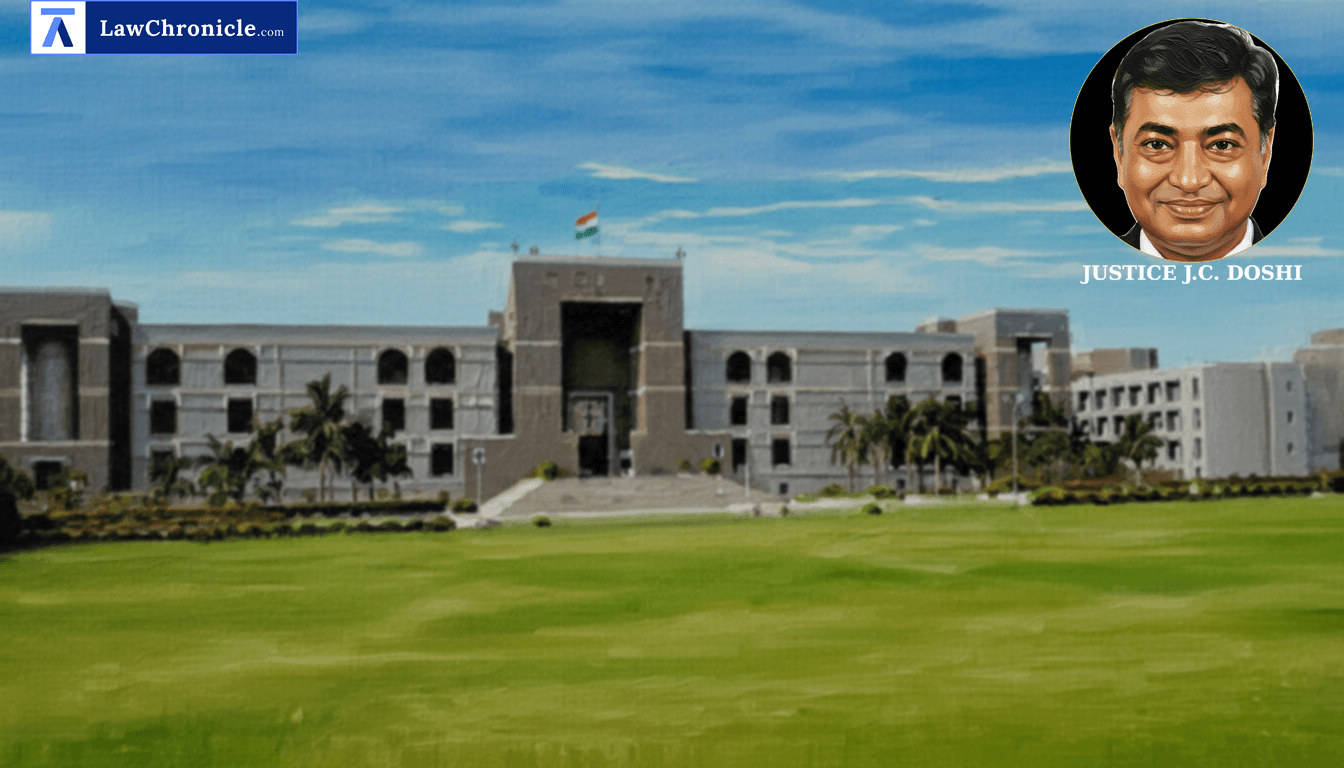
The Gujarat High Court has redefined the threshold for 'total' functional disability in motor accident claims, ruling that the amputation of a limb constitutes a 100% loss of earning capacity for professionals whose avocations demand continuous physical agility. This decisive verdict mandates that insurance payouts must account for the complete destruction of a victim's professional utility, moving beyond mere physical impairment percentages to ensure 'just' compensation for life-altering trauma.
Justice J. C. Doshi presided over the First Appeal preferred by a 28-year-old mechanical engineer seeking enhancement of the compensation awarded by the Motor Accident Claims Tribunal, Ahmedabad. The appellant challenged the original award on the grounds that it failed to adequately address the permanent partial disability caused by the amputation of his leg in a 2006 road accident.
Key Takeaways
Functional Over Physical Disability
Courts must look beyond medical disability certificates to assess how an injury specifically impacts a claimant's unique profession and ability to earn.
Mechanical Engineering as Physical Avocation
Since the role of a mechanical engineer requires continuous support of both legs, an amputation effectively renders the professional 'deadwood' in their field.
Mandatory Future Prospects
Even in cases of permanent disability, the inclusion of future prospects is an integral component of 'just and fair' compensation under the Motor Vehicles Act, 1988.
Prosthetic Costs as Restorative Justice
Compensation must include tangible expenses for prosthetic limbs to restore the victim as close to their pre-accident state as possible.
Judicial Rationale on Functional Disability
The Court observed that the Tribunal erred in its mechanical application of disability figures. The bench emphasized that for a mechanical engineer, the loss of a leg is not just a partial physical impairment but a total professional blockade. Drawing from the principles laid down in M.Paramesh Versus Vrl Logistics Ltd. ( "2026 INSC 655": 2026 CaseBase(SC) 612), the Court highlighted the necessity of distinguishing between physical and functional disability.
The Court, in its reasoning, observed: "The work of a mechanical engineer is essentially a physical and manual avocation requiring continuous use and support of both legs. The material on record further reveals that on account of the injuries suffered in the accident, the appellant underwent amputation of his leg. Therefore, it is a case of 100% injury."
Furthermore, the Court noted that the concept of 'just' compensation is seminal to the Motor Vehicles Act, 1988. Referring to V.Pathmavathi Versus Bharthi Axa General Insurance Co.Ltd. ( "AIR 2026 SC 840": 2026 CaseBase(SC) 115), the Court corrected the omission of 'loss of future prospects' in the original award, asserting that money, while unable to renew a battered physical frame, must be liberal enough to procure tangible support for the victim.
Specific Directions Issued by the Court
The Court has the following directions:
"8.1 The present appeal is partly allowed.
8.2 The Insurance Company is directed to deposit the enhanced amount Rs.10,85,931/- with 7.5% p.a. interest from the date of claim petition till its realization before the concerned Tribunal, within a period of 12 weeks from the date of receipt of this order.
8.3 Rest of the directions issued in the impugned judgment and award shall remain unaltered.
8.4 The Tribunal shall disburse the entire awarded amount lying in the FDR and/or with the Tribunal, with accrued interest thereon, if any, to the claimant, by account payee cheque / NEFT / RTGS, after proper verification and after following due procedure.
8.5 While making the payment, the Tribunal shall deduct the courts fees, if not paid, in accordance with rules/law."
Ratio
In motor accident claims, the assessment of compensation for permanent disability must be based on 'functional disability' relative to the claimant's specific occupation. If an injury prevents a person from performing the essential manual or physical duties of their profession, the functional disability must be assessed at 100%, regardless of the medical percentage, to ensure the compensation is just, fair, and equitable.
Background
The dispute originated from an accident on July 19, 2006, when the appellant's motorcycle collided with a truck near Hotel Annapurna in Ahmedabad. The appellant, then 28, suffered severe injuries leading to the amputation of his leg. He approached the Motor Accident Claims Tribunal seeking compensation under Section 166 of the Motor Vehicles Act, 1988. The Tribunal had initially awarded Rs. 8,03,980/-, but the appellant contended this was on the lower side, failing to consider the full extent of his pain, suffering, and the specialized costs associated with a prosthetic leg. The High Court, after re-evaluating the evidence and professional requirements of the appellant, enhanced the total compensation to Rs. 18,89,911/-, ordering the insurance company to pay the additional amount of Rs. 10,85,931/-.
Case Details:
Case No.: R/FIRST APPEAL NO. 474 of 2013
Neutral Citation: 2026:GUJHC:62813
Case Title: Goswami Vijaygiri Mahendragiri Versus Basantsingh Sachansingh & Ors.
Appearances:
For the Petitioner(s): MR JIGAR G GADHAVI(5613)
For the Respondent(s): MR RAJ P. PATEL for MR HARNISH V DARJI(3705) for Defendant Nos. 1 and 2, MR VIBHUTI NANAVATI(513) for Defendant No. 3
Source: 2026 CaseBase(GUJ) 29389
Similar Articles

 Breaking News


