


Andhra Pradesh HC Condones 218-Day Delay Due to Cyclone Relief and Bureaucratic Hurdles
 Copy Link
 Share
 Save
Administrative exigencies and natural disasters serve as valid grounds for condoning delay in government appeals, prioritizing substantial justice over technical timelines. The Andhra Pradesh High Court has underscored that while bureaucratic delays are common, the impact of cyclones and administrative bifurcation provides a 'sufficient cause' to allow the State to pursue its legal remedies despite significant procedural lapses.
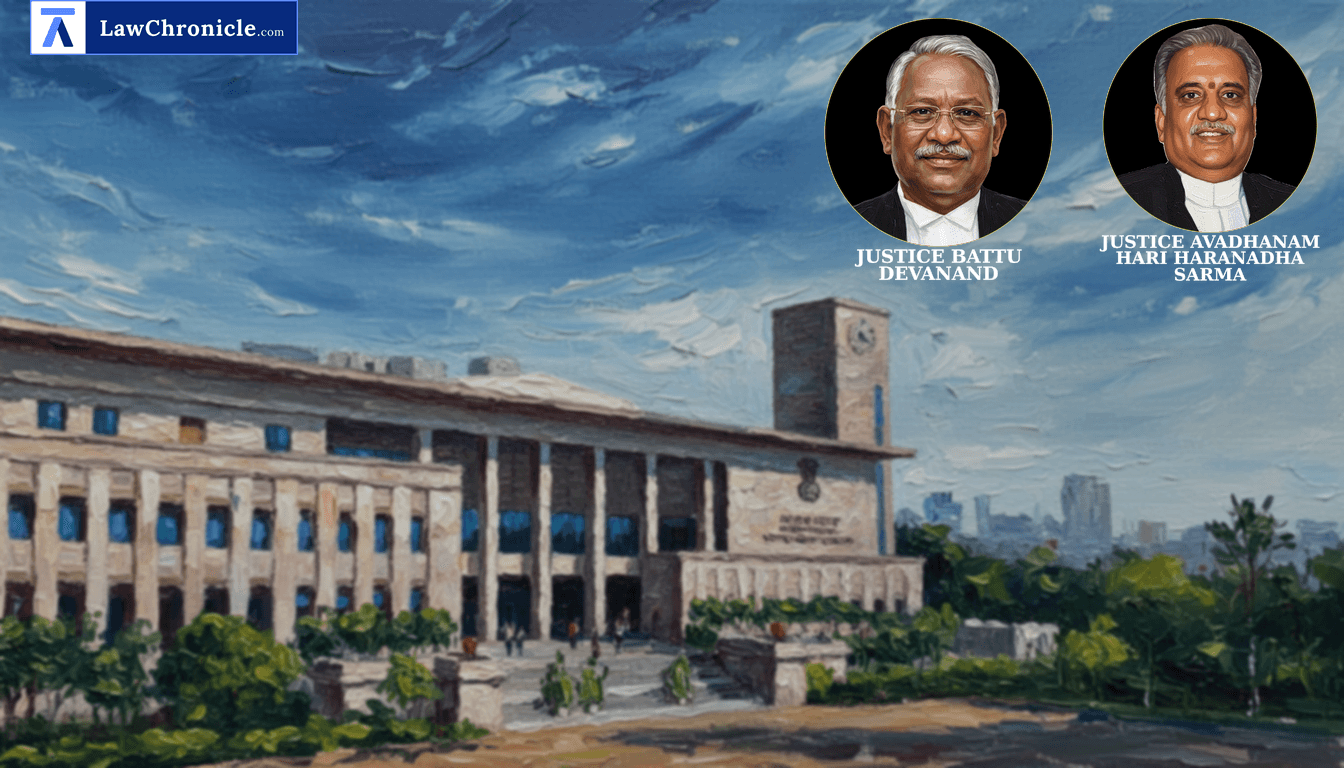
A bench comprising Justice Ravi Nath Tilhari and Justice Alapati Giridhar heard the application filed by the State of Andhra Pradesh seeking to condone a 218-day delay in filing writ appeals against a single-judge order regarding land acquisition compensation. The underlying dispute involved directions to pay compensation under the RFCTLAPR Act, 2013 by treating certain petitioners as freeholders of land.
Key Takeaways
Administrative Burden as Reasonable Excuse
Public officials managing relief operations during natural disasters like cyclones are granted judicial leniency regarding procedural timelines.
Substantial Justice Over Formality
Courts will prioritize the merits of a case and the prevention of loss to the state exchequer over minor procedural irregularities or inconsistencies in delay explanations.
Accountability Measures
While condoning delay, the court noted that administrative accountability, such as issuing charge memos to negligent officers, supports the genuineness of the State's explanation.
Court Observations on 'Sufficient Cause'
The Court, in its reasoning, observed: "The bifurcation of Sullurupet divisions and preparing for relief measures for cyclone works, involve huge work. Further, during cyclones, it requires attention and coordination of various departments for preparedness, evacuation of people from low-lying areas and post-cyclone relief and distribution of essential commodities etc apart from their regular work. The Appellants also explained for the delay in detail in 114 columns."
The Bench further noted that when the State is the applicant, the court must account for "impersonal machinery" and bureaucratic methodologies. Relying on Sheo Raj Singh (deceased) through legal representatives and others Vs. Union of India and Another, the Court acknowledged that file-pushing and note-making often lead to collective delays that should not necessarily bar a community cause. Furthermore, the Court cited G. Ramegowdas, Major and Others Vs. Special Land Acquisition Officer, Bangalore to reiterate that courts should have regard for normal procedural delays inherent in government actions.
The Court has following directions:
"IA is allowed with costs of Rs.15,000/- payable to the Respondents. As a sequel thereto, miscellaneous petitions, if any pending, shall stand closed."
Ratio
An application under Section 5 of the Limitation Act, 1963 must be examined based on the explanation offered as a whole. The exercise of judicial discretion depends upon the sufficiency and acceptability of the cause shown, where the length of delay is secondary to the advancement of substantial justice, especially when administrative exigencies like natural disasters and departmental bifurcations are present.
Background
The State of Andhra Pradesh sought to appeal a common order dated June 19, 2025, which directed them to compensate landholders under the RFCTLAPR Act, 2013. The Revenue Divisional Officer (RDO) of Sullurpet argued that the delay of 218 days was involuntary, primarily caused by the bifurcation of the Sullurpet division and the impact of two successive cyclones, 'Montha' and 'Seyanar', in late 2025. These events forced officials to prioritize evacuation and relief over legal filings.
The respondents contested the application, alleging that the State was merely trying to bypass liability in a pending contempt case. They cited Pathapati Subba Reddy (L.A) Vs. Special Deputy Collector (LA) and Majji Sannemma Alias Sanyasirao Vs. Reddy Sridevi and Others ( "(2021) 18 SCC 384": 2021 CaseBase(SC) 26), arguing that the State lacked due diligence and failed to provide a sufficient explanation for the time gaps. However, the High Court distinguished these precedents, noting that in the present case, the State had satisfactorily detailed the administrative hurdles through a 114-column explanation. The court ultimately allowed the application, permitting the State to file its appeal subject to the payment of costs.
Case Details:
Case No.: I.A.No.1 of 2026 in W.A.Nos.116, 117 & 124 of 2026
Neutral Citation: 2026:APHC:43755
Case Title: THE STATE OF AP vs T GOPANNA
Source: 2026 CaseBase(AP) 17827
Similar Articles


 Breaking News


