


Government Departments Cannot Claim Immunity From Limitation Act on Grounds of Bureaucratic Red-Tape: Andhra Pradesh HC
 Copy Link
 Share
 Save
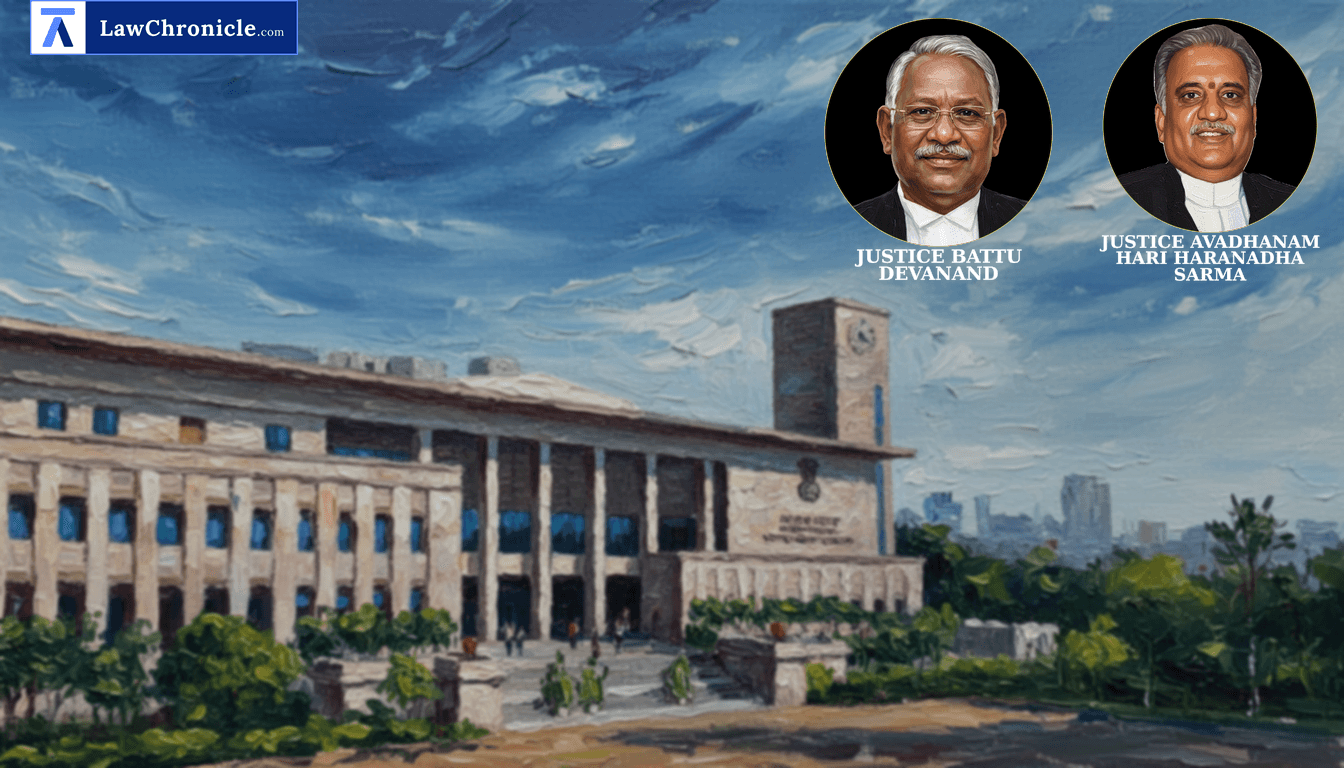
The High Court of Andhra Pradesh has slammed the door on administrative lethargy, ruling that government instrumentalities cannot bypass the Limitation Act, 1963 by citing internal procedural delays or changes in executive leadership. In a stern rebuke to the Devasthanam authorities, the court emphasized that the law of limitation binds every litigant equally, and judicial discretion for condoning delay is an exception reserved for bona fide diligence rather than a remedy for systemic negligence.
A bench comprising Justice Battu Devanand and Justice A. Hari Haranadha Sarma heard the application filed by Sri Durga Malleswara Swamy Varla Devasthanam seeking to condone a massive delay of 892 days in filing a writ appeal. The underlying dispute involved a challenge to a Single Judge's order that had directed the regularization and extension of time-scale benefits to an employee under the Code of Civil Procedure, 1908.
Key Takeaways
Equality Before Limitation Law
Government bodies and private litigants are governed by the same clock; bureaucratic methodology does not grant a special license to ignore statutory timelines.
Rejection of 'Change of Guard' Excuse
The assumption of office by a new Executive Officer is not a valid legal ground to reset the limitation period for challenging historical court orders.
Condonation is Not a Right
Section 5 of the Limitation Act, 1963 requires proof of 'sufficient cause,' and courts will not exercise discretion to reward 'total lethargy' or 'utter negligence.'
Protection of Accrued Rights
Once a limitation period expires, the successful litigant acquires a legal right to treat the decree as binding, which should not be lightly disturbed.
Judicial Scrutiny of Administrative Delay
The court scrutinized the Devasthanam's plea, which primarily attributed the 892-day delay to the current Executive Officer only taking charge in 2025 and general "administrative reasons." The bench found these justifications to be entirely insufficient and reflective of a casual approach toward judicial proceedings. Referring to the precedent in Office of Chief Post Master General and Others vs. Living Media India Ltd. and another ( "(2012) 3 SCC 563: 2012 LawSuit (SC) 124": 2012 CaseBase(SC) 176), the court noted that the 'impersonal machinery' of government cannot be an excuse in the age of modern technology.
The Court has following directions:
"In the result, the petition is dismissed. In view of the dismissal of I.A.No.01 of 2025, the Writ Appeal shall stand dismissed. There shall be no order as to costs. As a sequel, miscellaneous petitions pending, if any, shall stand closed."
Significant observations were made regarding the conduct of state agencies. The Court, in its reasoning, observed: "Condonation of delay is an exception and should not be used as an anticipated benefit for government departments. The law shelters everyone under the same light and should not be swirled for the benefit of a few. The department has miserably failed to give any acceptable and cogent reasons sufficient to condone such a huge delay."
Ratio
Government departments and public instrumentalities are under a special obligation to perform duties with diligence and cannot claim a separate, more liberal period of limitation. The expression 'sufficient cause' under Section 5 of the Limitation Act, 1963, while elastic, does not cover gross negligence, deliberate inaction, or routine bureaucratic red-tape, especially when the delay is inordinate and the explanation is concocted or lackadaisical.
Background
The case originated from a writ petition filed by a Devasthanam employee seeking regularization of services and pay scale benefits as a Record Assistant. A Single Judge had allowed the employee's petitions in 2022. Despite receiving the order copy in late 2022/early 2023, the Devasthanam failed to prefer an appeal for over two years. In the interim, the Endowment Department had even issued memos to comply with the High Court's directions, and the employee's services were reportedly regularized.
The Devasthanam eventually moved the Writ Appeal along with a condonation application (I.A. No. 1 of 2025), claiming they only realized the necessity of the appeal after a new Executive Officer took charge. The court relied on several landmark Supreme Court rulings, including The State of Madhya Pradesh and others vs. Bherulal ( "2020 SCC OnLine SC 849": 2020 CaseBase(SC) 644) and Esha Bhattacharjee v. Raghunathpur Nafar Academy ( "(2013) 12 SCC 649": 2013 CaseBase(SC) 742), to conclude that 'sufficient cause' was missing. The bench highlighted that the State must pay for the wastage of judicial time and that such costs should ideally be recovered from the officers responsible for the 'quietus' in the files.
Case Details:
Case No.: I.A. NO: 1 OF 2025 In/And WRIT APPEAL NO: 440 OF 2025
Neutral Citation: 2026:APHC:37485
Case Title: Sri Durga Malleswara Swamy Varla Devasthanam v. P Sreenivasulu and Others
Appearances:
For the Petitioner(s): GP FOR ENDOWMENTS
For the Respondent(s): GP FOR SERVICES II, D V SASIDHAR
Source: 2026 CaseBase(AP) 15661
Similar Articles
 Breaking News


