


State Lethargy No Ground For Condoning Delay: Orissa High Court
 Copy Link
 Share
 Save
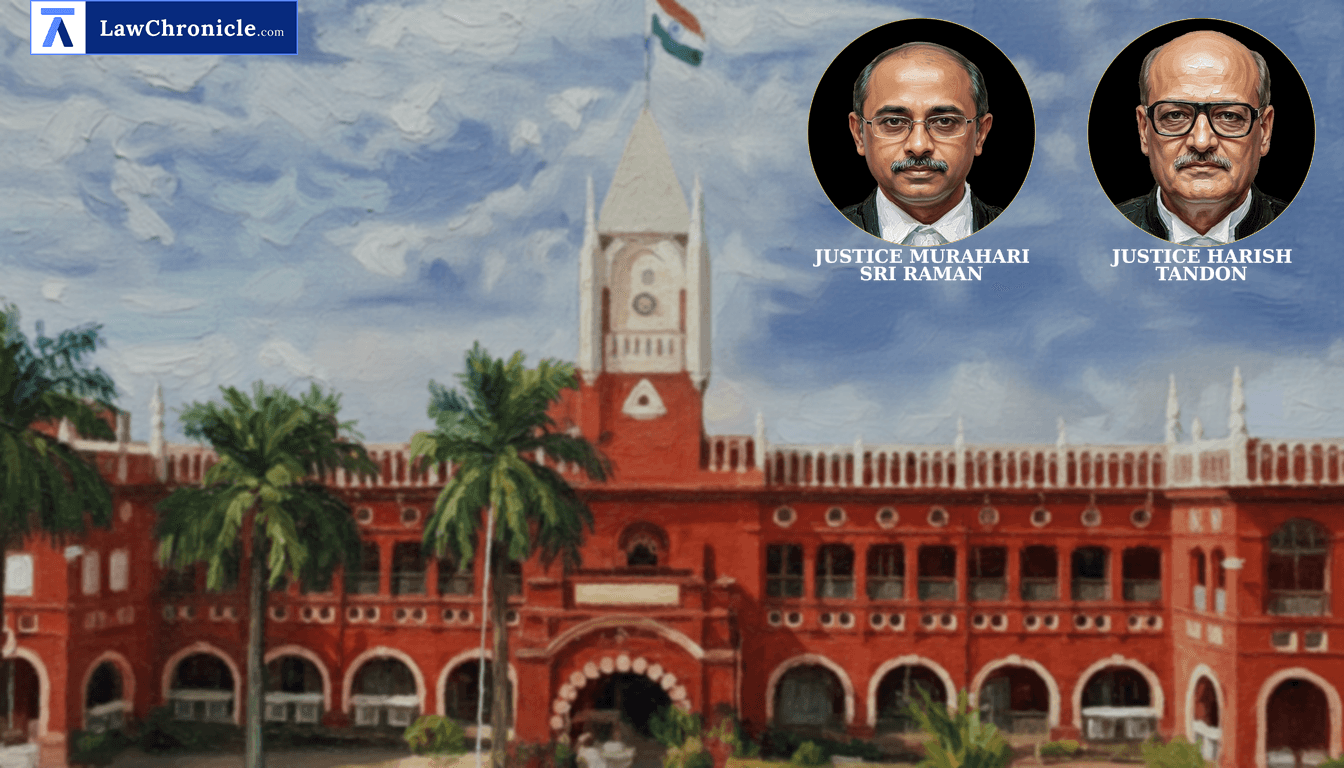
The Orissa High Court has delivered a stern rebuke to the State government's 'lackadaisical attitude' in legal proceedings, ruling that bureaucratic red tape and internal file movement do not constitute a 'good cause' for condoning inordinate delays. In a high-stakes decision aimed at curbing administrative indolence, the Court dismissed a writ appeal filed by the State with a 303-day delay, asserting that the law of limitation applies with equal rigour to the Government as it does to private citizens.
A bench comprising Chief Justice Harish Tandon and Justice Murahari Sri Raman heard the matter. The State of Odisha had challenged a Single Judge's order which directed the regularisation and payment of retiral dues to a former employee who had served for over four decades. The High Court found the State's explanation for the nearly ten-month delay to be 'vague' and 'evasive', especially considering the appeal was filed only after contempt proceedings were initiated against the officials.
Court Rebukes Administrative Lethargy and Indolence
The Court observed that the explanation offered by the State was nothing more than an 'excuse' rather than a valid 'explanation'. It highlighted that the State machinery often resorts to such delays to thwart the execution of favourable orders passed in favour of private litigants. Drawing from various precedents, the Court noted that while some latitude is permissible for governmental functioning, it cannot become a 'surrogate for State laxity'.
The Court has the following directions:
"I.A. No.160 of 2026, is dismissed. Consequently, the writ appeal bearing W.A. No.99 of 2026 stands dismissed with cost assessed at Rs.1,000,000/- to be deposited with the Odisha State Legal Services Authority within a week from date. In the event of such deposit, the said amount shall be kept in the account earmarked for Juvenile."
The Court, in its reasoning, observed: "This Court, therefore, comes to the irresistible conclusion that stating simply that due to movement of files delay occasioned would not suffice. It cannot thus be construed that such explanation (rather excuse) is 'sufficient cause'/'good cause' so as to warrant consideration of cause for the delay in filing writ appeal. This Court does not find the averments of the appellants in the application for condonation of delay as genuine."
Background:
The case originated from a writ petition filed by a respondent who was engaged as a 'Fitter Mechanic' on a Nominal Muster Roll basis in 1980. Despite serving for more than 41 years until his retirement in 2022, his services were not regularised, even though a junior colleague had received such benefits. A learned Single Judge, while allowing the writ petition in February 2025, had quashed the refusal and directed regularisation with retrospective effect.
The State failed to file a counter-affidavit despite repeated opportunities before the Single Judge. After the judgment, the State waited 303 days beyond the limitation period prescribed under the Limitation Act, 1963 and the Rules of the High Court of Odisha, 1948 to file the intra-court appeal. The respondent argued that the State only moved the High Court to avoid the rigours of Contempt of Courts Act, 1971. The Court relied on Pathupati Subba Reddy (died) by Lrs. Vrs. The Special Deputy Collector (LA) and Union of India Vrs. Jahangir Byramji Jeejeebhoy (D) through his legal heir to emphasize that the length of delay is a relevant factor and that 'administrative lethargy' is no ground for condonation.
Key Takeaways:
Equality Before Law
All litigants, including the State, are bound by the same limitation periods, and the State cannot claim a separate or extended period of limitation without showing sufficient cause.
Excuses vs. Explanations
Generic references to 'file pushing' or 'decision-making processes' are classified by courts as excuses rather than legitimate legal explanations for delay.
Deterrence Against Non-Compliance
By imposing a heavy cost of ₹1 lakh, the High Court signalled that it will no longer tolerate the practice of filing appeals only as a defensive tactic against contempt proceedings.
Ratio Decidendi:
The rule of law established is that administrative delay incidental to the decision-making process within the Government does not inherently constitute 'sufficient cause' or 'good cause' under the rules of limitation. Discretion to condone delay must be exercised judiciously, and where there is evidence of gross negligence, lack of bona fides, or deliberate inaction particularly when used to frustrate the fruits of a decree the court is obligated to dismiss the time-barred application to maintain the finality of litigation.
Case Details:
Case No.: W.A. No.99 of 2026 & I.A. No.160 of 2026
Case Title: State of Odisha & Ors. v. Ratnakar Swain
Appearances:
For the Petitioner(s): Mr. Debashis Tripathy, Additional Government Advocate
For the Respondent(s): M/s. Jajati Keshari Khuntia, Himansu Sekhar Deo, Braja Kishore Mohanty, Sai Suman, Advocates
Source: 2026 CaseBase(ORI) 6
Similar Articles
 Breaking News


