


Arbitrator's Personal Expertise Cannot Replace Evidence For Awarding Damages: Delhi HC
 Copy Link
 Share
 Save
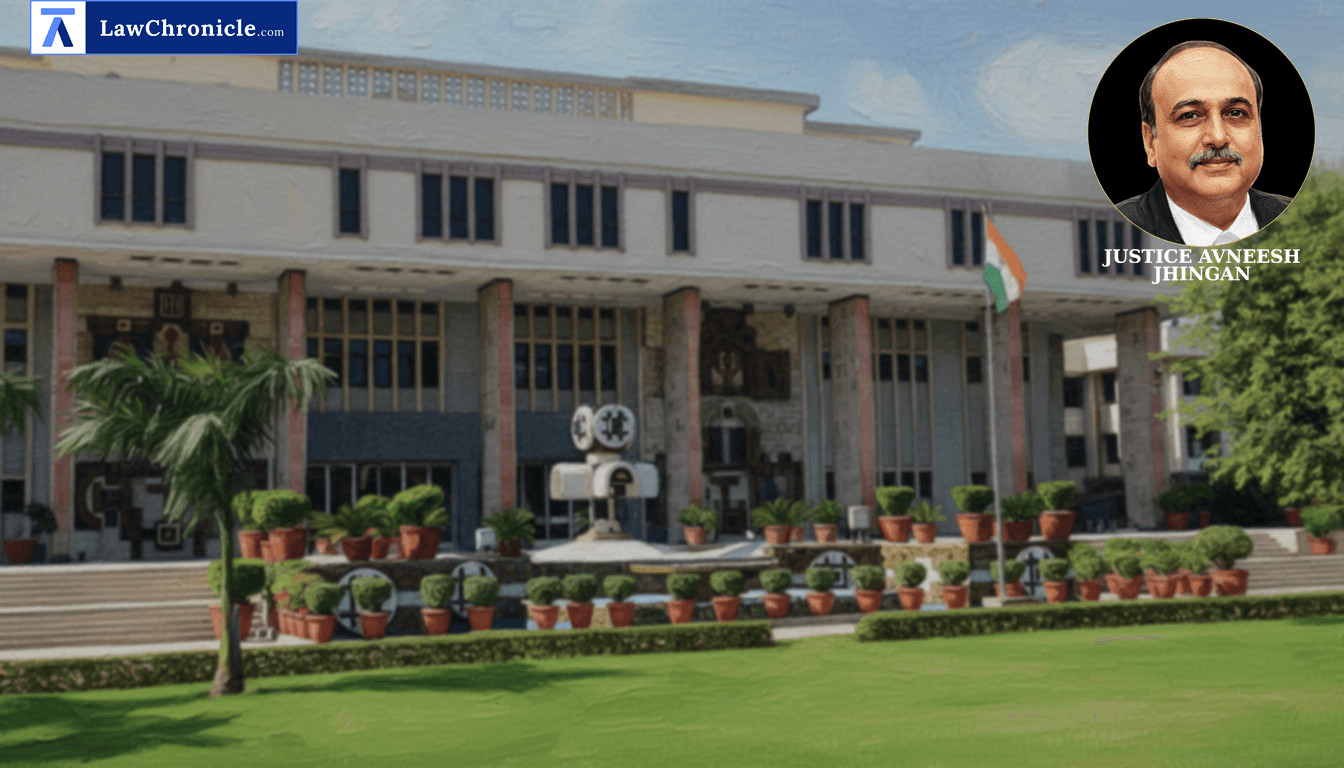
The Delhi High Court has delivered a stern reminder that arbitral tribunals cannot substitute the legal requirement of cogent evidence with personal experience or trade guesswork when awarding damages. In a significant blow to the finality of awards lacking evidentiary backing, the Court set aside a multimillion-rupee construction award, ruling that a contractor's failure to prove actual loss under the Indian Contract Act, 1872 cannot be cured by a judge’s subjective expertise.
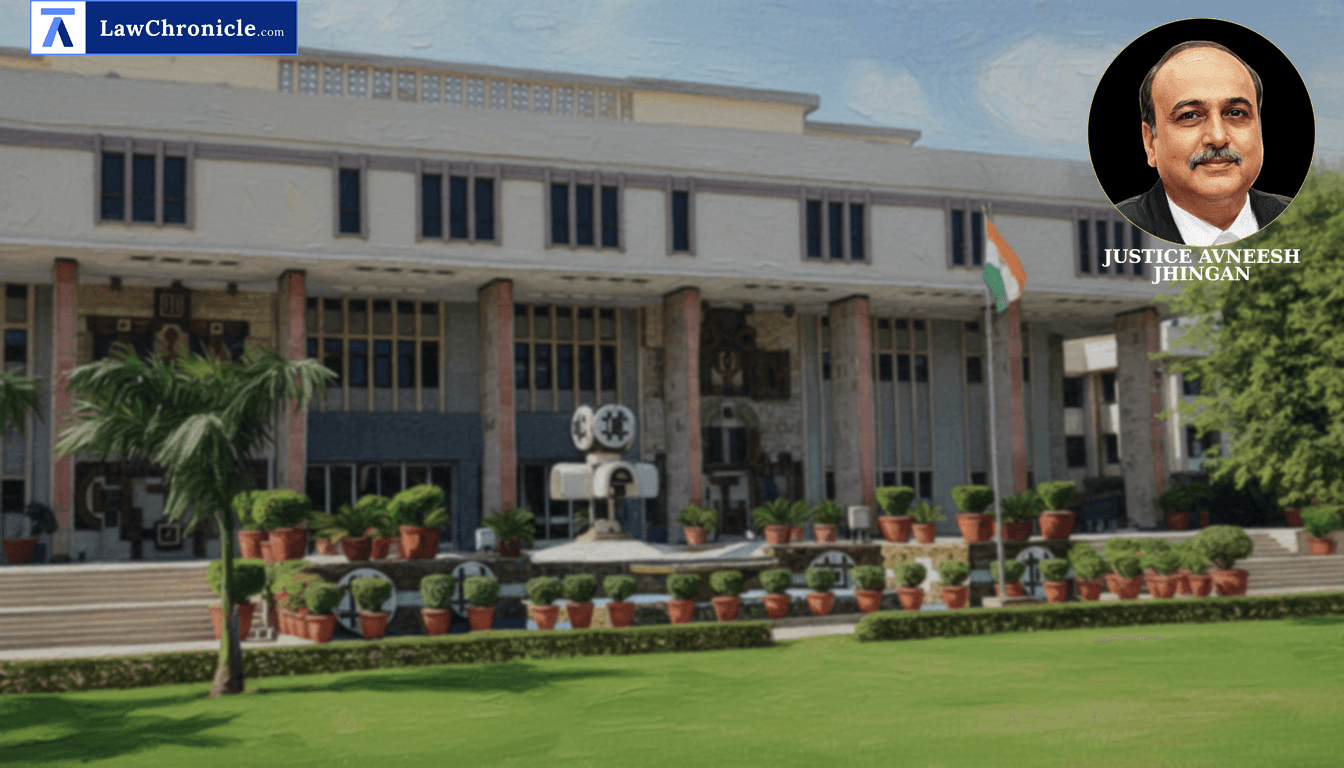
In a challenge brought by Eco Green Buildtech Pvt Ltd, a Single Judge Bench of Justice Avneesh Jhingan examined whether an arbitral tribunal could validly award claims for idling resources, overheads, and loss of profits based on personal knowledge and trade practices rather than documented proof. The proceedings originated from a contract for the construction of 'Sikka Kamya Greens' in Greater Noida, which was marked by delays and a contentious Memorandum of Understanding.
Key Takeaways
Evidence Over Expertise
Arbitrators are prohibited from using their personal professional experience to quantify damages where the claimant has failed to discharge the burden of proving actual loss or injury.
Confidentiality of Settlement Talks
Information or admissions made during unsuccessful conciliation proceedings cannot be relied upon or cited as evidence in subsequent arbitral adjudication.
Statutory Compliance for Loss Claims
To succeed in claims for loss of profitability, litigants must strictly satisfy the four-pronged test, including the provision of credible evidence to substantiate the specific loss suffered.
Procedural Fairness in Expert Reports
A tribunal's failure to provide parties with an opportunity to object to a Local Commissioner's report constitutes a violation of Section 18 of the Arbitration and Conciliation Act, 1996.
Confidentiality of Conciliation and the Local Commissioner's Report
The Court took serious exception to the tribunal's reliance on observations recorded during conciliation meetings. It was noted that during the conciliation phase, the petitioner had allegedly shown satisfaction with a Local Commissioner's report. However, once conciliation failed, the tribunal used those 'conciliatory admissions' to adjudicate the claim.
Referring to Moti Ram v. Ashok Kumar ( "(2011) 1 SCC 466": 2010 CaseBase(SC) 898) and Perry Kansagra v. Smriti Madan Kansagra ( "(2019) 20 SCC 753": 2019 CaseBase(SC) 2617), the High Court emphasized that mediation and conciliation are founded on confidentiality. The Court observed: "If the happenings in the mediation proceedings are disclosed, it will destroy the confidentiality of the mediation process... Such statements which are essentially made in order to see if there could be a settlement, ought not to be used against the maker of such statements in case at a later point the attempts at mediation completely fail."
The Requirement of Proof Under Contract Law
The Bench found that the tribunal had awarded over Rs. 2.84 Crores for additional overheads and substantial sums for idling machinery despite the respondent failing to produce vouchers, rent receipts, or staff deployment records. The tribunal had justified these awards by citing its "long experience in this field" and CPWD circulars that were never confronted to the petitioner.
The Court, in its reasoning, observed: "The expertise of the tribunal cannot substitute the onus to be discharged by the respondent to prove the actual loss or damage suffered. For awarding of damages under Section 73 of the Indian Contract Act, 1872 the twin conditions of the breach of terms of the contract and consequential actual loss or damage suffered are mandatory to be established." The Court cited Kailash Nath Associates v. DDA ( "(2015) 4 SCC 136": 2015 CaseBase(SC) 937) and Fateh Chand v. Balkishan Dass ( "1963 SCC OnLine SC 49": 1963 CaseBase(SC) 9) to reinforce that Section 74 of the Indian Contract Act, 1872 does not dispense with the proof of loss.
Strict View on Hudson Formula
Regarding the claim for loss of profit, the tribunal had applied the Hudson Formula based on "trade usage." The High Court, relying on the Supreme Court's decision in Unibros v. All India Radio, clarified that while such formulas are accepted in trade, they cannot be applied in a vacuum without evidence of lost opportunities. The Court noted: "The personal knowledge and expertise of the tribunal cannot be the basis for awarding of the claim and it shall not discharge the onus of the respondent to prove the claim for loss."
The Court has the following directions:
"In view of the above discussion the petition is allowed, the impugned award and the additional award are set aside. Pending application is also disposed of."
Ratio
An arbitral award is patently illegal if it quantifies damages for idling resources, additional overheads, or loss of profits based solely on the arbitrator's personal experience, trade usage, or unproven circulars, in the absence of cogent evidence of actual loss. Furthermore, any reliance on statements made during confidential conciliation proceedings for the purpose of final adjudication violates the principles of natural justice and statutory confidentiality.
Background
The dispute stemmed from a 2016 contract worth Rs. 53.73 Crores for a construction project in Greater Noida. The respondent, Vikartan Infrastructure Pvt Ltd, alleged that Eco Green Buildtech caused delays by failing to release payments and supply materials. Although an MOU was signed in 2018 to settle accounts, the respondent later invoked arbitration, claiming over Rs. 15 Crores. The Arbitral Tribunal upheld the respondent's claims on several heads, largely rejecting the petitioner's counter-claims. The petitioner challenged the award under Section 34 of the Arbitration and Conciliation Act, 1996, arguing that the mandate had expired and that the damages were awarded without evidence. While the Court found the challenge to the mandate factually incorrect, it agreed that the methodology of awarding damages was legally unsustainable.
Case Details:
Case No.: O.M.P. (COMM) 293/2023 & I.A. 14489/2023
Case Title: Eco Green Buildtech Pvt Ltd V. Vikartan Infrastructure Pvt Ltd
Appearances:
For the Petitioner(s): Mr. S K Maniktala, Mr. Udit Maniktala, Mr. Akshay Sharma, Mr. Sanchit Jain, Mr. Vikas Rana, Mr. Shikhar Prakash & Mr. Mohit Sharma, Advs.
For the Respondent(s): Mr. Somnath Bharti, Sr. Adv. with Mr. Bhupesh Narula, Ms. Rinku Narula, Mr. Anurag Ekka & Mr. Kanishk Taneja, Advs.
Source: 2026 CaseBase(DEL) 5691
Similar Articles
 Breaking News


