


Tribunal Is Master Of Evidence, Court Cannot Re-Appreciate Facts Under Section 34: Delhi HC
 Copy Link
 Share
 Save
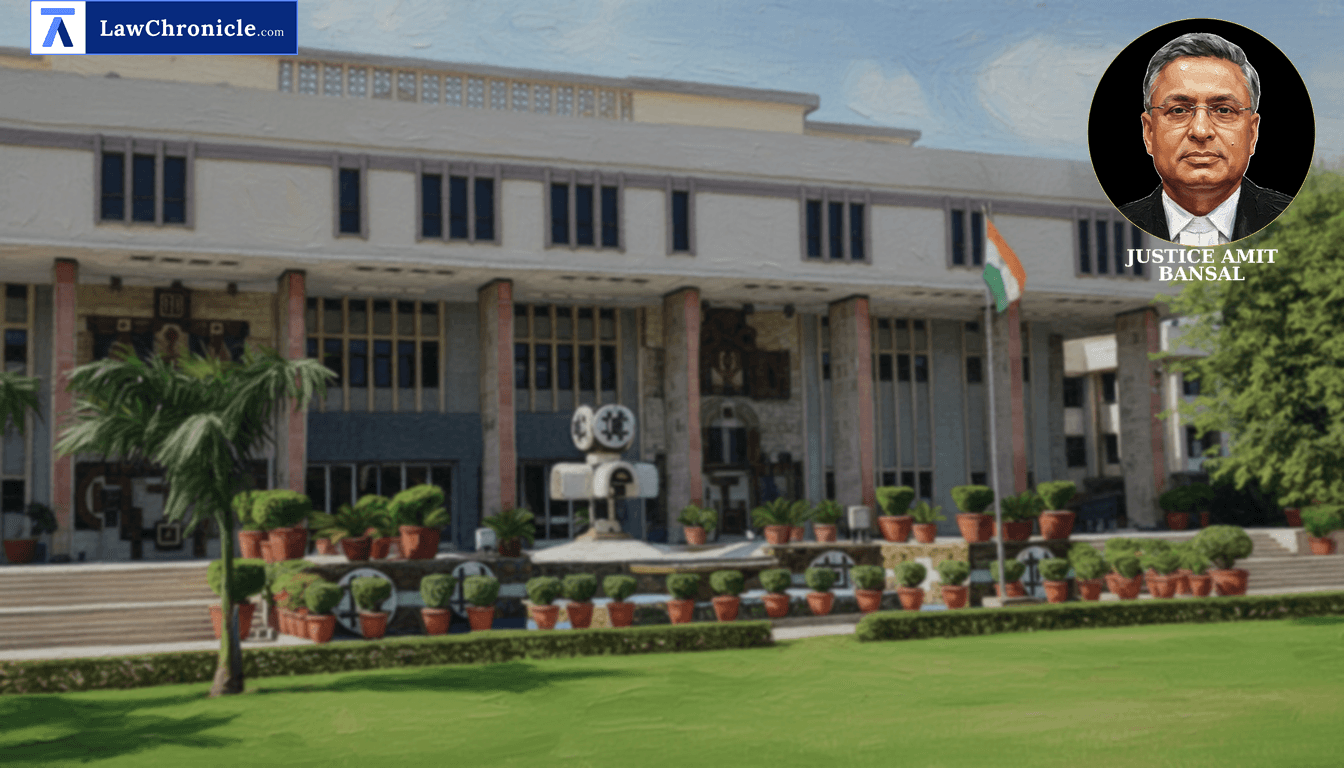
The Delhi High Court affirmed that the scope of judicial interference under Section 34 of the Arbitration and Conciliation Act, 1996 is restricted to limited grounds like patent illegality and perversity, emphasizing that an arbitral tribunal is the ultimate master of the quantity and quality of evidence. Rejecting a challenge against an award involving a hydroelectric project dispute, the Court held that a possible view taken by the arbitrator on facts must be respected and cannot be substituted by the Court's own interpretation.
Justice Amit Bansal presided over the matter, which arose from a petition filed by Madhya Bharat Power Corporation Limited (the Employer) against an arbitral award in favor of Voith Hydro Private Limited (the Contractor). The dispute pertained to two contracts for electro-mechanical works for the 96 MW Rongnichu Hydro Project in Sikkim. After the project faced suspensions, the Contractor invoked arbitration seeking compensation for engineering works, materials manufactured, and loss of profits. The Arbitral Tribunal had partially allowed the Contractor's claims, leading the Employer to seek a setting aside of the award.
Limited Scope of Judicial Interference Under Section 34
The Court reiterated that it does not sit in appeal over an arbitral award. Referring to the principles laid down in Associate Builders v. Delhi Development Authority ( "(2015) 3 SCC 49": 2014 CaseBase(SC) 661) and Ssangyong Engineering and Construction Company Limited v. National Highways Authority of India (NHAI) ( "(2019) 15 SCC 131": 2019 CaseBase(SC) 226), the Court noted that patent illegality must go to the root of the matter and cannot include mere erroneous application of law or reappreciation of evidence. The Court, in its reasoning, observed: "...a mere erroneous application of the law or wrong appreciation of evidence by itself is not a ground to set aside an award as is clear from the provisions of sub-section (2-A) of Section 34 of the 1996 Act."
Validity of Compensation for Engineering and Materials
The Employer contested the award of 6% engineering costs, arguing it was excessive and duplicated in other claims. However, the Court found that the Tribunal had relied on expert evidence and the unique nature of hydro projects. Citing McDermott International Inc. v. Burn Standard Co. Ltd. ( "(2006) 11 SCC 181": 2006 CaseBase(SC) 687), the Court noted that the method to compute damages falls squarely within the domain of the Arbitral Tribunal. Similarly, regarding site expenses, the Court refused to interfere with the Tribunal's reliance on ERP records, noting that such an objection would require impermissible reappreciation of evidence, consistent with NTPC Limited v. Voith Hydro JV.
Court Rationale on Loss of Profits and Costs
On the issue of loss of profit, the Court upheld the Tribunal's decision to award 6% on the unexecuted portion of the contract. The Court noted that since the project was stalled and awarded to a third party, the contract was effectively terminated. The Court also affirmed the Tribunal's discretion under Section 31A of the Arbitration and Conciliation Act, 1996 regarding the allocation of arbitration costs. The Court concluded that no grounds for patent illegality or perversity were established under the standards reaffirmed in OPG Power Generation Private Limited v. Enexio Power Cooling Solutions India Private Limited ( "(2025) 2 SCC 417": 2024 CaseBase(SC) 550).
Background:
The dispute began after Madhya Bharat entered into contracts with Voith Hydro in 2011 for the Rongnichu Hydro Project. The contracts were subsequently suspended in 2013 and 2014 due to various project delays. Voith Hydro eventually invoked arbitration in 2017, claiming compensation for work done and losses suffered due to the prolonged suspension and eventual termination of the contract. The Arbitral Tribunal, utilizing a Joint Expert Report, awarded specific sums to Voith Hydro while rejecting Madhya Bharat's counterclaims. Madhya Bharat challenged the award in the High Court, primarily arguing that the damages were awarded without sufficient proof and that there was a duplication of claims. The High Court dismissed the petition, finding the Tribunal's reasoning to be cogent and based on available evidence.
Case Details:
Case No.: O.M.P. (COMM) 452/2019 & I.A. 14761/2019
Case Title: MADHYA BHARAT POWER CORPORATION LIMITED v. VOITH HYDRO PRIVATE LIMITED
Appearances:
For the Petitioner(s): Mr. Ratan K. Singh, Senior Advocate with Mr. Prateek Khandelwal and Mr. Anand Murthi Rao, Advocates. Mr. M. Rajshekhar, DGM (Legal).
For the Respondent(s): Mr. Raj Shekhar Rao, Senior Advocate with Mr. Omar Ahmad, Mr. Vikram Shah, Ms. Simarjeet and Mr. Ritik Kumar Rath, Advocates
Source: 2026 CaseBase(DEL) 376
Similar Articles
 Breaking News


