


High Court Upholds Tribunal's Deference to SSC Experts in CGLE 2024 Evaluation Despite Noting Systemic Lapses
 Copy Link
 Share
 Save
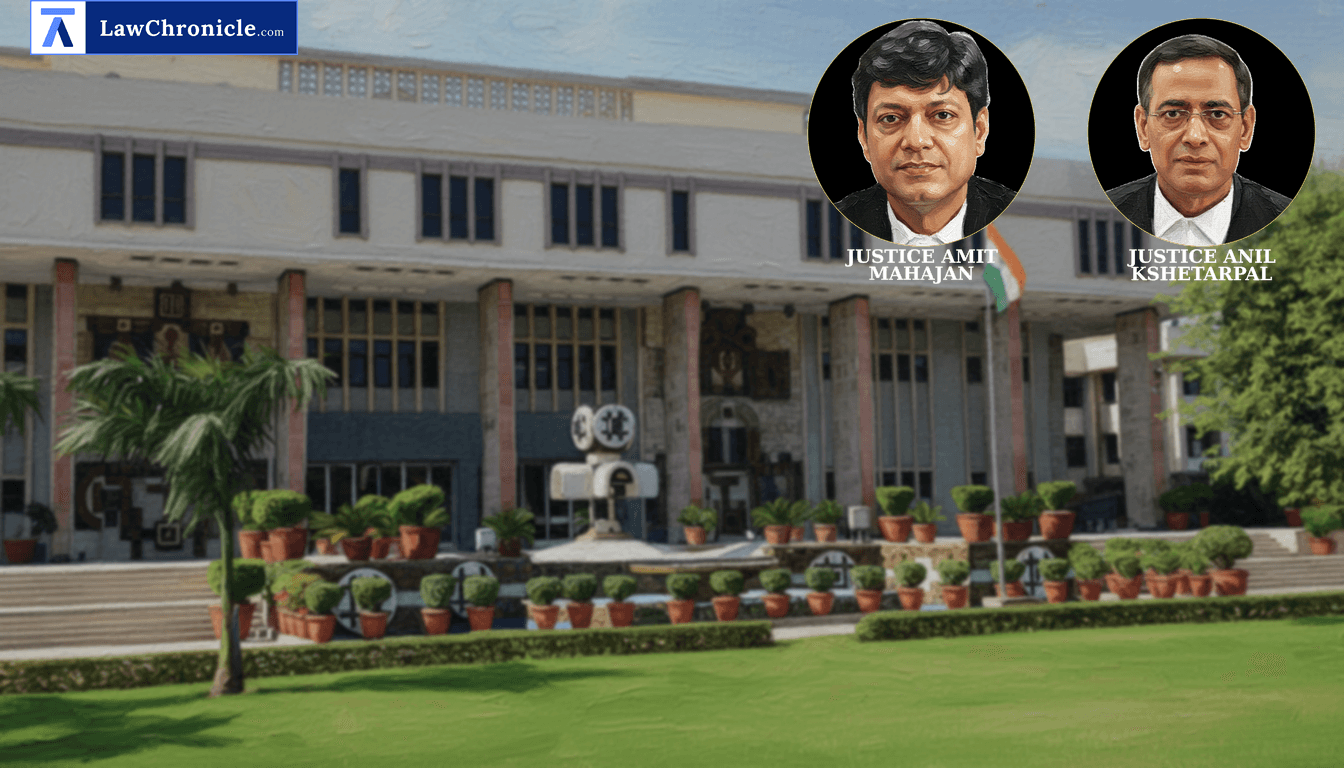
A bench of Justices Anil Ksheterpal and Amit Mahajan heard writ petitions under Articles 226 and 227 of the Constitution challenging orders of the Central Administrative Tribunal that dismissed original applications against the final results and answer keys of the Combined Graduate Level Examination (CGLE), 2024 conducted by the Staff Selection Commission (SSC). The petitions assailed the Tribunal's refusal to re-evaluate the Tier‑II answer keys and the SSC's decision to grant uniform "bonus" or grace marks in respect of multiple questions and to release the final answer key after declaration of results.
The Court upheld the impugned orders and dismissed the writ petitions, holding that judicial review in academic matters was circumscribed and that courts could not substitute their assessment for that of Subject Matter Experts (SMEs) unless there was patent illegality, arbitrariness, or manifest procedural impropriety. The Court, in its reasoning, observed: "At the outset, it is necessary to elucidate the scope of judicial review in matters of academic evaluation. It is well settled that Courts and Tribunals, in exercise of writ jurisdiction under Articles 226 and 227 of the Constitution, do not function as appellate bodies to re-assess answer keys or the merits of academic judgments made by SMEs unless the decision-making process is shown to be vitiated by patent illegality or arbitrariness." The judgment also recorded strong criticisms of the SSC’s administration, noting that "the uniform grant of grace marks in as many as twenty‑two (22) questions to all candidates, including those who had either not attempted the questions or had furnished incorrect answers, represents a serious deviation from the principles of competitive merit and procedural fairness," and that "By declaring final results prior to the publication of the final answer key, SSC effectively insulated its decision‑making from timely scrutiny, thereby presenting aspirants with a fait accompli and shielding systemic errors from challenge." Despite these observations, the Court found the corrective measures adopted by the SSC to be founded on expert opinion and not vitiated by the threshold required for judicial interference.
Background
The SSC had notified CGLE, 2024 on June 24, 2024 for approximately 17,727 vacancies. Tier‑I took place in September 2024 and Tier‑II on January 18 and 20, 2025 (with a delayed Data Entry Speed Test module on January 31, 2025). A tentative answer key for Paper‑I was published on January 21, 2025 and representations were invited. The SSC declared preliminary results on March 12, 2025 and, after post‑preferences, released the final answer key and final scores on March 18, 2025.
Under the final answer key nine questions from the January 18 session and ten from the January 20 session were declared invalid; in addition, a tabulation showed 22 questions for which grace marks were uniformly awarded to all candidates. Aggrieved candidates filed Original Applications before the Tribunal challenging the evaluation and moderation measures; the Tribunal dismissed those OAs, holding that the SMEs’ considered views warranted deference and that judicial bodies lacked the technical competence to re‑evaluate multidisciplinary answers.
Petitioners argued that judicial review was available where answer‑setting and evaluation were riddled with lacunae, that normalization and uniform marking violated the SSC’s prescribed methodology and diluted merit, and that marks should be awarded only to candidates who attempted disputed questions. They relied on precedents where courts intervened in academic evaluations in fields of the law. Respondents urged deference to SME opinion, reliance on earlier decisions confining judicial review in technical academic matters, and submitted that full marks were awarded only where ambiguity existed.
The High Court examined the scope of review, distinguishing precedents where courts exercised review in legal‑subject examinations and reiterating that multidisciplinary exams involving mathematics, science, English and general knowledge fell outside judicial expertise. The Court noted specific instances of typographical or drafting errors that reflected lack of due care but concluded that the SSC’s moderation policy had a discernible logic and was not shown to be patently illegal or arbitrary. The Court also expressed expectation that the SSC would adopt more circumspect and systematic vetting and stated that, although the conduct merited strong judicial disapproval, no directions were warranted in the present petitions. Ultimately, the impugned Tribunal orders were upheld and the writ petitions were dismissed; all pending applications stood disposed of.
Case Details: Case No.: W.P.(C) 8524/2025 & other connected matters Case Title: Devyanshu Suryavanshi & Ors. v. Staff Selection Commission & Anr. and connected matters Appearances: For the Petitioner(s): Mr. Gauhar Mirza, Mr. Aditya Bharat Manubarwala, Ms. Abiha Zaidi, Ms. Tanishka Grover, Mr. Pritam and Ms. Priyam Karma, Advocates (in W.P.(C) 8524/2025 and W.P.(C) 8525/2025); Mr. K. K. Sharma and Mr. Harshit Agarwal, Advocates (in W.P.(C) 12471/2025); Mr. Arun Kumar Singh and Mr. Dhanajaya Kumar Tyagi, Advocates (in W.P.(C) 15634/2025). For the Respondent(s): Ms. Arunima Dwivedi, CGSC, along with Ms. Himanshi Singh and Ms. Priya Khurana, Advocates (in W.P.(C) 8524/2025, W.P.(C) 12471/2025 and W.P.(C) 8525/2025); Mr. Jagdish Chandra, CGSC, along with Ms. Maanya Saxena and Mr. Siddharth Bajaj, Advocates (in W.P.(C) 10070/2025 and W.P.(C) 15634/2025).
Similar Articles
 Breaking News


