


Balance Sheet Entries Acknowledging Debt May Extend Limitation Period Under Section 18: SC
 Copy Link
 Share
 Save
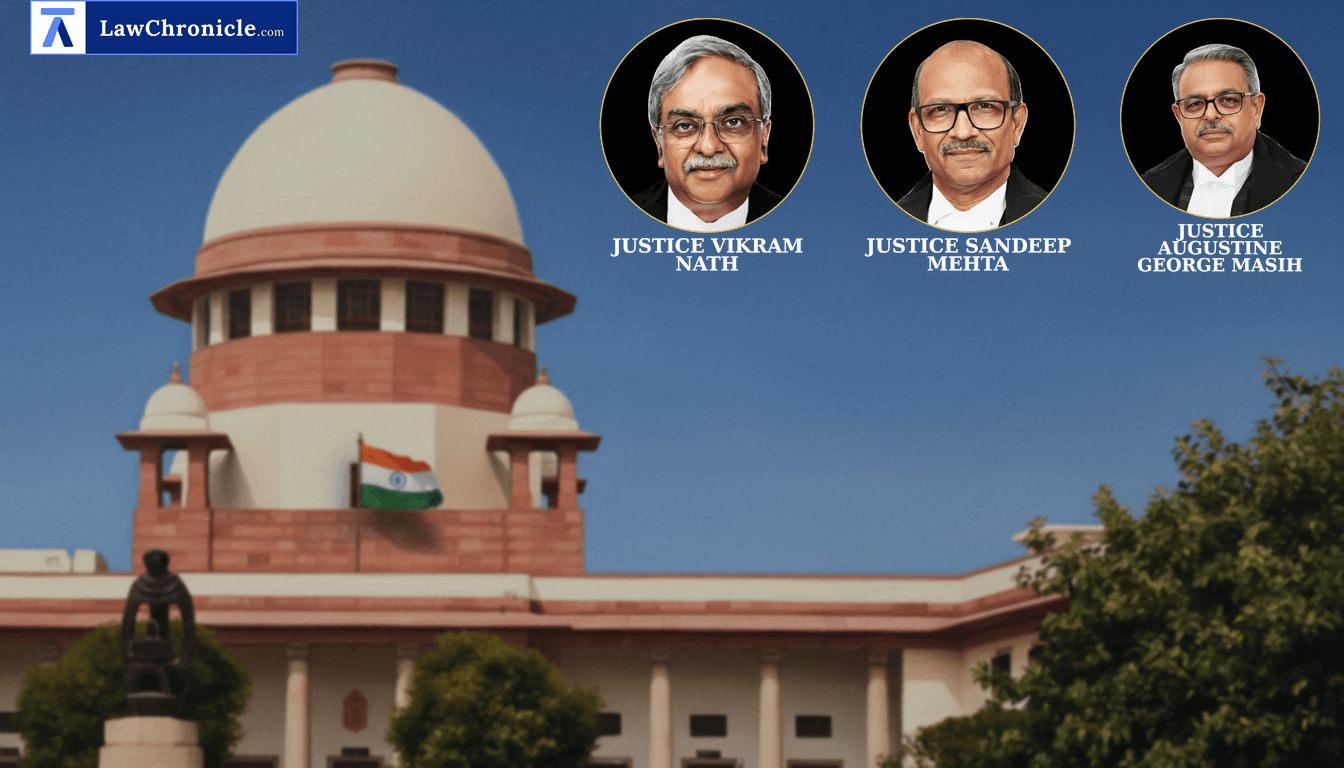
The Supreme Court has established that continuous balance sheet entries acknowledging debt renew the limitation period automatically, barring civil suits from being thrown out at the threshold under procedural rejection rules. It affirmed that courts evaluating rejection of plaints cannot hold mini-trials into evidentiary details when financial records prima facie demonstrate a subsisting jural relationship.
A bench comprising Justice Vikram Nath, Justice Augustine George Masih, and Justice Sandeep Mehta set aside a Delhi High Court order that had rejected a money recovery suit as time-barred under Order VII Rule 11 of the Code of Civil Procedure, 1908.
Key Takeaways
- Balance Sheet Acknowledgment Extends Limitation: Financial liabilities carried forward in annual accounting balance sheets serve as valid acknowledgments of debt under Section 18 of the Limitation Act, 1963.
- Automatic Renewal of Cause of Action: Every subsequent balance sheet entry reflecting outstanding liabilities grants a fresh starting point for limitation without requiring condonation of delay.
- Threshold Rejection Limits: While adjudicating Order VII Rule 11 applications under the Code of Civil Procedure, 1908, courts cannot conduct deep evidentiary inquiries or conclusively settle disputed questions of liability.
- Specific Creditor Naming Not Mandatory: Section 18 does not require a debtor to explicitly state the creditor's name in balance sheet entries, provided surrounding financial records confirm the jural relationship.
Court Observations and Directions
The Supreme Court emphasized that at the preliminary stage of Order VII Rule 11 of the Code of Civil Procedure, 1908, courts must only assess whether the plaint discloses a prima facie case. Applying Section 18 of the Limitation Act, 1963, it reiterated principles established in Asset Reconstruction Company (India) Ltd. v. Bishal Jaiswal ( "2021 INSC 254": 2021 CaseBase(SC) 432) and later followed in Axis Bank Ltd. v. Naren Sheth ( "2023 INSC 820": 2023 CaseBase(SC) 52), confirming that entries in books of account constitute written acknowledgments of debt.
The Apex Court discussed that “Section 18 of the Limitation Act does not require that an acknowledgment be made to the name of the creditor specifically or be drawn up using a fixed format, so long as it acknowledges a subsisting liability. The only requirement is that the acknowledgment, when read in conjunction with the other circumstances surrounding the transaction, must indicate a subsisting jural relationship.”
Ratio
Under Section 18 of the Limitation Act, 1963, balance sheet entries reflecting carrying-forward liabilities constitute valid written acknowledgments of subsisting debt, extending the period of limitation afresh from each acknowledgment date without requiring specific creditor identification or a fixed statutory format.
Background
The underlying dispute originated from a summary suit instituted under Order XXXVII of the Code of Civil Procedure, 1908 in 2014 by a contractor seeking recovery of money under a civil works contract dated February 10, 2000. The plaintiff relied on running bills raised between 2000 and 2003, dishonoured cheques, and balance sheet entries of the respondent-society carrying forward outstanding balances continuously up to the financial year 2012-13.
The defendant-society applied for rejection of the plaint under Order VII Rule 11 of the Code of Civil Procedure, 1908, asserting that the suit was time-barred. The Trial Court dismissed the application, holding that entries in balance sheets up to 2013 created fresh limitation periods. However, the Delhi High Court reversed this on revision, ruling that the balance sheet entries failed to specifically prove an acknowledgment payable to the plaintiff.
Allowing the appeal, the Supreme Court held that the High Court erred in weighing evidentiary nuances at the threshold stage and ordered the immediate revival of the civil suit before the Trial Court.
Case Details:
Case No.: Civil Appeal No. of 2026 (@ Special Leave Petition (Civil) No. 30778 of 2024)
Neutral Citation: 2026 INSC 1207
Case Title: Yusuf v. Vigyapan Loke Delhi Advertising CGHS Ltd.
Source: 2026 CaseBase(SC) 9611
Similar Articles
 Breaking News


