


Controlling Authority has no power to decide Employer-Employee Lis: Supreme Court
 Copy Link
 Share
 Save
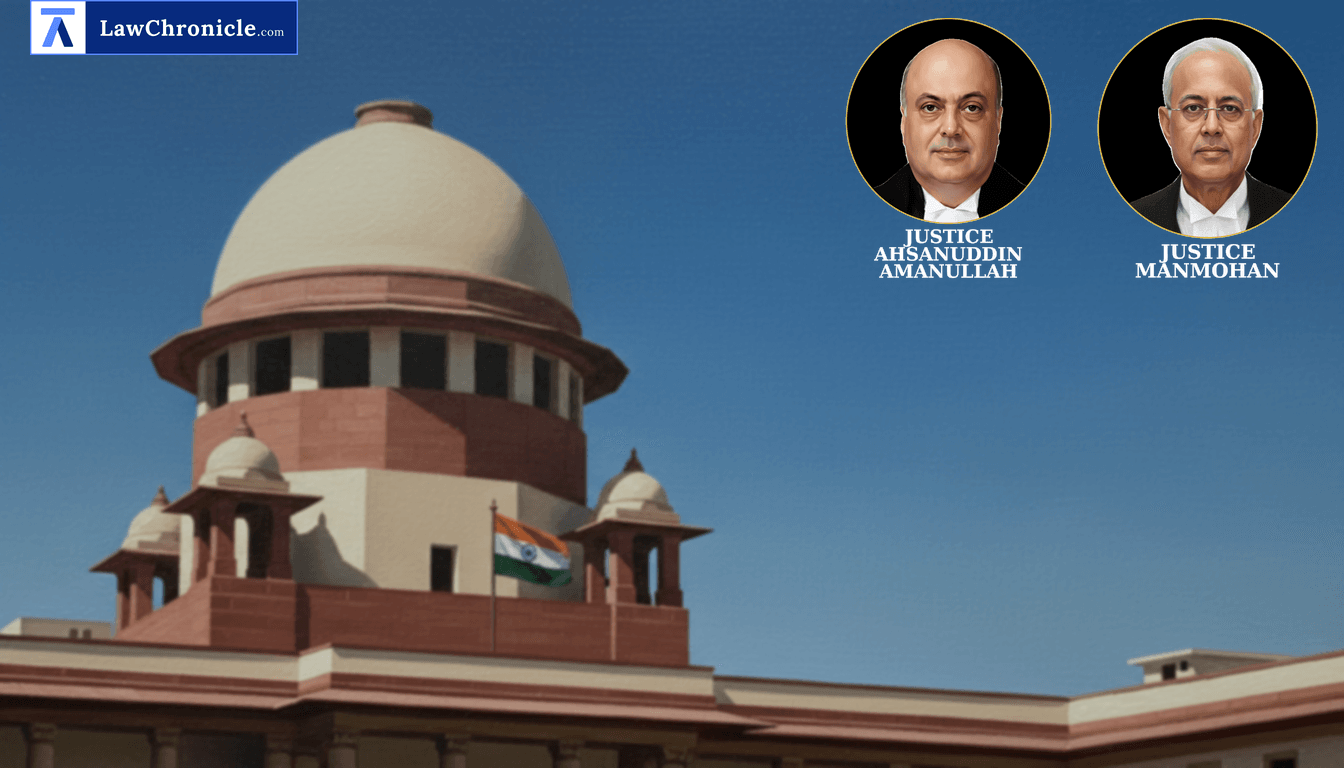
Restricting jurisdictional overreach by statutory tribunals, the Supreme Court has ruled that a Controlling Authority under the payment of gratuity framework lacks the jurisdiction to adjudicate contentious employer-employee relationships or fasten liability on principal employers for contract workers.
A bench of Justice Ahsanuddin Amanullah and Justice Manmohan set aside a High Court judgment that had saddled a principal employer with gratuity liabilities, holding that statutory authorities under the gratuity regime cannot determine complex questions of employment status.
Key Takeaways
No Jurisdictional Overreach: Controlling Authorities under the gratuity statute are restricted solely to computing payable amounts and cannot determine disputes regarding employment liability.
Contractors vs Principal Employers: Personnel deployed through third-party contractors cannot directly claim an employer-employee relationship with the principal employer to demand statutory gratuity.
Wages Exclude Gratuity: Liability for wages under contract labour legislation does not automatically extend to gratuity payments.
Adjudicatory Limits of Controlling Authority
The Supreme Court affirmed that the jurisdiction of the Controlling Authority is strictly circumscribed by the statute and does not extend to determining contentious issues of employment liability. The Bench observed that "The adjudication by the Controlling Authority with regard to the liability was beyond its jurisdiction, as the only power conferred on the Controlling Authority under the statute was to compute the amount which may be payable to the concerned 'employee'."
Addressing the interaction between statutory definitions of wages and contract labour liabilities, the Court upheld the appellant's contentions regarding the scope of the Payment of Wages Act, 1936 and the Contract Labour (Regulation and Abolition) Act, 1970.
Ratio
The statutory jurisdiction of the Controlling Authority under the Gratuity Act is confined strictly to the computation of gratuity payable to an 'employee' and does not extend to adjudicating disputes regarding the existence of an employer-employee relationship or fastening liability on a principal employer for contract labourers.
Background
The dispute arose when contract workers engaged through independent contractors filed applications before the Controlling Authority seeking payment of gratuity directly from the principal employer, M/s Oil and Natural Gas Corporation Ltd. The Controlling Authority held the appellant liable despite claims that no employer-employee relationship existed and that the agreement explicitly established a contract at arm's length.
Although the Appellate Authority set aside the Controlling Authority's order, the High Court of Bombay reversed the decision and restored liability upon the appellant. The appellant then approached the Supreme Court, relying on Municipal Council, represented by its Commissioner, Nandyal Municipality, Kurnool District, A.P. versus K. Jayaram and Ors. and pointing out that under Clause (vi) of Section 2 of the Payment of Wages Act, 1936 and Section 21(4) of the Contract Labour (Regulation and Abolition) Act, 1970, gratuity is excluded from the definition of wages.
Allowing the appeal, the Supreme Court set aside the High Court's order and revived the Appellate Authority's decision. However, the Apex Court clarified that since the claimed gratuity amounts had already been disbursed pursuant to an earlier interim order, no recovery would be made from the workers.
Case Details:
Case No.: Civil Appeal No. OF 2026 (Arising out of SLP (C) No. 498/2024)
Neutral Citation: 2026 INSC 1019
Case Title: M/S OIL AND NATURAL GAS CORPORATION LTD v. SURYAKAND D. LAD & ORS.
Appearances:
For the Petitioner(s): Mr. Tushar Mehta, Solicitor General
For the Respondent(s): Mr. Riwaj Rai, Advocate
Source: 2026 CaseBase(SC) 8080
Similar Articles

 Breaking News


