


Court permits production of documents during cross‑examination if they are not foreign to pleadings
 Copy Link
 Share
 Save
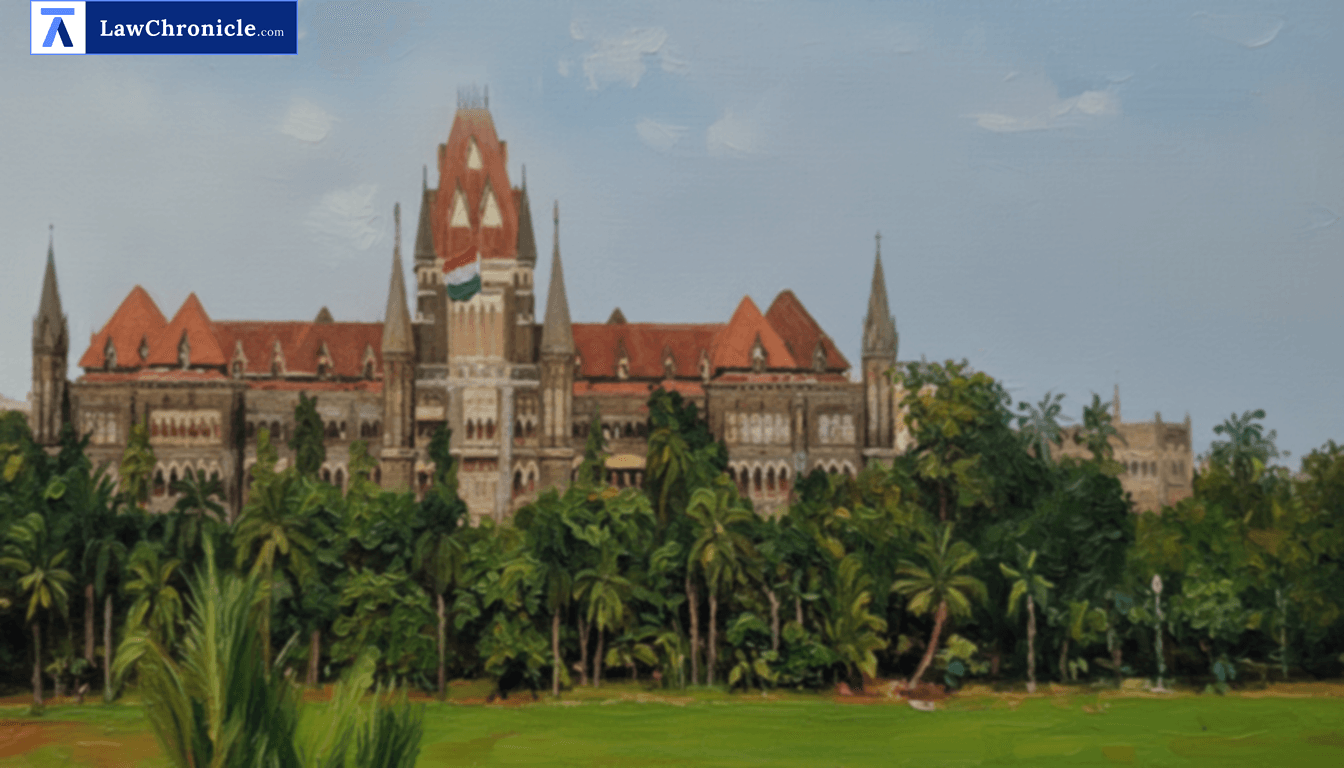
A single‑judge bench of Justice Gauri Godse of the Bombay High Court heard a writ petition filed by defendant no.1 challenging a trial‑court order that refused his application to produce certain receipts to confront plaintiff no.1 during cross‑examination in a suit for cancellation of sale deeds. The question before the Court was whether documents not produced with pleadings could be produced at the stage of cross‑examination under Orders VII, VIII and XIII of the CPC read with Section 145 of the Evidence Act, particularly in light of the Supreme Court’s decision in Mohammed Abdul Wahid v. Nilofer.
The High Court allowed the petition, quashed the trial court order dated 8 December 2021 and directed that the trial court permit defendant no.1 to produce the documents listed at Exhibit 118 to confront plaintiff no.1 during cross‑examination. The Court relied on the principle that parties who appeared as witnesses stood “on the same footing” as other witnesses for the purpose of adducing evidence, and that procedural rules could not be applied to frustrate effective cross‑examination. The Court, in its reasoning, observed: "Therefore, the Court must allow a party to contradict a witness by showing him his previous statement in writing, which was not produced earlier, provided it is relevant to the matters in question. After a party is allowed to contradict a witness by showing his previous statement in writing, the settled practice consistently followed by the Civil Courts in our State requires that the document be marked as an exhibit. Therefore, the document must be taken on record, and for doing so, leave of the Court is not required. Therefore, the Court recording the evidence must permit a party to produce a document for cross‑examination of the witness or to hand over a document to refresh the witness's memory, on the touchstone of Section 145 of the Evidence Act (Section 148 of BSA)."
Background
The dispute arose from a suit filed by respondent nos.1 to 3 seeking cancellation of three sale deeds and a rectification deed dated April 2012 which they alleged were executed by defendant no.1 by misusing a cancelled power of attorney. The plaintiffs sought injunctions restraining interference with their possession. Defendant no.1 denied forgery and pleaded that a consideration of Rs.5 lakh had been paid to plaintiff nos.1 and 2 and that receipts (said to be in the name of plaintiff no.1) existed. Defendant no.1 sought amendment of his written statement to add particulars of the cash receipts; the application was refused as the trial had commenced and the matter stood posted for cross‑examination of plaintiff no.1. He thereafter applied to produce the receipts in evidence to confront plaintiff no.1, but the trial court rejected that application.
The High Court examined the post‑2002 amended framework of Orders VII, VIII and XIII of the Code of Civil Procedure and Section 145 of the Evidence Act (corresponding provisions in the Bharatiya Sakshya Adhiniyam were also considered). Relying on the Supreme Court’s ruling in Mohammed Abdul Wahid, the Court held that the exemption permitting production of documents for cross‑examination remained available and that documents used for that limited purpose could not be disallowed if they were not “completely divorced from or foreign to the pleadings made.” The Court distinguished earlier decisions based on the unamended provisions and concluded that the trial court erred in refusing the defendant the opportunity to confront the plaintiff with the receipts. The writ petition was allowed: the impugned order was quashed and the trial court was directed to permit production of the documents listed at Exhibit 118 during the cross‑examination of plaintiff no.1.
Case Details: Case No.: Writ Petition No. 8080 of 2022 Case Title: Mr. Jijabhau Dyaneshwar Temgire v. Mr. Gangaram Khandu Temgire & Ors. Appearances: For the Petitioner(s): Mr. Mateen Shaikh a/w. Mr. Shrinivas Kshirsagar, Mr. Parvez Inamdar and Ms. Muskan Shaikh For the Respondent(s): Mr. P. J. Thorat i/b. Mr. Prabhanjan Gujar
Similar Articles
 Breaking News


