


Courts Empowered To Summon Documents From Persons Present In Proceedings: J&K High Court
 Copy Link
 Share
 Save
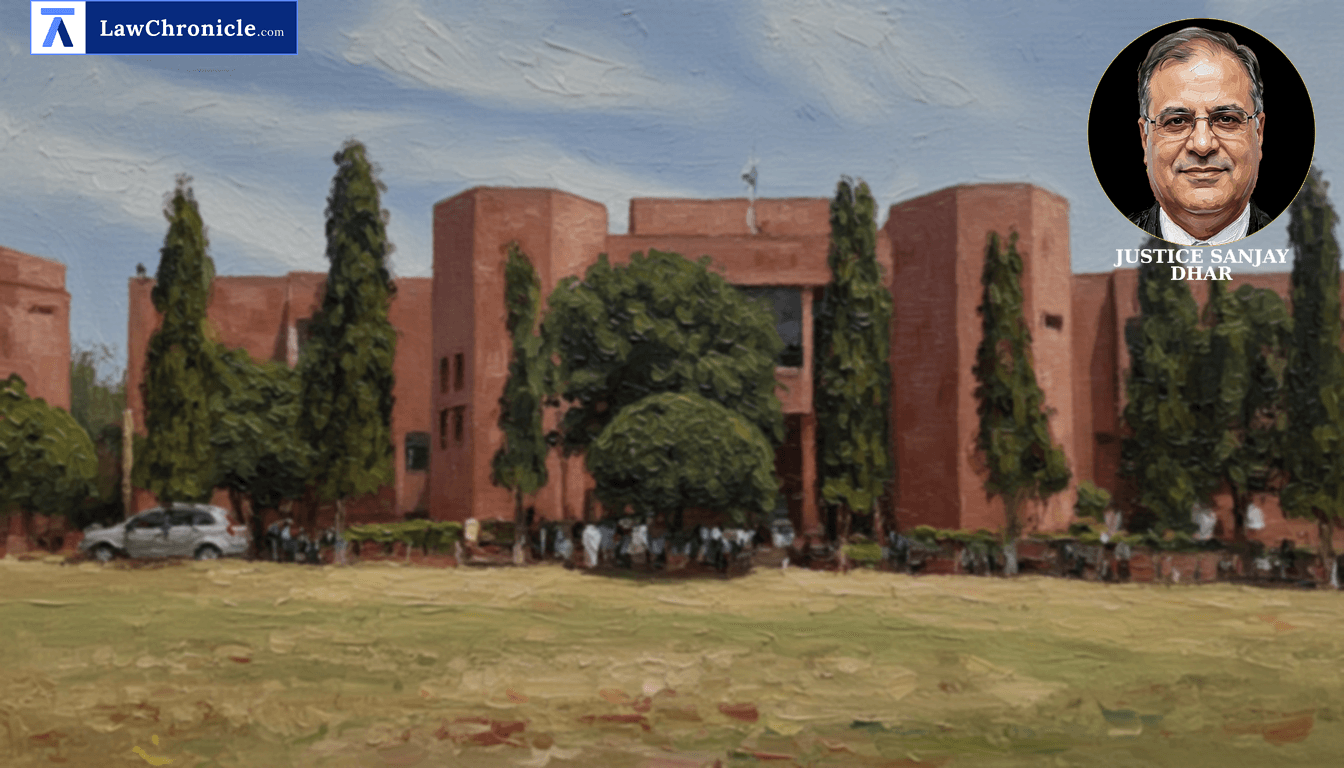
The Jammu & Kashmir and Ladakh High Court has reinforced the discretionary power of trial courts to mandate the production of vital evidence from witnesses present in court, ruling that procedural technicalities cannot override the quest for substantial justice. In a decisive stance against obstructive litigation, the court held that Rule 7 of Order XVI allows judges to transcend standard summoning timelines if a person in the courtroom possesses records essential for a fair trial.
Justice Sanjay Dhar, while presiding over the matter, scrutinized the interplay between various procedural rules of the Code of Civil Procedure, 1908. The court emphasized that the power to require a person present in court to produce a document then and there is an independent authority that does not negate the general mandates of witness lists or expense deposits.
Key Takeaways
Primacy of Substantial Justice
Trial courts possess broad discretion to allow the production of original revenue records to ensure that the best possible evidence is available during final adjudication.
Independence of Rule 7
The power under Order XVI Rule 7 is independent of Rules 1 to 6, meaning a court can command a witness already present in the courtroom to produce documents without being strictly bound by prior summoning applications.
No Prejudice in Record Production
The production of historical revenue records does not prejudice the opposing party, as they retain the right to cross-examine witnesses and lead evidence in rebuttal.
Court Observations on Order XVI CPC
The court addressed the petitioner's argument that the trial court's direction bypassed the mandatory requirements of filing witness lists and depositing expenses. Rejecting this contention, the High Court noted that the discretionary power exercised was perfectly in accordance with the intent of the legal framework. The Court, in its reasoning, observed: "This Court fails to comprehend as to which of these provisions runs contrary to powers given to the Court under Rule 7 Order XVI CPC. The said provision only vests powers with the Court to require any person, who is present in Court, either pursuant to summons issued by the Court or otherwise, to give evidence or to produce any document then and there in his possession. It is a provision independent of the provisions contained in Rules 1 to 6 of Order XVI CPC."
Regarding the relevance of the records, the Court noted that a party should not be prevented from presenting the best possible evidence in support of its case. It held: "It is a fundamental legal principle that a party should not be prevented from presenting the best possible evidence in support of its case... by examining the Patwari concerned, who is custodian of the revenue record, with reference to the entries in revenue record for previous years, the plaintiff has not travelled beyond his pleadings nor has he tried to introduce a new case."
Ratio
Order XVI Rule 7 of the Code of Civil Procedure, 1908, vests an independent discretionary power in the Court to require any person present before it to produce documents in their possession. This power is not superseded by the procedural requirements of Rules 1 to 6 of the same Order. A trial court’s exercise of such discretion to facilitate the production of original records for the purpose of doing substantial justice does not warrant interference under the supervisory jurisdiction of the Constitution unless patently illegal.
Background
The dispute originated from a suit filed by the respondents seeking a declaration of ownership and possession over 43 kanals 06 marlas of land in Village Nalley, Reasi. The respondents (plaintiffs) alleged that the petitioner (defendant) had fraudulently managed to get his name reflected under the cultivation column of the revenue records in 1997-98, despite the land being unculturable for 80 years. The petitioner, conversely, claimed he had purchased the land from the original plaintiff for ₹80,000 in 1989.
During the trial, the Patwari was summoned to produce specific records. When the plaintiff sought to question him on records ranging from 1960 to 1991, the defendant objected as those specific years weren't mentioned in the initial list. The trial court subsequently allowed an application under Order XVI Rules 1 and 7, directing the Patwari to produce the Khasra Girdhawari from 1960 to 2011. This direction was challenged by the petitioner through a supervisory petition under the Constitution.
The High Court found that the trial court's order was aimed at achieving substantial justice and dismissed the petition, affirming that the defendant could still cross-examine the witness on the produced records.
Case Details:
Case No.: CM(M) No. 35/2026
Neutral Citation: 2026:JKLHC-JMU:2965
Case Title: Pardeep Kumar vs Chanchala Devi and others
Appearances:
For the Petitioner(s): Mr. Vikram Sharma, Sr. Adv. with Mr. Sachin Dev Singh, Adv. and Mr. Sanpreet Singh, Adv.
For the Respondent(s): Mr. R. K. S. Thakur, Adv and Ms. Anandita Thakur, Adv.
Source: 2026 CaseBase(JK) 882
Similar Articles
 Breaking News


