


Courts Must Adopt Liberal Approach In Plaint Amendments If No Vested Rights Offended: Calcutta HC
 Copy Link
 Share
 Save
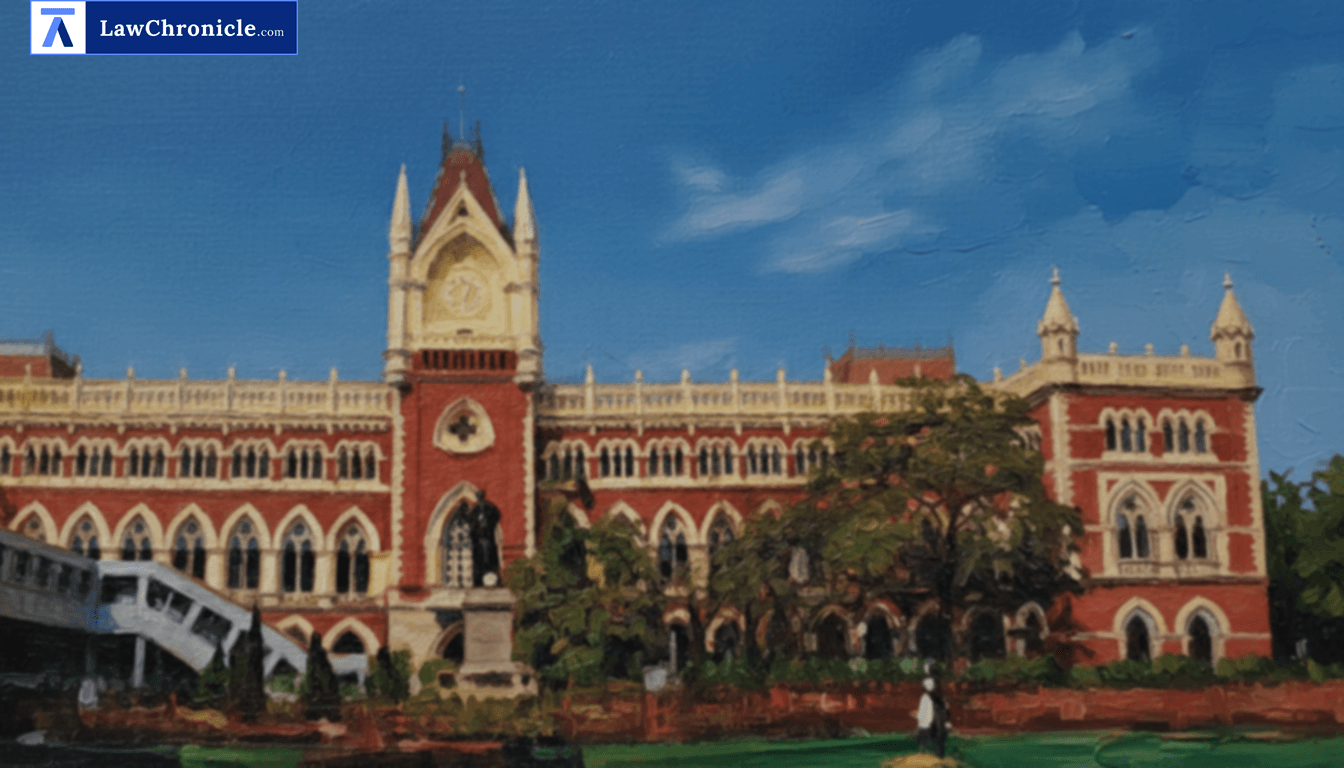
Substantive justice cannot be sacrificed at the altar of hyper-technicalities, as the Calcutta High Court rules that amendment of pleadings should be liberally allowed even after significant delay if they do not alter the suit's nature or prejudice the defendant's accrued rights. The decision reinforces the principle that procedural hurdles must not obstruct the adjudication of the real controversy between parties, especially when the proposed changes align with the opponent's own pleadings.
Justice Rai Chattopadhyay presided over the revisional application challenging an order of the Civil Judge (Junior Division), Haldia, which had previously dismissed a plaintiff's prayer for amendment of a plaint filed fourteen years prior. The Court examined the boundaries of judicial discretion under Order VI Rule 17 of the Code of Civil Procedure, 1908, emphasizing that the primary objective of the court is to resolve the actual dispute rather than penalize litigants for delays that do not cause legal prejudice.
Key Takeaways
Substance Over Form
Amendments that facilitate the resolution of the 'real question in controversy' must be prioritized over procedural delays.
No Prejudice to Vested Rights
If a proposed amendment does not strip the defendant of a vested legal right or change the core nature of the suit, it should generally be permitted.
Effect of Opposing Pleadings
When a plaintiff seeks to amend their case to align with facts already disclosed by the defendant in their written statement, the plea for amendment gains greater legitimacy.
Rejection of Hyper-Technicality
Trial courts should avoid a rigid or hyper-technical approach to Order VI Rule 17 applications, favoring a reasonable and liberal interpretation to ensure complete justice.
Court Rejects Hyper-Technical Approach to Procedural Delays
The High Court observed that while the suit was filed in 2011 and the amendment sought in 2025, the lapse of time alone cannot be the sole criterion for rejection. The Court noted that the plaintiff sought to modify a prayer for 'absolute ownership' to a claim of 'co-ownership' based on a 1950 deed mentioned by the defendants themselves. This shift, the Court held, did not militate against the defense but rather brought the pleadings in line with the discovered facts.
The Court, in its reasoning, observed: "Therefore, when neither the nature of the suit changes nor any vested right of the defendant is offended by the intended amendments, the Court should have adopted a reasonable and liberal approach in considering such prayer and allow the same rather than taking a hyper technical approach, to dismiss the prayer of the plaintiff."
The Court has following directions:
"i) Impugned order of the Civil Judge (Junior Division), Haldia, dated 29.8.2025, in Title Suit No. 36 of 2011 is set aside.
ii) The amendment sought to be introduced by the plaintiff vide schedule in his application dated 14.07.2025 stands allowed. Let necessary modification to be immediately incorporated in the plaint and an amended plaint be filed in the Trial Court. Let the Trial Court proceed in accordance with law in the suit, as expeditiously as possible."
Ratio
A prayer for amendment of pleadings under Order VI Rule 17 of the Code of Civil Procedure, 1908 should be allowed, notwithstanding significant delay, provided the amendment is necessary for determining the real questions in controversy, does not change the fundamental nature and character of the suit, and does not cause irreparable prejudice or extinguish any vested rights accrued to the opposing party.
Background
The litigation originated from Title Suit No. 36 of 2011, where the plaintiff initially sought a declaration of absolute ownership. However, in 2025, the plaintiff filed an application for amendment after allegedly discovering a 1950 registered deed through the defendants' written statement. The amendment sought to clarify that the property was 'ejmali' (joint) property devolved upon multiple heirs, effectively narrowing the plaintiff's claim to that of a co-sharer.
The Trial Court had rejected the application on August 29, 2025, primarily on the grounds of delay and the stage of the proceedings. Challenging this, the petitioner argued that the amendment was germane to the suit and would not prejudice the defendants as it reflected their own stand. The High Court agreed, finding that the Trial Court's order was not in consonance with settled legal principles and failed to account for the fact that the amendment actually aligned with the recorded history of the property.
Case Details:
Case No.: C.O. 4083 of 2025
Case Title: Sawkat Ali Versus Abdul Hossain Sha & Ors.
Appearances:
For the Petitioner(s): Mr. Dyutiman Banerjee, Mr. Salil Kr. Maity
For the Respondent(s): Mr. Sabhon Majumder, Ms. Kalpita Paul
Source: 2026 CaseBase(CAL) 2912
Similar Articles
 Breaking News


