


Defendant Cannot Switch Stand From Co-Sharer to Tenant via Additional Pleadings: SC
 Copy Link
 Share
 Save
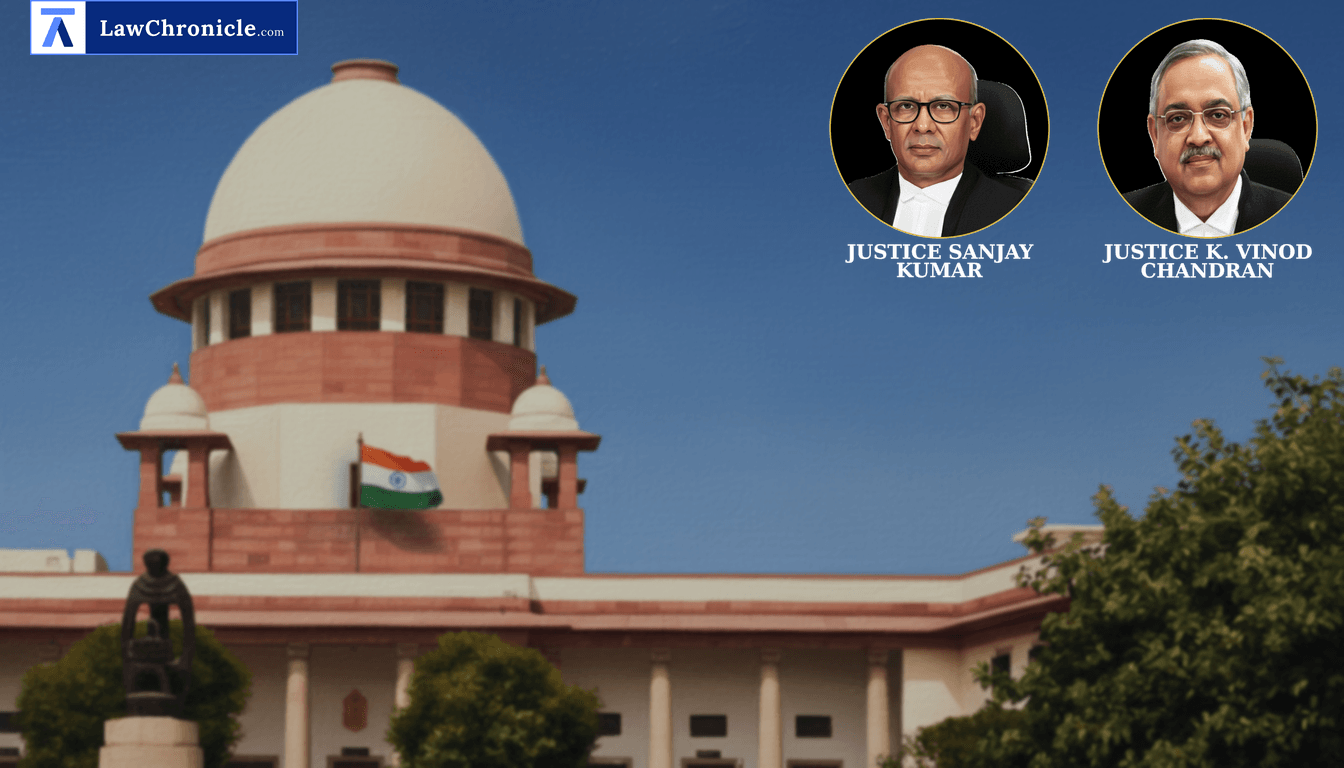
The Supreme Court has clarified that a defendant cannot be permitted to use an additional written statement to introduce a completely inconsistent and contradictory plea, especially after the trial has commenced.
A two-judge bench comprising Justice Sanjay Kumar and Justice K. Vinod Chandran heard an appeal challenging a High Court order that allowed a defendant to file an additional written statement under Order 8 Rule 9 of the Code of Civil Procedure, 1908. The Court emphasized that such procedural maneuvers cannot be used to bypass the strict requirements of amending pleadings once a trial has begun.
Supreme Court Rejects Inconsistent Pleadings After Trial Commencement
The Court observed that the defendant sought to change her status from a 'bonafide co-sharer' to a 'tenant' under the plaintiff through an additional written statement. The Court held that this retraction of the earlier stand was contrary to the mandate of Order 6 Rule 7 of the Code of Civil Procedure, 1908. The Court, in its reasoning, observed: "This retraction of her earlier stand and introduction of a totally inconsistent and contradictory stand by the defendant, in the guise of filing an additional written statement, was contrary to the mandate of Order 6 Rule 7 CPC."
Furthermore, the bench noted that the application was filed after the cross-examination of the first witness had already taken place. The Court stated: "Further, the very filing of such an application by the defendant, having failed to seek amendment of her written statement at the appropriate stage and after the trial in the suit had already commenced, was clearly an abuse of process."
Background:
The litigation originated from Title Suit No. 1527 of 2022 filed by Mondira Ghosh seeking the eviction of Chaitali Ghosh from certain premises. In her original written statement filed in December 2022, the defendant claimed she was a co-sharer of the property. However, after the trial commenced and the plaintiff’s witness (PW-1) was cross-examined on multiple dates, the defendant filed an application under Order 8 Rule 9 of the Code of Civil Procedure, 1908 to file an additional written statement and a counter-claim, now claiming to be a tenant.
The Trial Court rejected this application, citing Order 6 Rule 7 of the Code of Civil Procedure, 1908, which prohibits inconsistent allegations of fact. However, the Calcutta High Court, exercising jurisdiction under Article 227 of the Constitution of India, 1950, partially allowed the defendant's plea, permitting the additional written statement on the grounds that the facts were necessary for deciding the real controversy. The Supreme Court disagreed with the High Court's leniency, noting it effectively bypassed the proviso to Order 6 Rule 17 of the Code of Civil Procedure, 1908, which limits amendments after the start of a trial. The Apex Court restored the Trial Court's order, dismissing the defendant's attempt to change her legal stand.
Case Details:
Case No.: Civil Appeal No. of 2026 (@ SLP (C) No. 34411 of 2025)
NeutralCitation: 2026 INSC 545
Case Title: Mondira Ghosh v. Chaitali Ghosh
Source: 2026 CaseBase(SC) 468
Similar Articles



 Breaking News


