


Delayed Court Fee Payment Cannot Revive Omitted Counter Claim Post-Trial: SC
 Copy Link
 Share
 Save
Trial courts cannot allow litigants to belatedly pay court fees and revive a non-existent counter claim after the conclusion of evidence without satisfying the strict test of due diligence. Under the Code of Civil Procedure, 1908, financial incapacity alone cannot serve as an automatic ground to bypass statutory limits on amending pleadings post-commencement of trial.
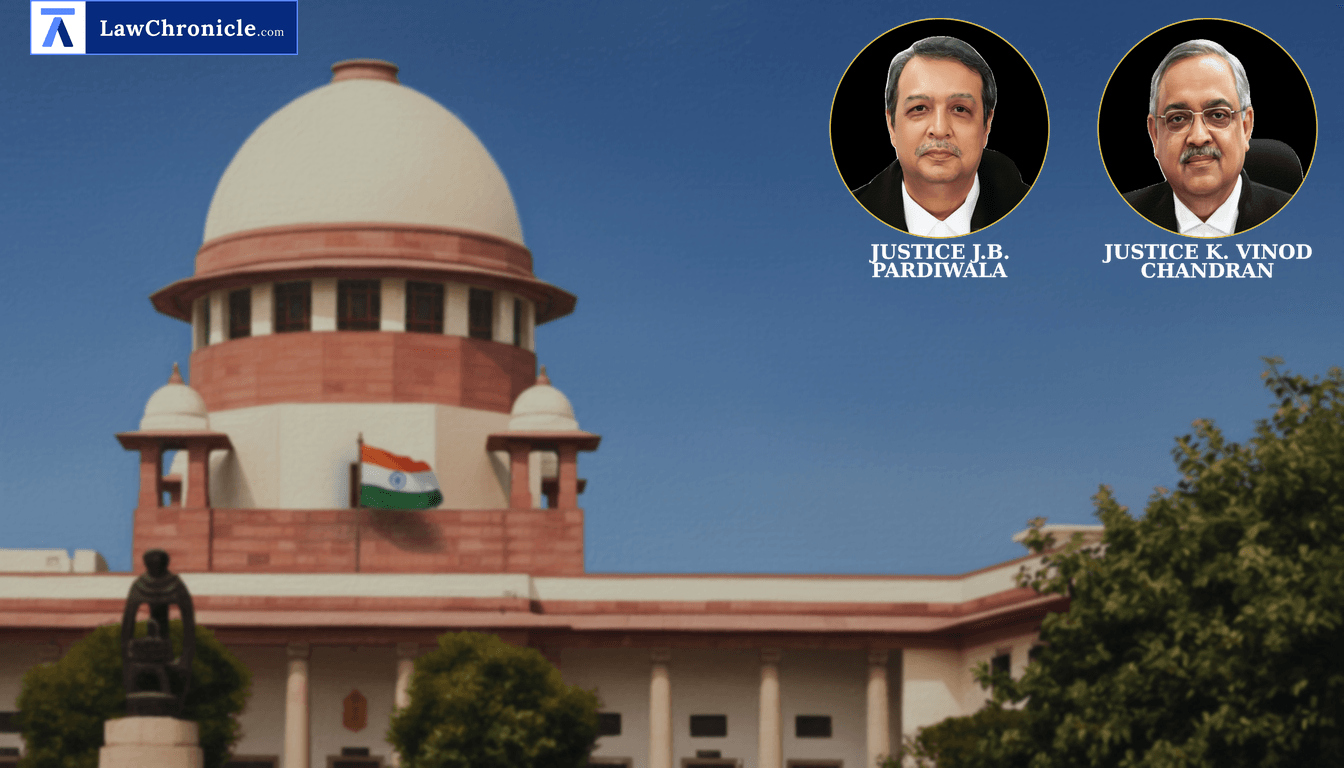
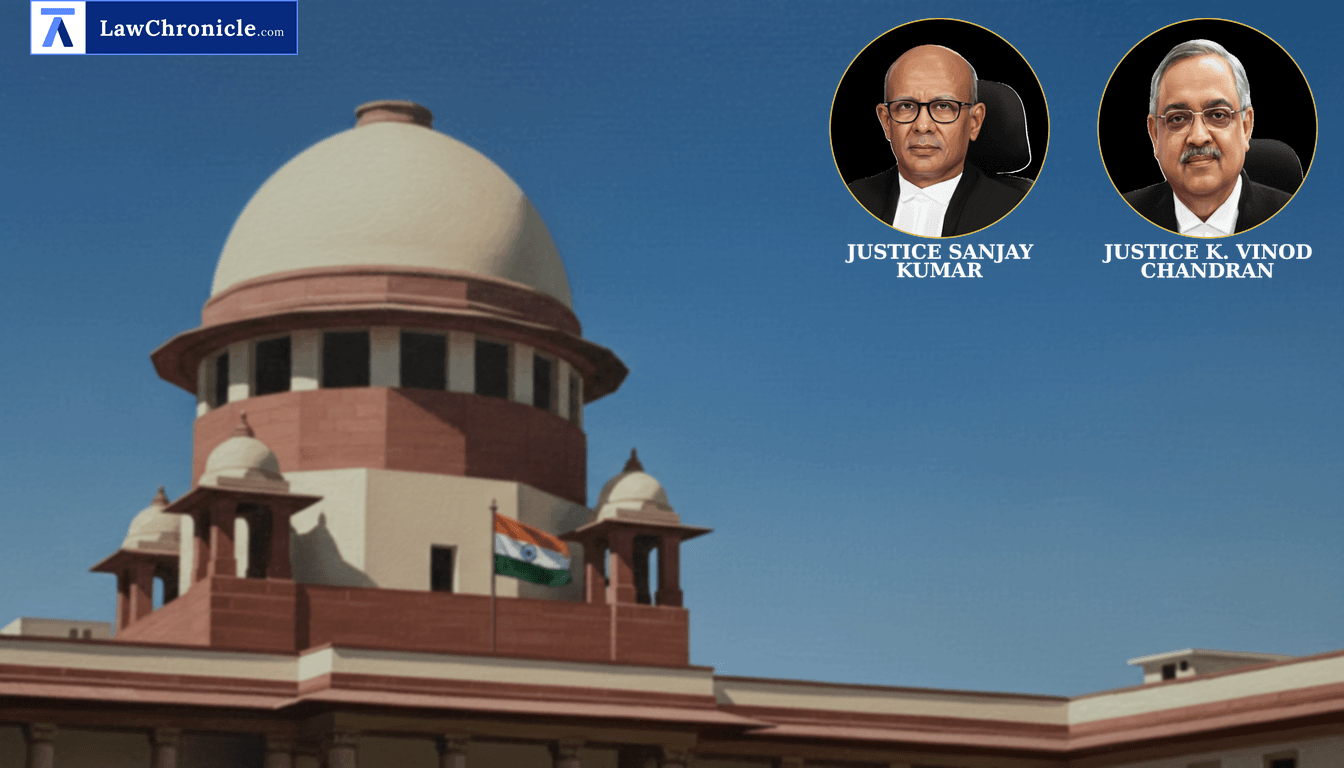
A Division Bench comprising Justice J.B. Pardiwala and Justice K. Vinod Chandran delivered the ruling while setting aside the concurrent orders of the High Court and Trial Court that had permitted a defendant to deposit court fees on a counter claim four years after submitting the written statement and after the entire trial evidence was closed.
Key Takeaways
Strict Rule on Post-Trial Counter Claims: A counter claim that was excluded or not brought on record at the initial stage cannot be surreptitiously introduced after evidence is closed.
Due Diligence Mandate Under Order VI Rule 17: Parties seeking to amend pleadings or bring new claims post-trial must plead and prove due diligence under the proviso to Order VI Rule 17 of the Code of Civil Procedure, 1908.
Financial Incapacity Inadequate: Mere lack of financial capacity does not automatically grant a party an unfettered right to belatedly tender court fees after trial completion.
Protection of Adverse Party's Rights: Allowing counter claims after trial completion causes grave prejudice to plaintiffs who were deprived of the opportunity to adduce rebuttal evidence.
Limits on Section 149 and Counter Claims Post-Trial
Addressing the scope of Section 149 of the Code of Civil Procedure, 1908, the Supreme Court distinguished the precedent in A. Nawab John & Ors v. VN Subramaniyam ( "(2012) 7 SCC 738": 2012 CaseBase(SC) 874), noting that while courts hold authority to accept deficient court fees at any stage, such exercise requires an active claim existing on record.
The Court, in its reasoning, observed: "After the trial was concluded, an amendment to the written statement, incorporating a counter claim; which was necessary as we noticed hereinabove, would have been difficult. Order VI Rule 17 of the CPC would have restricted such amendment, since though Rule 17 provides for amendment of pleadings at any stage of the proceedings with leave of the Court, the proviso permits such amendments after the trial has commenced, only in circumstances where the Court comes to the conclusion that despite due diligence the party was prevented from raising the matter before commencement of the trial."
The Court issued the following directions:
"The Suit shall be adjudicated without the counter claim. The appeal stands allowed with the above directions."
Ratio
Where a counter claim is not legally taken on record at the time of filing the written statement due to non-payment of court fees, it cannot be subsequently entertained after the conclusion of trial evidence by merely paying court fees under Section 149 of the Code of Civil Procedure, 1908 without satisfying the proviso to Order VI Rule 17 of the Code of Civil Procedure, 1908.
Background
In the present case, a written statement containing a counter claim was filed on October 13, 2015, but was returned for proper presentation. When resubmitted on March 29, 2016, the defense explicitly requested the court to accept only the written statement, citing inability to pay the required court fees. Consequently, the counter claim was not taken on record.
After the evidence of the plaintiff was officially closed on July 24, 2019, and witness cross-examination concluded on January 29, 2020, the defendant filed an application on March 5, 2020, seeking permission to deposit court fees on the counter claim. The Trial Court allowed the application on the same day without affording reasonable opportunity to the plaintiff, and the High Court subsequently affirmed this order in revision.
Reversing both judgments, the Supreme Court held that allowing a counter claim after trial completion severely prejudices the opposing party, who had no occasion to adduce evidence against an unrecorded claim. The appeal was accordingly allowed, directing the suit to proceed strictly without the counter claim.
Case Details:
Case No.: Civil Appeal No. 9775 of 2026
Neutral Citation: 2026 INSC 777
Case Title: IJM Corporation Berhad v. M/s Lakshmi Sai Constructions Company and Anr.
Appearances:
For the Petitioner(s): Mr. Nishanth Patil, AoR
For the Respondent(s): Mr. P. Mohith Rao, AoR
Source: 2026 CaseBase(SC) 727
Similar Articles
 Breaking News


