


Delay in Uploading GST Portal Summaries Cannot Defeat Substantive Refund Rights: Gujarat HC
 Copy Link
 Share
 Save
Procedural delays by tax authorities in uploading digital summaries cannot be weaponized to time-bar legitimate refund claims, especially when substantive rights are protected by constitutional safeguards. The High Court has ruled that where a refund is directed by an appellate authority, the state cannot arbitrarily retain funds by citing technical limitation periods triggered by manual order deliveries.
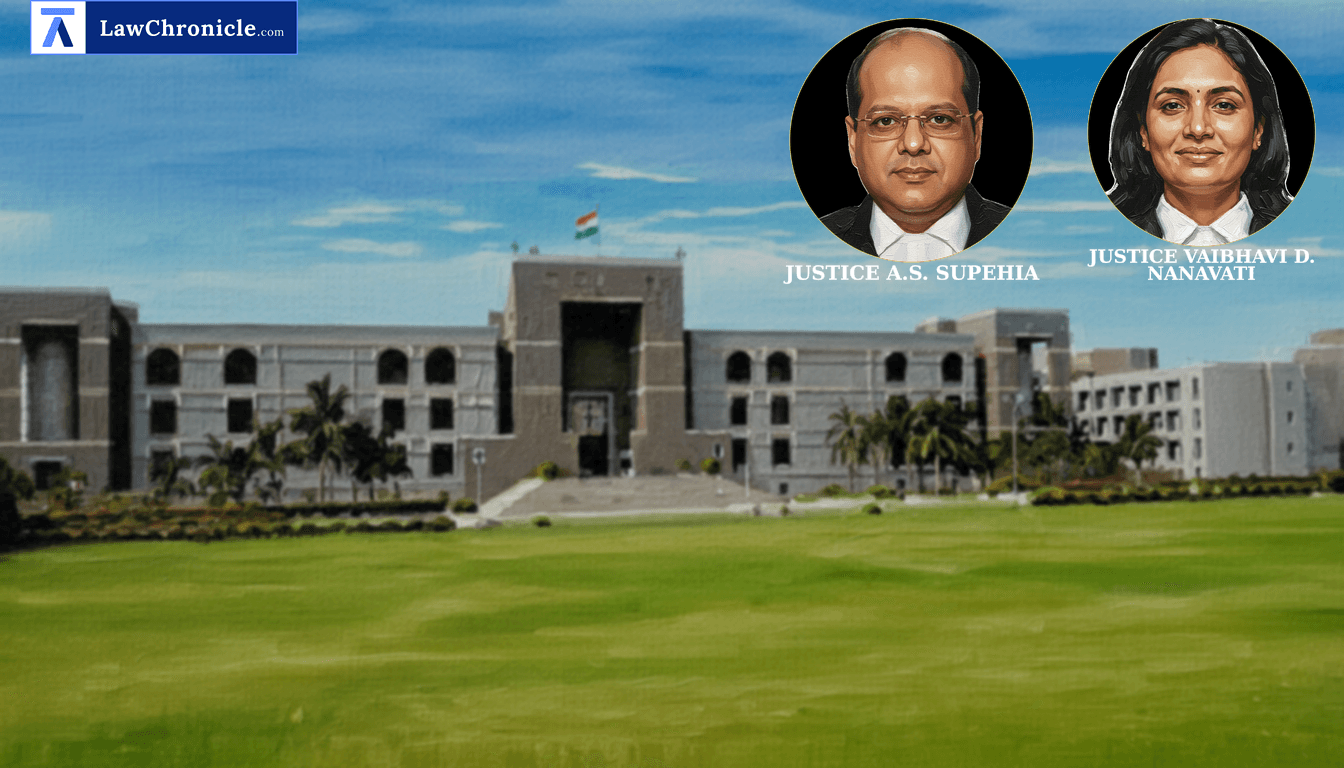
A division bench of Justice A.S. Supehia and Justice Vaibhavi D. Nanavati heard a Special Civil Application challenging the rejection of a GST refund claim by the Assistant and Deputy Commissioners of State Tax. The petitioners sought the recovery of Rs. 5,41,032/- which had been deposited following an interception of goods, a demand that was subsequently set aside in appeal.
Key Takeaways
Digital Overrides Manual
In the era of GST portal compliance, the date of uploading digital summaries like FORM GST APL-04 can be treated as the 'relevant date' to protect litigants from procedural traps.
Constitutional Protection of Property
Tax amounts ordered to be refunded qualify as 'property' under Article 300A of the Constitution of India, and their continued retention without authority of law violates Article 265 of the Constitution of India.
Procedural Fairness
Statutory limitations under Section 54 of the Central Goods and Services Tax Act, 2017 must be interpreted to facilitate justice rather than serve as a 'tyrant' to frustrate relief already granted by higher authorities.
Court Observations and Directions
The court noted that while a physical copy of the appellate order was delivered on March 8, 2022, the mandatory portal summary in FORM GST APL-04 was only uploaded on June 3, 2024. The petitioners applied for a refund the very next day. The bench observed that rejecting this claim as time-barred would effectively revive an illegal demand that had already been quashed.
The Court, in its reasoning, observed: "The State, which collects revenue from taxpayers, is under a constitutional obligation to act fairly, transparently and in accordance with law. Its actions in matters of taxation must conform to the principles of fairness, predictability and the rule of law, and must not result in arbitrary or oppressive retention of amounts that are no longer supported by a subsisting demand. The retention of the amount ordered to be refunded would indirectly amount to reviving the order dated 29.11.2019... Thus, the statutory provisions cannot be permitted to operate in a manner that would result in the revival of an illegal action."
The Court has the following directions:
"The respondents are directed to process the refund application dated 04.06.2024. We further clarify that in case the portal does not allow the filing and processing of the refund application, it will be open for the petitioners to file a fresh off-line application. On receipt of such application, the respondents are directed to process the same and pay the amount of refund along with interest which shall be calculated at the rate of 6% from 15.08.2024. The present directions shall be implemented within a period of 12 weeks, failing which the petitioners will be entitled to 9% interest per annum on the amount of refund after 12 (twelve) weeks."
Ratio
Procedural law is a handmaid to justice and not its mistress. When a taxpayer is entitled to a refund via an appellate order, the limitation period for filing the refund application under Section 54 of the Central Goods and Services Tax Act, 2017 may be computed from the date the mandatory electronic summary (FORM GST APL-04) is uploaded on the GST portal, particularly if the delay in uploading is attributable to the department.
Background
The dispute began when a transport vehicle belonging to the petitioners was intercepted in November 2019, leading to a tax and penalty demand of Rs. 5,41,032/- under Section 129 of the Central Goods and Services Tax Act, 2017. Although the petitioners paid the amount to release the goods, the Appellate Authority later found the E-way bill was active and there was no intention to evade tax. Despite the appellate order dated February 28, 2022, directing a refund, the tax department rejected the subsequent refund application as time-barred, arguing it was filed more than two years after the manual delivery of the order. The High Court relied on Sambhaji vs Gangabai ( "2008 (17) SCC 117": 2008 CaseBase(SC) 826) to emphasize that procedural prescriptions should be lubricants, not resistants, in the administration of justice, and ultimately quashed the rejection orders.
Case Details:
Case No.: R/SPECIAL CIVIL APPLICATION NO.4610 of 2025
Neutral Citation: 2026:GUJHC:67059-DB
Case Title: Panila Chem Limited & Anr. Versus State Of Gujarat & Ors.
Appearances:
For the Petitioner(s): Krutarth K Desai, Mr Abhay Y Desai
For the Respondent(s): Mr Raj Tanna, AGP For R-1; Mr Neel P Lakhani for R-2,3
Source: 2026 CaseBase(GUJ) 31760
Similar Articles



 Breaking News


