


Delhi HC: Equitable Principles Bar Recovery of Excess Pension From Vulnerable Widow
 Copy Link
 Share
 Save
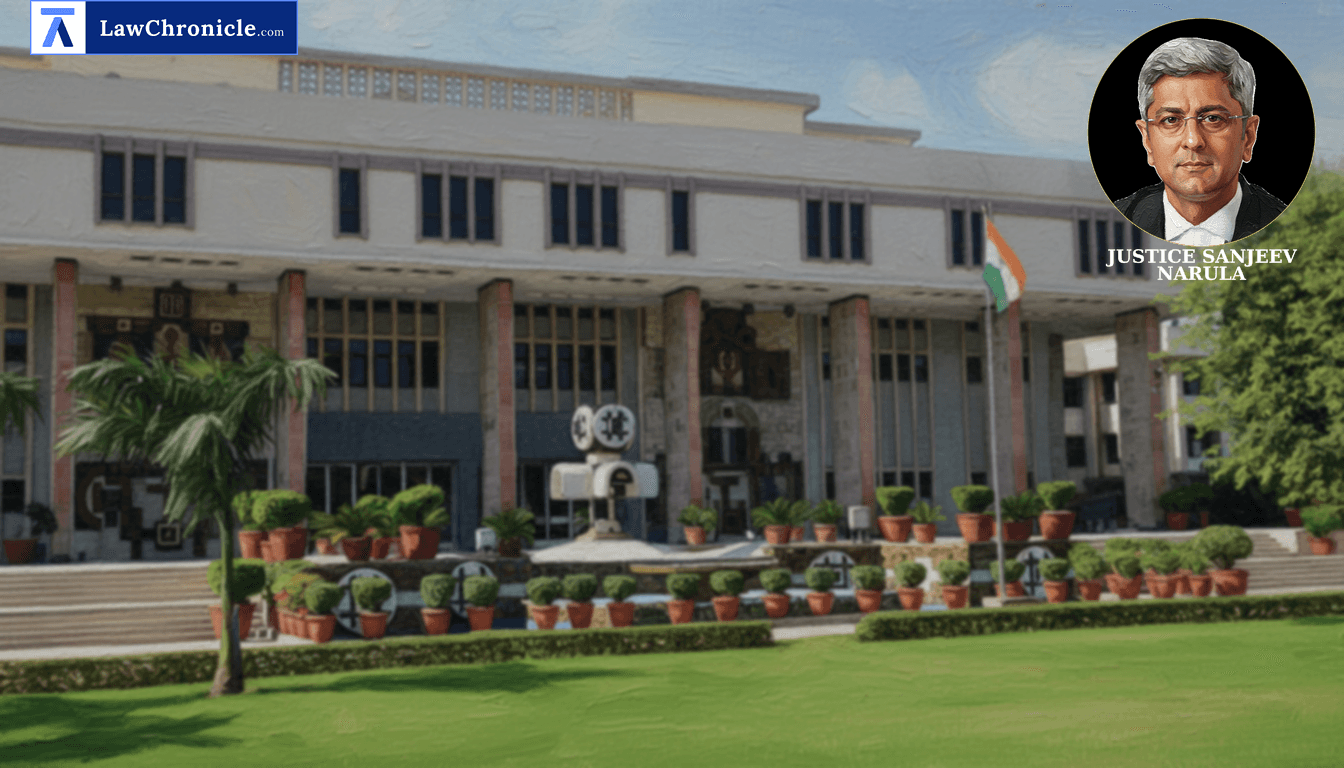
The Delhi High Court in Ms. Indra v. The Govt. of NCT of Delhi & Anr. held that the recovery of excess payments from a family pensioner is legally unsustainable when the error arises from the bank's processing and results in undue hardship. A single-judge bench of Justice Sanjeev Narula emphasized that the State and its agencies cannot reclaim public funds after a prolonged period when the recipient is not at fault.
The case involved a widow receiving family pension after her husband, a Class III employee, died in harness. The State Bank of India (SBI) initiated recoveries totaling over ₹3.6 lakhs after detecting a "wrong ENHANCE DATE" in their software, seven years after the payment began. The Court noted that the petitioner played no role in this error and had no means to detect the bank's internal processing mistake.
In its reasoning, the Court observed: "The position that emerges may be summarised thus. The overpayment in the present case arose from an error in pension processing at the bank’s end. There is no material to suggest fraud, misrepresentation or concealment by the Petitioner. The overpayment continued for years before recovery was initiated and recovery was then made from family pension payable to a widow... The generic undertaking relied upon by SBI, obtained at the commencement of family pension, does not, in these facts, suffice to displace the equitable restraint recognised by the Supreme Court."
Protective Shield of Supreme Court Precedents
The Court relied heavily on the landmark judgment in State of Punjab v. Rafiq Masih ( "(2015) 4 SCC 334": 2014 CaseBase(SC) 477), which identified specific categories where recovery by an employer would be impermissible, including cases involving retired employees or where payments exceeded five years. The Court further noted that while State of Punjab v. Rafiq Masih ( "(2015) 4 SCC 334": 2014 CaseBase(SC) 477) mentions retired employees, the logic applies with greater force to a widow surviving on a limited family pension.
Addressing the bank's reliance on High Court of Punjab and Haryana & Ors. v. Jagdev Singh, the Court distinguished the facts, noting that in the present case, the undertaking signed by the widow was a standard-form routine document rather than a specific election for benefits. The Court also referred to Syed Abdul Qadir & Ors. v. State of Bihar & Ors. ( "(2009) 3 SCC 475": 2008 CaseBase(SC) 1932) and Thomas Daniel v. State of Kerala & Ors. ( "2022 SCC OnLine SC 536": 2022 CaseBase(SC) 297) to reiterate that when excess payment arises from the employer's mistake and recovery results in disproportionate hardship, equity must prevail.
Directions Issued to Bank Authorities
Finding the recovery mechanism to be system-driven and lacking prior notice, the Court quashed the deductions. The Court has the following directions:
"46.1 The recovery effected by Respondent No. 2 from the Petitioner’s family pension, including the recovery initiated in May 2017 and the subsequent revised recovery, is hereby set aside.
46.2 Respondent No. 2 shall refund to the Petitioner the amounts already recovered from her family pension pursuant to the impugned recovery.
46.3 The refund shall be made within eight weeks from today together with simple interest at 6% per annum, computed from the date of each deduction until the date of actual payment.
46.4 No further recovery shall be effected from the Petitioner’s family pension on the basis of the impugned overpayment entries."
Background:
The dispute began when the Petitioner noticed a substantial reduction in her pension in 2017. Investigation revealed that SBI had quantified an excess payment of ₹2,51,616, later revised to ₹3,60,279. The bank argued that the recovery was justified based on an undertaking signed in 2004 and various RBI circulars. The Petitioner contended that as a senior citizen, the deductions of ₹4,399 per month from her meager pension left her struggling to maintain dignity. The Court ultimately found that since the error was institutional and the Petitioner was a vulnerable family pensioner, the recovery violated the principles of fairness and the protections enshrined under the Constitution of India, 1950.
Case Details:
Case No.: W.P.(C) 4502/2021 & CM APPL. 13760/2021
Case Title: MS INDRA v. THE GOVT OF NCT OF DELHI & ANR.
Appearances:
For the Petitioner(s): Ch. Rabindra Singh, Mr. Paras Aggarwal and Ms. Ekta Singh, Advocates.
For the Respondent(s): Mrs. Avnish Ahlawat, SC for GNCTD with Mr. Mohnish Sehrawat, Ms. Aliza Alam, Advocates for R-1; Mr. Rajiv Kapur, SC for SBI, Mr. Akshit Kapur, AOR, Ms. Riya Sood, Advocate for SBI.
Source: 2026 CaseBase(DEL) 381
Similar Articles


 Breaking News


