


No Immunity From Recovery of Inadvertent Excess Gratuity Paid: Chhattisgarh HC
 Copy Link
 Share
 Save
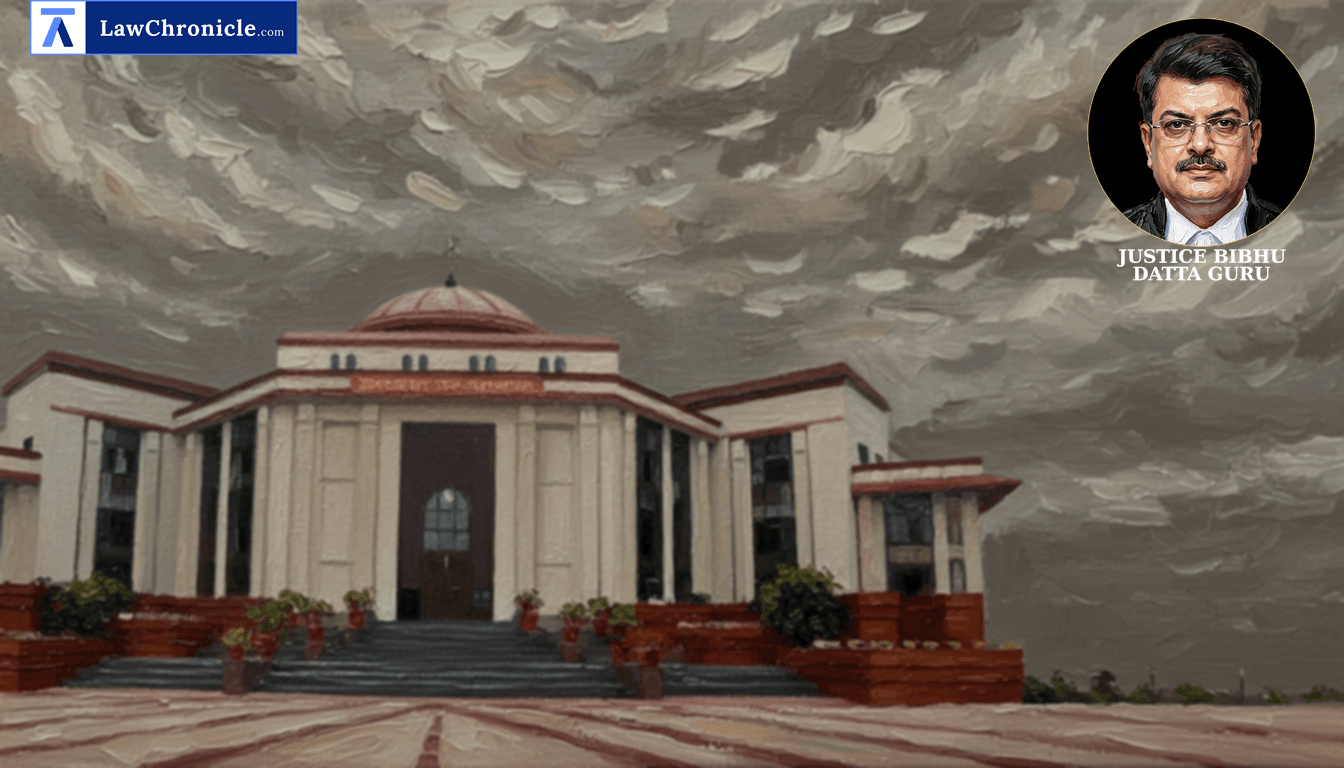
Public money erroneously paid to a retired employee without legal authority cannot be retained, as administrative errors do not automatically extinguish an employer's right to recover state funds. The Chhattisgarh High Court affirmed that recovery of excess payments remains the general rule, while exemptions from recovery constitute narrow exceptions that cannot be stretched to permit unjust enrichment at the exchequer's cost.
A single judge bench of Justice Bibhu Datta Guru dismissed a writ petition challenging an administrative order for the recovery of excess gratuity paid to a retired employee. The Court held that the worker was obligated to point out the inadvertent overpayment and could not shield behind equitable exceptions to retain unearned public revenue.
Key Takeaways
Recovery as General Rule: Recovery of excess public money is the primary principle, whereas exemption from recovery remains a limited, equitable exception.
No Retention of Unjust Enrichment: Employees cannot retain public funds paid under a bona fide administrative error, as such retention constitutes unjust enrichment.
Duty to Report Overpayment: Recipients of excess government funds are legally obligated to inform the department regarding erroneous disbursements.
Distinguishing Protection Standards: Protections against recovery after one year of retirement do not apply unconditionally when excess statutory benefits like gratuity are inadvertently disbursed.
Court's Rationale on Public Funds and Recovery
The Court observed that public money belongs neither to the disbursing officer nor to the recipient who gets the excess amount. It emphasized that equity operating in favor of an innocent employee cannot be expanded to standardise unjust enrichment at the cost of public revenue.
The Court, in its reasoning, observed: "Mere administrative error does not automatically extinguish the right of the employer to recover public money, particularly where the employee was aware of the correct entitlement. If an amount beyond the sanctioned entitlement has been paid, the employer is under a corresponding obligation to safeguard the public exchequer. Equity operates in favour of an innocent employee but cannot be extended to permit unjust enrichment at the cost of public revenue."
Addressing the scope of exceptions to recovery, the Court highlighted: "The recovery of excess payment is the general rule, whereas exemption from recovery constitutes a narrow exception, to be invoked only in exceptional factual situations where equitable considerations outweigh the State's right to recover public money. Consequently, in every case involving recovery of excess payment, the Court is required to examine whether the employee falls within the limited equitable exceptions recognised by law; failing such circumstances, recovery cannot be interdicted merely because the excess payment was occasioned by an administrative or bona fide mistake."
Ratio
Any public fund disbursed without the authority of law creates an absolute obligation on the recipient to refund the excess amount, and administrative errors or bona fide mistakes of the state do not extinguish the employer's right to recover public revenue unless exceptional equitable circumstances strictly apply.
Background
The petitioner, a employee who retired from service on June 30, 2024, challenged a recovery order dated June 5, 2026. The impugned order directed the recovery of gratuity paid in excess of his sanctioned entitlement at the time of his retirement.
The petitioner's counsel relied upon the Supreme Court judgment in State of Punjab and Others Vs. Rafiq Masih (White Washer) and Others ( "(2015) 4 SCC 334": 2014 CaseBase(SC) 477), contending that recovery of excess amounts from a retired employee after the expiry of one year from retirement is impermissible when there is no fault on the employee's part.
Conversely, the State argued that the judgment in State of Punjab and Others Vs. Rafiq Masih (White Washer) and Others ( "(2015) 4 SCC 334": 2014 CaseBase(SC) 477) was inapplicable, as the case merely sought the recovery of excess gratuity paid inadvertently during retirement processing. Rebutting the petitioner's contentions, the High Court placed reliance on Chandi Prasad Uniyal & Others v. State of Uttarakhand & Others ( "(2012) 8 SCC 417": 2012 CaseBase(SC) 537), which established that money paid without legal authority can always be recovered to prevent unjust enrichment. The Court distinguished State of Punjab and Others Vs. Rafiq Masih (White Washer) and Others ( "(2015) 4 SCC 334": 2014 CaseBase(SC) 477), noting that the petitioner failed in his duty to inform the department of the inadvertent overpayment. Finding no jurisdictional error, perversity, or statutory violation, the High Court held that the order did not warrant interference under Constitution and dismissed the petition.
Case Details:
Case No.: WPS No. 5995 of 2026
Neutral Citation: 2026:CGHC:34717
Case Title: Kali Ram Kurre v. State Of Chhattisgarh & Ors.
Appearances:
For the Petitioner(s): Mr. Pramod Ramteke, Advocate
For the Respondent(s): Ms. Poorva Tiwari, Panel Lawyer
Source: 2026 CaseBase(CTH) 7414
Similar Articles
 Breaking News


