


Delhi HC Slams Ministry of Railways Over Decades-Long Delay in Regularizing Low-Paid Bearers and Vendors
 Copy Link
 Share
 Save
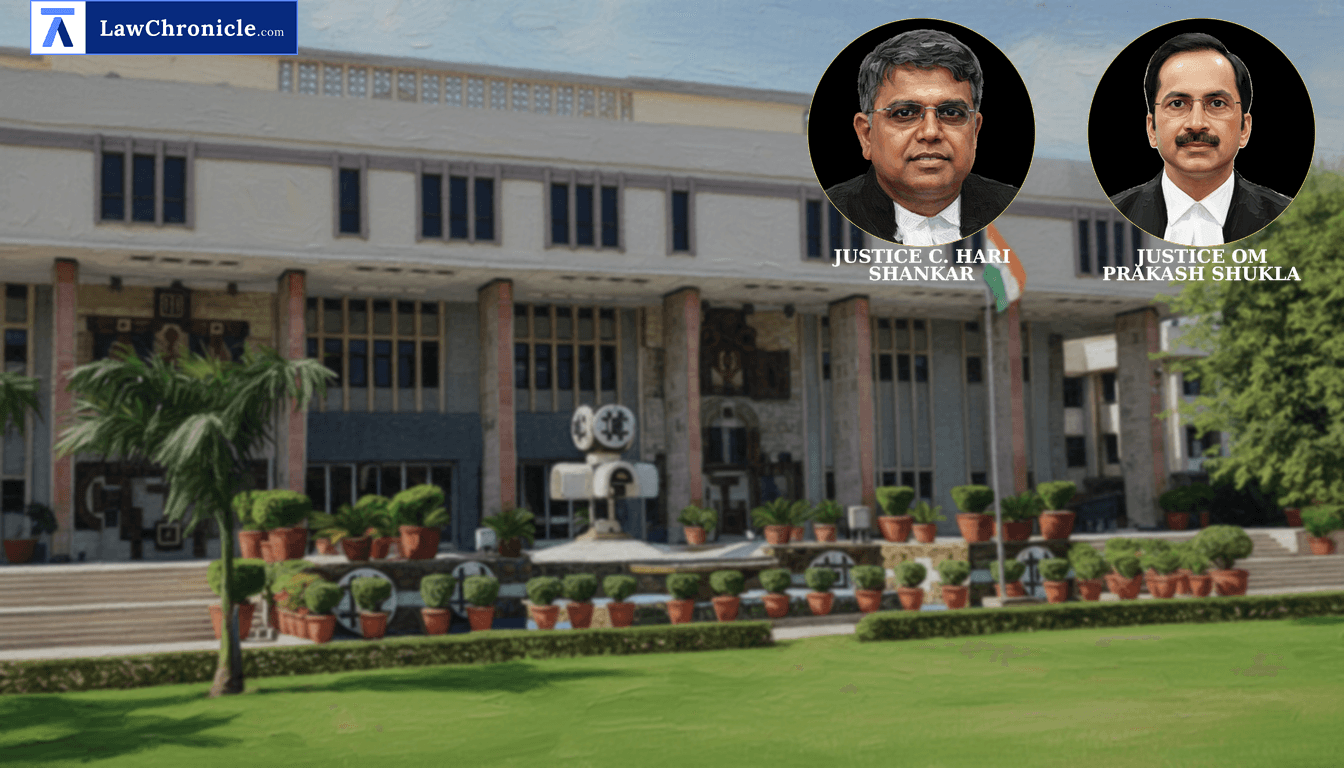
In a stern rebuke to executive apathy, the Delhi High Court has upheld the regularization of Group-D commission bearers and vendors, ruling that decades of litigation forced upon low-paid employees despite clear Constitution of India, 1950 mandates and Supreme Court directions constitutes a travesty of justice. The Court emphasized that continuous service in essential roles transforms temporary or contractual labels into a substantive right to regularization that cannot be defeated by procedural technicalities or subsequent screening processes.
Key Takeaways
Substantive Right to Regularization
Continuous and uninterrupted service in essential organizational roles creates a substantive legal right to regularization that overrides original temporary or contractual labels.
Judicial Discipline and Stare Decisis
High Courts are bound by the Constitution of India, 1950 to implement the law declared by the Supreme Court with full vigor, ensuring that beneficial precedents are not weaponized against workers.
Prohibition of Unfair Labour Practices
Maintaining employees on a commission or contractual basis for decades for work that is recurrent and essential constitutes an unfair labour practice and violates the right to life.
Limits of Executive Discretion
Once a right to regularization is crystallized by judicial precedent, the state cannot compel long-serving employees to participate in fresh recruitment or screening exercises.
The Delhi High Court, while adjudicating writ petitions filed by the Ministry of Railways, dealt with the long-standing dispute regarding the absorption of commission bearers and vendors into regular Group-D service. The respondents, who had worked for the North Eastern Railway for decades, sought regularization based on a 1976 Railway Board Circular and subsequent directions from the Apex Court. The Court noted with "deep regret" that these low-paid employees were forced to litigate since the 1980s despite multiple favorable orders in cases like Mahesh v. Union of India and others and South Eastern Railway Congress & Ors v. The Chairman, Railway Board.
Court's Rationale on Regularization and Judicial Discipline
The Court, in its reasoning, observed: "...Article 144 of the Constitution of India, 1950 obliges all authorities, civil and judicial, to act in aid of this Court. These are not ceremonial recitals. They are the structural guarantees that convert dispersed adjudication into a single system that speaks with one voice and commands public confidence... Any attempt at distinguishing the facts of the present case from those which stand covered by the judgments in Vinod Kumar, Jaggo, Shripal and Dharam Singh, to our mind, would be a clear act of judicial indiscipline."
The Court heavily relied on the principles laid down in Bhola Nath v. State of Jharkhand ( "2026 SCC OnLIne SC 129": 2026 CaseBase(SC) 79), Pawan Sharma v. Govt. of NCT of Delhi, and New Delhi Municipal Council v. Kalpana Sharma ( "MANU/DE/2899/2026": 2026 CaseBase(DEL) 3389), noting that when employees are selected by a process mirroring regular recruitment and perform essential duties for years, they are entitled to regularization. The Bench further observed that the reliance on the State of Karnataka v. Uma Devi judgment to deny regularization was misplaced, as that ruling was intended to curb "back-door" appointments, not to be used as a tool to perpetuate contractual exploitation.
Directions Issued to the Ministry of Railways
The Court has following directions:
"The respondents would be entitled to exactly the same benefits which were granted to the petitioners in Pawan Sharma v. Govt. of NCT of Delhi, i.e., to be regularised prospectively with however, the benefit of fixation of pay, seniority and continuity of service from the date of initial appointment but without any back wages."
In addition to confirming the regularization, the Court upheld the cost of Rs. 1 lakh imposed by the Central Administrative Tribunal, noting that the Railways had failed to substantiate claims regarding previous absorptions of the respondents. The Court remarked that such costs were necessary to protect the "socialist structure of our democracy."
Case Details:
Case No.: W.P.(C) 7973/2018 and WP(C) 8018/2018
Case Title: UNION OF INDIA v. RAM BARAN AND ORS.
Appearances:
For the Petitioner(s): Ms. Pratima N Lakra, CGSC; Mr. Shailendra Kumar Mishra and Ms. Upanita Soumyadarshini, Advs.
For the Respondent(s): Mr. Ambhoj Kumar Sinha, Adv.
Source: 2026 CaseBase(DEL) 5684
Similar Articles
 Breaking News


