


State Cannot Weaponize Procedural Lapses To Exploit Tribal School Teachers: Bombay HC
 Copy Link
 Share
 Save
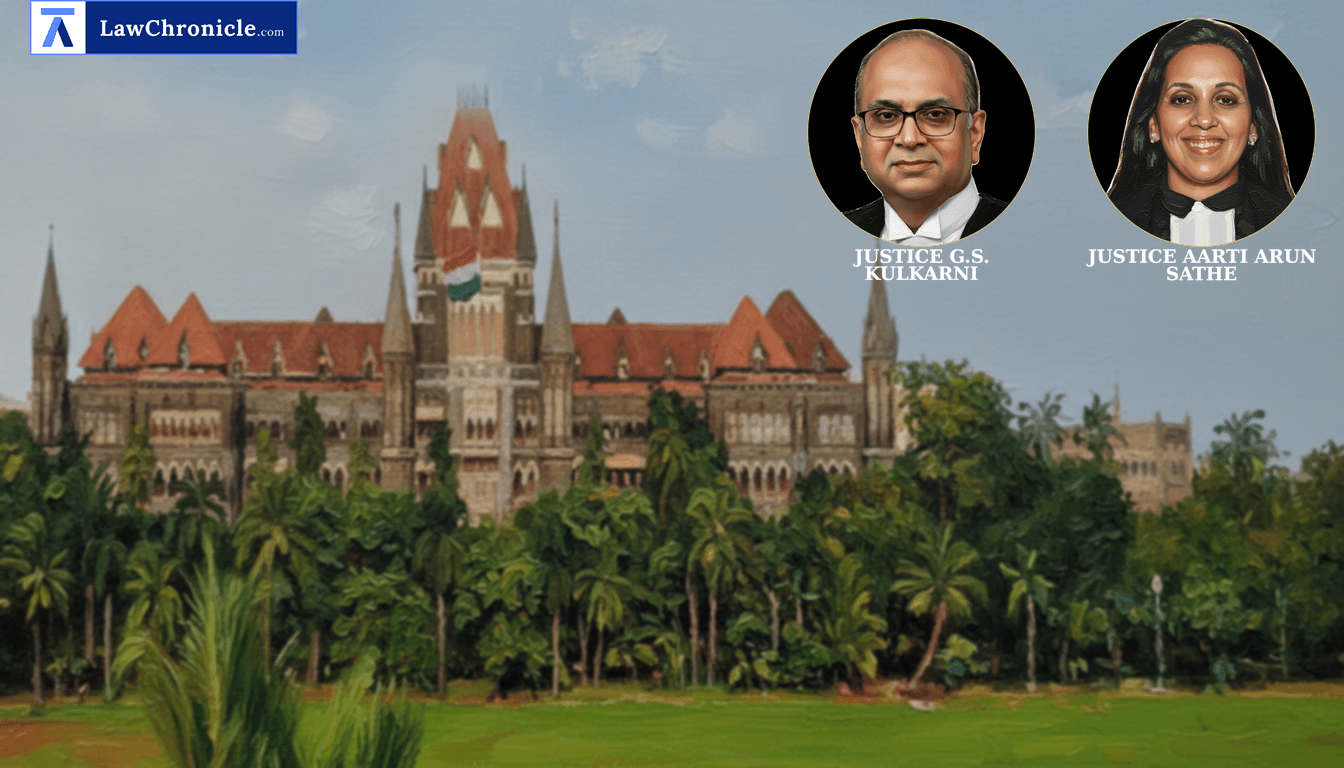
In a stern rebuke to the state's exploitative employment practices, the Bombay High Court has quashed orders denying regularization to Ashram School teachers, ruling that long-term service in remote tribal areas cannot be discarded through mechanical application of procedural formalities. The Court underscored that the State, as a model employer, is constitutionally barred from using artificial breaks and contractual labels to perpetuate ad-hocism at the cost of fundamental educational rights.
A division bench comprising Justice G. S. Kulkarni and Justice Aarti Sathe heard the challenge against the Additional Commissioner of Tribal Development's decision to reject regularization claims despite the petitioners rendering over a decade of service. The bench observed that the denial of permanency to qualified staff serving in geographically challenging terrains amounted to manifest exploitation.
Key Takeaways
End of Exploitative Ad-hocism
The Court ruled that the State cannot perpetually maintain employees on a meager honorarium while performing essential functions in remote areas, as this constitutes systemic exploitation.
Primacy of Dedicated Service
Ten years of service remains the primary benchmark for regularization in tribal schools, and procedural irregularities like the lack of a formal advertisement cannot override a decade of dedicated work.
Model Employer Obligations
The judgment reinforces that government entities must lead by example in labor practices, preventing the 'gig economy' mindset from infiltrating public sector employment.
Protection of Tribal Education
By securing the rights of teachers, the Court ensured the continuity of education for tribal children in hilly terrains where qualified staff are traditionally unwilling to serve.
Judicial Scrutiny of State Inaction
The Court noted that the petitioners were appointed without formal advertisements only because the state faced a critical vacancy crisis in remote villages. It held that the state could not later use the absence of such advertisements as a shield to deny regularization. Relying on Madhukar Bhavanrao Sadgir and Others Vs. The State of Maharashtra and Others, the bench reiterated that ten years of service is the sole criteria when the state fails to conduct regular selection processes for years.
The Court, in its reasoning, observed: "Asking the petitioners to continue to work on meager honorarium for such a long period would tantamount to their exploitation not expected from the welfare State. The State is expected to be a model litigant."
Addressing the state's reliance on Secretary, State of Karnataka and Others Vs. Umadevi and Others ( "(2006)4 SCC 1": 2006 CaseBase(SC) 148), the bench clarified that the landmark ruling was never intended to penalize long-serving employees or justify prolonged ad-hocism. The Court cited Bhola Nath vs The State of Jharkhand & Ors. ( "2026 SCC Online SC 129": 2026 CaseBase(SC) 79) and Jaggo vs Union of India & Ors. ( "2024 SCC ONLine SC 3826": 2024 CaseBase(SC) 715) to emphasize that while illegal appointments are barred, "irregular" appointments involving employees who have served continuously against sanctioned functions for considerable periods demand a fair and humane resolution.
The Court has following directions:
"(i) The impugned orders dated 13th January 2026, and 14th January 2026 issued by Respondent No. 3-Additional Commissioner, Tribal Development, Thane Region, Thane are hereby quashed and set aside;
(ii) The Respondents shall regularize the services of the Petitioners who have completed ten years of service w.e.f. the date they completed ten years of service, or from the date of filing of this writ petition, whichever is later;
(iii) The Petitioners who have been terminated after ten years of service and during the pendency of this writ petition shall be reinstated from the date they filed the writ petition, or from the date of completion of ten years of service, whichever is later;
(iv) The Petitioners shall be granted financial benefits from the date of completing ten years of service, or from the date of filing of the writ petition in the earlier round of litigation (Writ Petition No. 6693 of 2023), whichever is earlier;
(v) The aforesaid directions to be complied by the Respondents within a period of three weeks from the date this order is made available to the Respondents by the Petitioners;"
Ratio
The State cannot perpetually rely on contractual labels or mechanical procedural barriers to deny regularization to employees who have rendered over ten years of continuous, unblemished service against sanctioned posts, particularly when such service is essential to the fulfillment of the State's constitutional obligations in remote areas. Procedural irregularities that do not go to the root of the appointment cannot override the substantive rights accrued through long-term dedicated service.
Background
The petitioners were appointed as secondary and primary teachers in Government Ashram Schools in Thane District, catering to tribal children in geographically challenging terrains. Despite serving between 10 to 13 years, they were kept on clock-hour or honorarium bases with artificial breaks in service. The state argued that the lack of public advertisements and the "temporary" nature of the contracts barred regularization, citing Constitution of India, 1950 and various Supreme Court precedents.
However, the High Court found that the state had failed to conduct regular selection processes and had benefited from the petitioners' labor when no other qualified staff were willing to work in those regions. The bench followed the precedents in Madhukar Bhavanrao Sadgir and Others Vs. The State of Maharashtra and Others and Namdeo Tukaram Dhonnar and Others Vs. The State of Maharashtra and Others, which established the roadmap for regularizing Ashram School staff. Consequently, the Court allowed the writ petition, directing reinstatement and the grant of financial benefits.
Case Details:
Case No.: WRIT PETITION NO.6262 OF 2026
Neutral Citation: 2026:BHC-AS:36184-DB
Case Title: Namdeo Tukaram Dhonnar and Others vs. The State of Maharashtra through Principal Secretary and Others
Appearances:
For the Petitioner(s): Ms. Pradnya Talekar with Ms. Madhuri Ayyapan and Ms. Arushi Keniya i/by Talekar & Associates
For the Respondent(s): Mr. B.V. Samant, Additional Govt. Pleader with Smt. M.P. Thakur, AGP
Source: 2026 CaseBase(BOM) 5631
Similar Articles
 Breaking News


