


Delhi High Court Declines Re-poll In Bar Council Elections Despite Admitted Ballot Tampering
 Copy Link
 Share
 Save
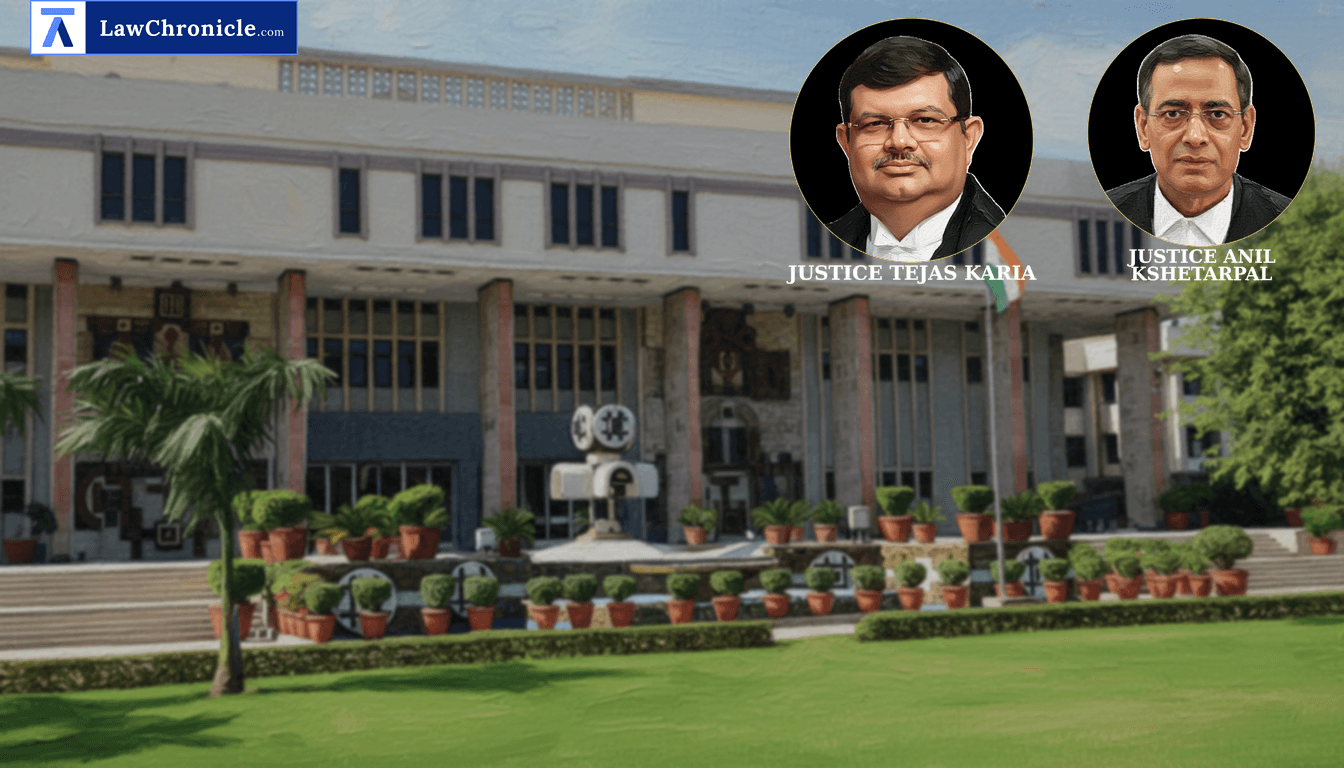
The Delhi High Court has refused to annul the Bar Council of Delhi (BCD) election despite a confirmed incident of ballot tampering, instead directing that the counting process resume under enhanced surveillance and stricter procedural safeguards. The Bench, comprising Justice Anil Kshetarpal and Justice Tejas Karia, balanced the need to preserve electoral integrity with the practical necessity of concluding the democratic process without incurring the significant cost and delay associated with conducting a fresh poll.
The Mandate for Fairness Over Re-polling
While the petitioners sought a complete re-poll following the detection of manipulated ballots, the Court observed that the statutory framework provides sufficient remedies to address such fraud without scrapping the entire exercise. The Court highlighted that the Advocates Act, 1961 and specifically the Bar Council of Delhi Rules, 1963 contain provisions for dealing with defaced or tampered voting papers.
The Court, in its reasoning, observed: "...the admitted manipulation of ballot papers by a member of the counting staff must be dealt with in the manner prescribed by the BCD Rules and the BCI Guidelines instead of directing re-polling as demanded by the Petitioners, especially having considered the effect of such manipulation and applicable the BCD Rules and the BCI Guidelines that already provide adequate safeguards for counting votes in cases involving tampered ballot papers."
Court Observations on Counting Integrity
The Bench examined the first-preference counting process through video records and found no evidence of systemic failure during that stage. It noted that the tampering discovered on April 15, 2026, occurred during the elimination stage and was localized to specific tables. Relying on the principles of N.P. Ponnuswami v. Returning Officer, Namakkal Constituency & Ors., Mohinder Singh Gill v. Chief Election Commr. ( "(1978) 1 SCC 405": 1977 CaseBase(SC) 276), and L. Chandra Kumar v. Union of India, the Court maintained that judicial interference should be minimal once an election has commenced, provided adequate remedial measures are available. The Court also referred to Kuldeep Kumar v UT Chandigarh & Ors. to emphasize that even when tampering is evident, the destruction of democratic principles can be compounded by countermanding an entire election if a specific remedial measure can restore the true vote count.
The Court has the following directions:
"i. The counting of the votes for BCD Election shall recommence from the stage it has stopped pursuant to the interim order passed by the Hon’ble Supreme Court on 18.05.2026.
ii. Before the counting recommences, all ballot papers presently kept in open baskets, whether in cloth bags or otherwise, shall be transferred to lockable boxes or bags. Such boxes or bags shall remain locked during every break and at the close of each counting day.
iii. A high-resolution camera shall be placed above / top of the counting table to ensure that each ballot paper is captured in full and with clarity. The entire counting process shall be continuously videographed without interruption and live-streamed in real time to all contesting candidates and their authorised representatives at the display provided on 6th Floor of S-Block, High Court of Delhi and through YouTube and the High Loop App, as previously.
iv. The Election Committee and Returning Officer shall examine the CCTV camera system installed at 7th Floor of S-Block, High Court of Delhi to ensure that all cameras shall continuously capture all counting tables and all persons stationed thereat and shall be positioned so that no material stage of handling, scrutiny, or movement of ballot papers falls outside their field of view.
v. The Returning Officer shall ensure that no counting staff for the next stage of counting is engaged through Mr. Prabodh Kumar. Entire counting staff shall be engaged only after proper verification, issuance of photo-identity cards, and submission of an undertaking confirming that no conflict of interest exists with any contesting candidate.
vi. Counting shall recommence as soon as the CCTV and Hi-resolution cameras, lockable boxes, and counting staff are in place and shall be endeavored to be completed expeditiously.
vii. Any ballot paper bearing erasures, overwriting, corrections, additions, or other suspicious variations shall be segregated and kept in sealed bundles or packets marked as ‘doubtful ballots’. Such doubtful ballots, including the 27 ballot papers that have already been identified as manipulated, shall be placed before the learned Additional Solicitor General to determine how they are to be counted and record brief reasons for each decision.
viii. The Counting Hall and all areas connected with the custody or handling of ballot papers shall remain under continuous CCTV surveillance, and entry thereto shall be regulated strictly through identity cards. A complete digital and physical log of every entry and exit shall be maintained and preserved as part of the election record.
ix. If any Petitioner or their authorized representative obstructs the counting process, misbehaves with any member of the Election Committee or Special Committee, the Returning Officer, the Observer, or any counting staff, restricts access to S-Block of the High Court of Delhi, or enters the 7th Floor of S-Block without authority, the Election Committee shall take appropriate steps in accordance with law.
x. All rights and contentions of the Petitioners are reserved. They shall remain at liberty to pursue the same by way of Election Petition(s) before the Election Tribunal upon conclusion of the BCD Election, if so advised. We clarify that the observations contained herein are prima facie in nature and shall not be construed as a final expression on the merits of the case. Any Election Petition(s), if filed, shall be decided independently by the Election Tribunal, uninfluenced by the observations hereinabove."
Background:
The dispute originated during the BCD Election held in February 2026. While the first-preference counting proceeded largely without incident, an 80th elimination round on April 15 revealed that a counting staff member, Nikhil Kumar, had prefixed the digit '1' to several ballots to favor a particular candidate. An FIR was registered, and the High-Powered Election Supervisory Committee (HPESC) later directed the counting to resume after re-verifying the affected tables. Petitioners challenged this before the Supreme Court in Birender Sangwan v. High Powered Election Supervisory Committee & Ors., which transferred the matter to the Delhi High Court for final adjudication. The petitioners argued that the integrity of the ballot boxes was compromised and that the Constitution of India, 1950 required a higher level of transparency. The High Court, however, found that while the fraud was serious, the existing legal framework and the appointment of the Additional Solicitor General to adjudicate 'doubtful ballots' under Rule 23 of the Bar Council of Delhi Rules, 1963 provided an efficacious solution.
Case Details:
Case No.: W.P.(C) 7531/2026 & Connected Matters
Case Title: RAMAN GANDHI v. BAR COUNCIL OF DELHI & ORS.
Appearances:
For the Petitioner(s): Ms. Sangita Malhotra, Adv., Mr. Sunil Dalal, Sr. Adv., Ms. Priya Hingorani, Sr. Adv., Ms. Shobha Gupta, Adv.
For the Respondent(s): Mr. T. Singhdev, Adv., Mr. Preet Pal Singh, Adv. for BCI, Dr. Lalit Bhasin, Adv.
Source: 2026 CaseBase(DEL) 427
Similar Articles
 Breaking News


