


No Vested Right To 100% Reservation In Bar Council Elections: Delhi High Court
 Copy Link
 Share
 Save
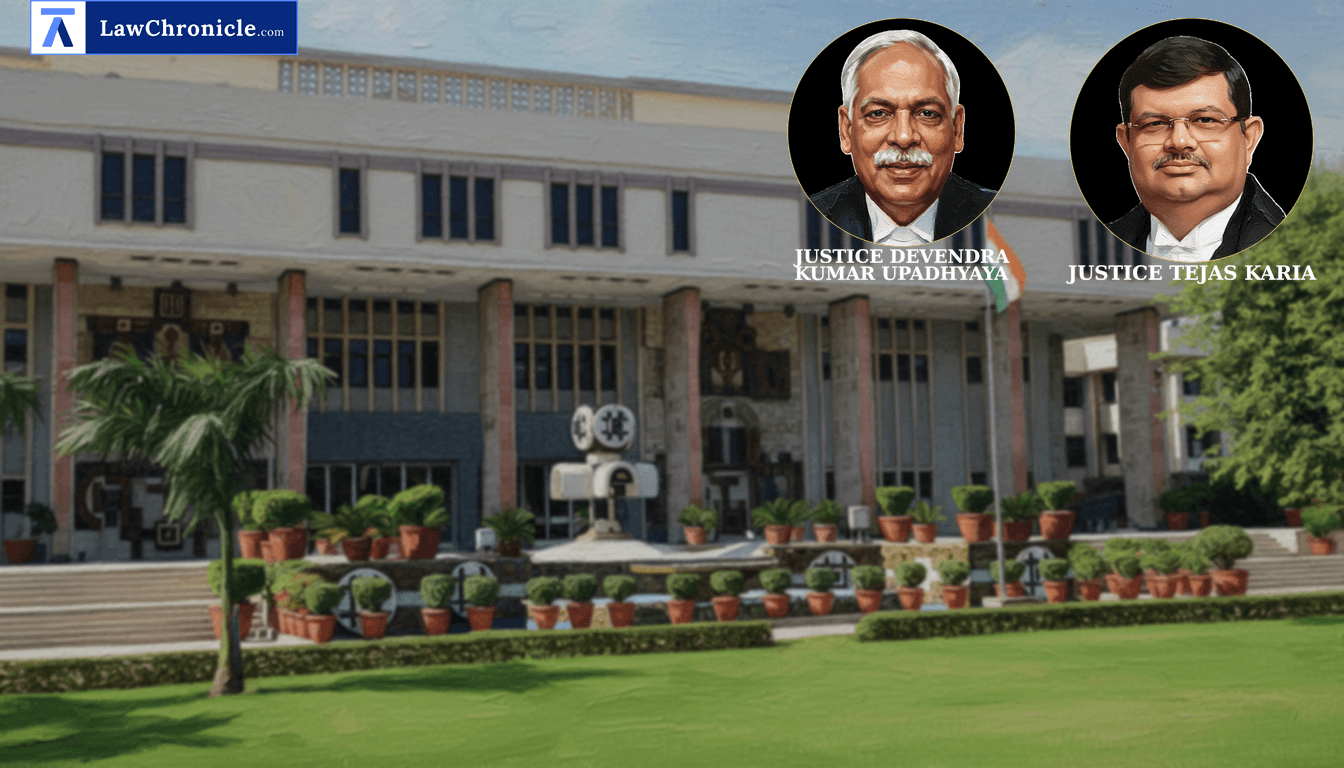
The Delhi High Court has slammed the brakes on attempts to enforce total reservation in Bar Council elections, ruling that advocates with less than ten years of practice cannot claim exclusive rights over unreserved seats after statutory and court-mandated quotas are met. In a decisive stance against over-reservation, the Court affirmed that the existing legal framework does not permit squeezing out general competition to accommodate specific experience-based demographics beyond what is explicitly provided by law.
A bench comprising Chief Justice Devendra Kumar Upadhyaya and Justice Tejas Karia heard the intra-court appeal challenging a Single Judge's order. The Appellant, an advocate contesting the Bar Council of Delhi (BCD) Election 2026, sought a clarification that the six seats remaining after the 50% seniority reservation and 30% women's reservation should be exclusively reserved for junior advocates with less than ten years of practice.
Court Rejects Claims of Unfair Representation Under Advocates Act
The Appellant contended that allowing senior advocates to contest for unreserved seats, despite having a dedicated quota, violated the principles of fair representation under the Advocates Act, 1961 and infringed upon fundamental rights under Article 14 of the Constitution of India, 1950 and Article 19(1)(g) of the Constitution of India, 1950. He argued that the current structure created an unequal environment for junior practitioners. However, the Court noted that the Advocates Act, 1961, specifically Section 3(2)(b), only mandates that "as nearly as possible one-half" of members must have at least ten years of experience, but does not provide a corresponding mandatory reservation for those with less experience.
Maintainability and Supreme Court Supervision
The Bench highlighted that the BCD Election 2026 is being conducted under the direct supervision of committees constituted by the Supreme Court in M. Varadhan v. Union of India & Anr.. The Court observed that the Supreme Court had specifically directed that no High Court or Civil Court should entertain petitions against decisions made by the High-Powered Election Committees. Consequently, the Writ Petition was held to be non-maintainable.
Regarding the merits, the Court, in its reasoning, observed: "The 50% reservation for advocates with more than ten years of practice, as stipulated in Section 3(2)(b) of the Advocates Act, together with the 30% reservation for women advocates directed by the Supreme Court in Yogamaya M.G. v. Union of India & Ors., must not be construed to imply that the remaining 20% positions are reserved for advocates with less than ten years of experience. Such an interpretation would lead to complete reservation for all posts, which is inconsistent with the provisions of the Advocates Act."
The Court has the following directions:
"Therefore, no interference is required in the Impugned Order dismissing the Writ Petition as non-maintainable. Consequently, the present Appeal as well as the pending Application are dismissed. No order is made regarding costs."
Key Takeaways:
No Automatic Residual Reservation
Residual seats in Bar Council elections remain open for general competition; young advocates do not have a vested right to exclusive reservation of remaining posts once statutory quotas are filled.
Supremacy of Election Committees
High Courts lack jurisdiction to entertain challenges to Bar Council elections when the Supreme Court has specifically vested supervisory powers in High-Powered Election and Supervisory Committees.
Prevention of 100% Reservation
Constitutional and statutory interpretations cannot be stretched to create 100% reservation within a representative body, as it contradicts the legislative intent of the Advocates Act, 1961.
Ratio Decidendi:
Advocates with less than ten years of practice do not possess a vested right to seek reservation for seats that are not specifically set aside by Section 3(2)(b) of the Advocates Act, 1961 or by judicial mandate. Furthermore, High Courts cannot bypass the specific dispute-resolution mechanisms established by the Supreme Court for monitored Bar Council elections.
Background:
The Appellant challenged a BCD notification dated 24.12.2025, which reserved 12 posts for advocates with over 10 years of practice and 5 posts for female advocates out of 23 total posts. The Appellant moved the court only after the election process had concluded and counting had commenced. The Single Judge dismissed the writ on grounds of delay, laches, and the absence of a vested right. The High Court upheld this, noting that the Appellant participated in the election before challenging its notification. The court further referenced the Indian Bar Councils Act, 1926 regarding the historical computation of the ten-year practice period. The appeal was dismissed without costs.
Case Details:
Case No.: LPA 161/2026 & CM APPL. 19155/2026
Case Title: Ramesh Chandra Singh V. Bar Council Of Delhi And Anr
Appearances:
For the Petitioner(s): Appellant-in-person
For the Respondent(s): Mr. Preetpal Singh, Ms. Tanupreet Kaur, Ms. Medha Sharma, Ms. Simran Kumar, Ms. Pooja and Mr. Gaurav, Advocates for BCI
Source: 2026 CaseBase(DEL) 954
Similar Articles

 Breaking News


