


Denial of Entry to House Not Abetment to Suicide: Chhattisgarh HC
 Copy Link
 Share
 Save
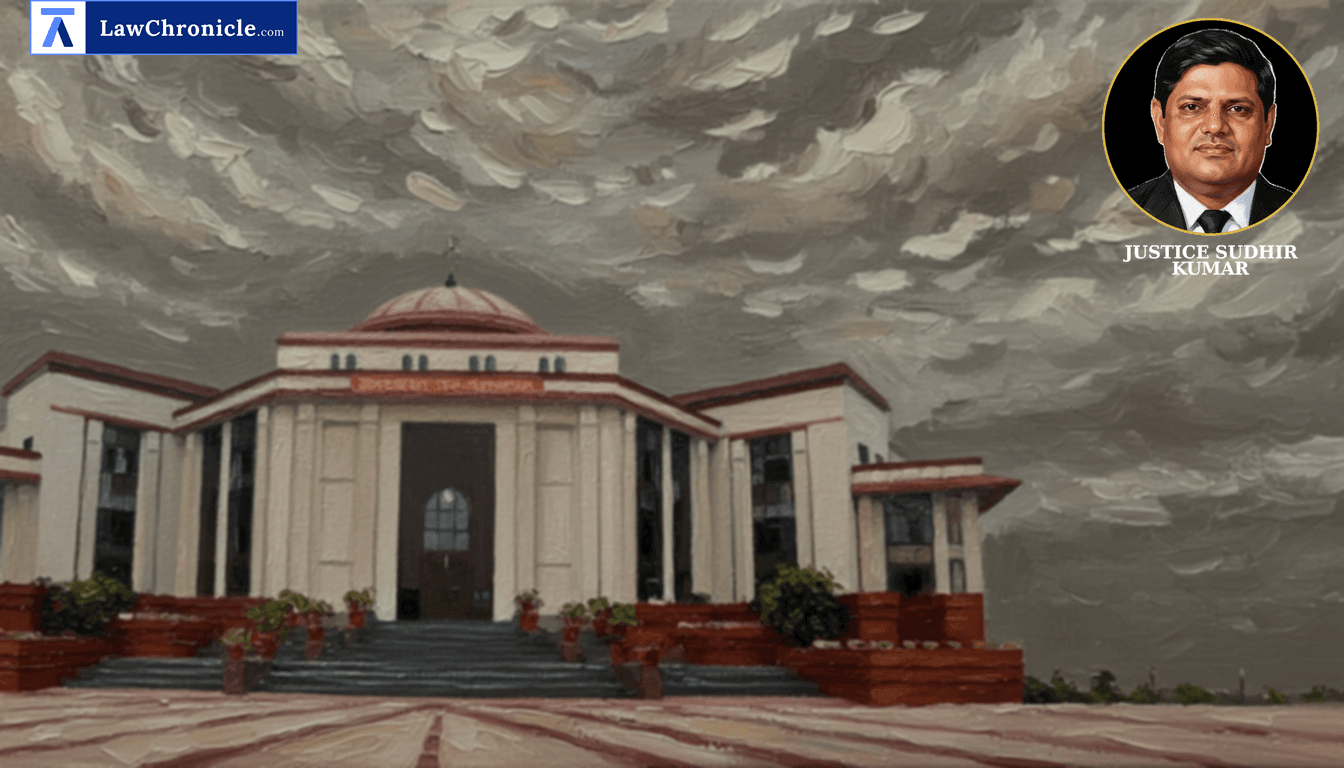
The Chhattisgarh High Court has ruled that preventing a family member from entering a house, in the absence of positive action or mens rea to incite death, does not satisfy the legal threshold for abetment to suicide or cruelty. Setting aside the conviction of a mother-in-law, the Bench emphasized that a suicide must be the direct and intended consequence of a particular act to sustain a criminal charge under Section 306 of the Indian Penal Code, 1860.
Justice Sudhir Kumar presided over the appeal, which challenged a 2011 judgment of the Additional Sessions Judge, Bemetara. The appellant had been convicted for the suicide of her daughter-in-law, based primarily on evidence that she had barred the deceased from entering the matrimonial home on the day of the incident.
Key Takeaways
Defining Positive Instigation
Mere harassment or denial of entry into a house, without a clear intent to drive a person to suicide, is insufficient to attract the rigors of Section 306.
Strict Interpretation of Section 107
For a conviction of abetment, the prosecution must demonstrate a direct or indirect act of provocation in close proximity to the time of death.
High Threshold for Cruelty
Procedural improvements in witness statements, such as new allegations of food denial not found in original police reports, cannot form the basis for a conviction under Section 498A.
Legal Threshold for Abetment and Cruelty
The Chhattisgarh High Court analyzed the intersection of Section 306 and Section 107 of the Indian Penal Code, 1860, noting that the prosecution failed to prove that the appellant possessed the specific mens rea required for abetment. While witnesses established that the deceased was sitting outside the house while the appellant remained inside, the Court found this fact insufficient to constitute a criminal act of incitement. The Bench further noted that allegations regarding the denial of food appeared to be an afterthought or improvement over the original police statements.
The Chhattisgarh High Court explained ingredients of abetment to suicide that “When Section 306 IPC is read with Section 107 IPC, it is clear that there must be (i) direct or indirect instigation (ii) in close proximity to the commission of suicide, along with (iii) clear mens rea to abet the commission of suicide.”
Ratio
To attract the offence of abetment to suicide, there must be proof of direct or indirect acts of instigation or incitement that reveal a clear mens rea to drive the victim to such an end. Harassment, regardless of its perceived severity, does not constitute abetment unless there is a conscious and deliberate intention to drive the person to take their own life.
Background
The prosecution alleged that on December 20, 2010, the appellant and other family members assaulted the deceased and demanded dowry. It was further alleged that the appellant ousted the deceased from the house, leading the victim to commit suicide by self-immolation. The trial court had previously acquitted other co-accused but convicted the mother-in-law under Sections 306 and 498A of the Indian Penal Code, 1860.
Upon review, the High Court relied on several precedents, including Amalendu Pal v. State of West Bengal ( "(2010) 1 SCC 707": 2009 CaseBase(SC) 286) and Pawan Kumar v. State of H.P. ( "(2017) 7 SCC 780": 2017 CaseBase(SC) 857), which established that reprimands or casual remarks do not amount to instigation. The Bench also cited Ude Singh v. State of Haryana ( "(2019) 17 SCC 301": 2019 CaseBase(SC) 4132) and Abhinav Mohan Delkar v. State of Maharashtra ( "(2026) 6 SCC 233": 2025 CaseBase(SC) 684) to reiterate that instigation requires an act that leaves the deceased with no other option. Relying on the principles in Prakash v. State of Maharashtra ( "(2026) 6 SCC 251": 2026 CaseBase(SC) 125), the Chhattisgarh High Court concluded that the prosecution failed to prove the necessary ingredients of the alleged offences beyond reasonable doubt.
Case Details:
Case No.: CRA No. 927 of 2011
Neutral Citation: 2026:CGHC:42567
Case Title: Smt. Manki Bai v. State of Chhattisgarh
Appearances:
For the Petitioner(s): Mr. Amit Kumar Sahu, Advocate.
For the Respondent(s): Mr. Anant Bajpai, Panel Lawyer
Source: 2026 CaseBase(CTH) 19575
Similar Articles
 Breaking News


