


Gujarat High Court Upholds Acquittal In Abetment To Suicide Case Over Lack Of Direct Mens Rea
 Copy Link
 Share
 Save
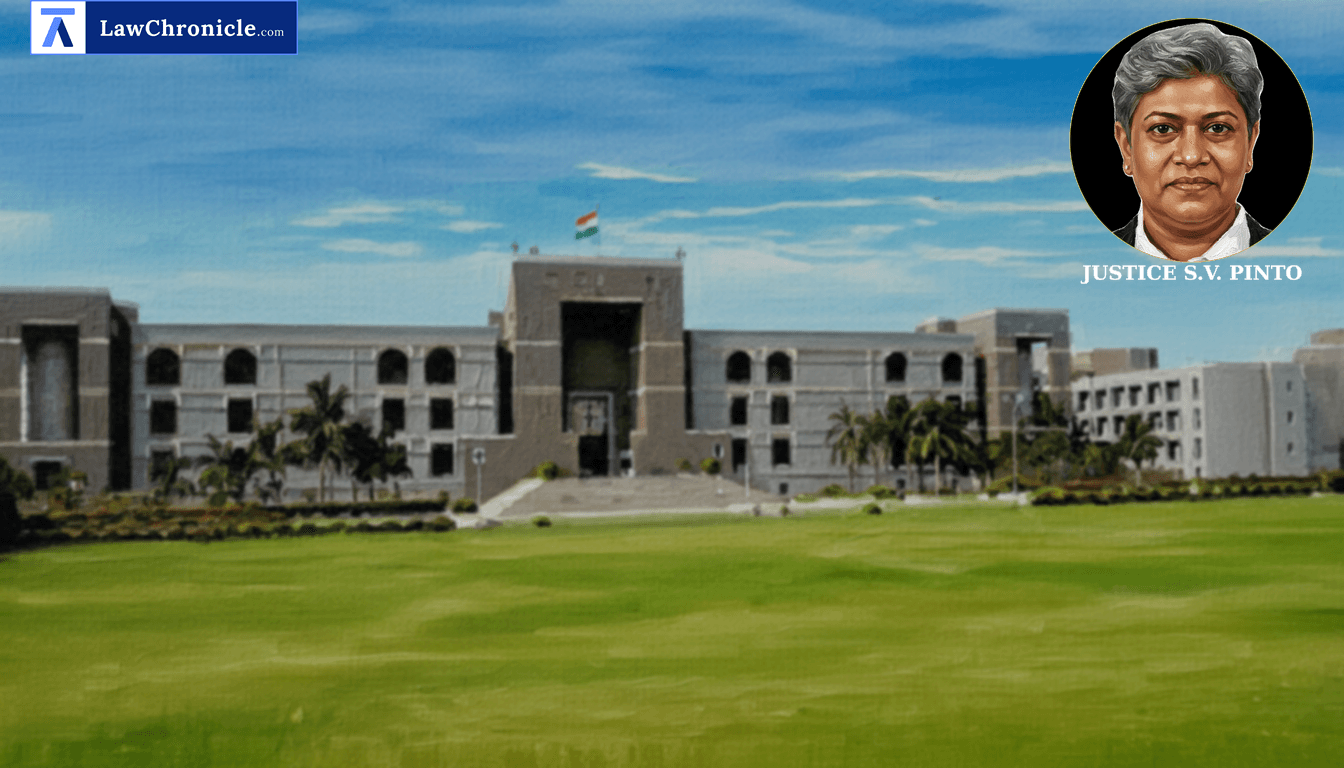
The Gujarat High Court has reinforced the stringent evidentiary standards required to sustain a conviction for abetment of suicide, ruling that neither routine domestic discord nor a husband's failure to provide household funds constitutes 'instigation' under the law. The court emphasized that in the absence of a direct act intended to push a deceased person into a position of no return, the benefit of doubt must remain with the accused.
Justice S.V. Pinto, while presiding over the appeal, evaluated the State's challenge against the acquittal of a husband charged under Section 306 and Section 498A of the Indian Penal Code, 1860. The Court scrutinized the oral testimonies and the procedural delays in the investigation, ultimately finding no grounds to interfere with the Trial Court's well-reasoned findings.
Key Takeaways
Requirement of Direct Instigation
Conviction under Section 306 requires a clear mental process of goading or provoking the victim, rather than mere ordinary petulance or domestic friction.
Presumption of Innocence Strengthened
An order of acquittal bolsters the initial presumption of innocence, and appellate courts will not interfere unless the trial court's view is found to be demonstrably perverse or impossible.
Strict Proof for Cruelty
Allegations of physical or mental harassment under Section 498A must be supported by consistent, independent evidence; material omissions in early police reports can be fatal to the prosecution's case.
Analysis of Abetment and Criminal Intent
The Court extensively analyzed the definition of 'abetment' as provided under Section 107 of the Indian Penal Code, 1860. It noted that for a successful prosecution, there must be a positive act on the part of the accused to aid or instigate the suicide. The Court, in its reasoning, observed: "The intention of the Legislature and the ratio of the cases decided by this court are clear that in order to convict a person under section 306 IPC there has to be a clear mens rea to commit the offence. It also requires an active act or direct act which led the deceased to commit suicide seeing no option and this act must have been intended to push the deceased into such a position that he/she committed suicide."
Assessment of Witness Testimonies
The Bench highlighted significant discrepancies in the testimonies of the deceased’s family members. While the complainant alleged systematic harassment and physical assault, the Court noted that these allegations were absent from the initial information (Janvajog) provided to the police. Furthermore, the mother of the deceased did not support the prosecution's narrative and was declared hostile. The Court remarked that no independent neighbors were examined to corroborate the claims of continuous harassment.
Court Directions
Following its analysis, the Court has following directions: "The impugned judgement and order of acquittal passed by the learned Additional Sessions Judge, Sabarkantha Camp at Modasa in Sessions Case No. 75/2011 on 10.07.2012, is hereby confirmed. Bail bond stands cancelled. Record and proceedings be sent back to the concerned Trial Court forthwith."
Ratio
To convict a person under Section 306 of the Indian Penal Code, 1860, there must be clear evidence of mens rea and an active, direct act intended to provoke the deceased to commit suicide; a victim's hypersensitivity to ordinary domestic petulance or discord common to society does not satisfy the legal requirement for abetment.
Background
The case arose from the death of Arunaben, who committed suicide by hanging on May 18, 2011, just six days after giving birth to a child. The prosecution alleged that her husband, the respondent, subjected her to physical and mental cruelty for money and failed to provide for household expenses. The State appealed the 2012 acquittal, arguing that the Trial Court ignored the testimony of family members who witnessed marks of injury on the body.
However, the High Court found that the prosecution failed to explain the delay in lodging the formal complaint and noted the absence of the accused at the time of the incident. Citing precedents like Mohan alias Srinivas alias Seens Alias Tailor Vs. State of Karnataka and M. Mohan Vs. State represented by the Deputy Superintendent of Police, the Court held that the Trial Court had taken a possible view of the evidence, warranting no interference under Section 378 of the Code of Criminal Procedure, 1973.
Case Details:
Case No.: R/CRIMINAL APPEAL NO. 2055 of 2012
Neutral Citation: 2026:GUJHC:70716
Case Title: State Of Gujarat Versus Pravinbhai Badabhai Manat
Appearances:
For the Petitioner(s): MR. Krutik Parikh, APP
For the Respondent(s): MR P P Majmudar, MS. Hastee Doshi
Source: 2026 CaseBase(GUJ) 31986

 Breaking News


