


Himachal Pradesh HC Refuses to Overturn Acquittal Amid Material Discrepancies in NDPS Case
 Copy Link
 Share
 Save

The Himachal Pradesh High Court has reinforced the sanctity of the 'double presumption of innocence' by refusing to overturn a trial court’s acquittal where the prosecution's narrative was riddled with material contradictions regarding police movement and search procedures. This ruling underscores that the appellate court's power to interfere with acquittals is strictly circumscribed, especially when the trial court has adopted a possible and reasonable view of the evidence.
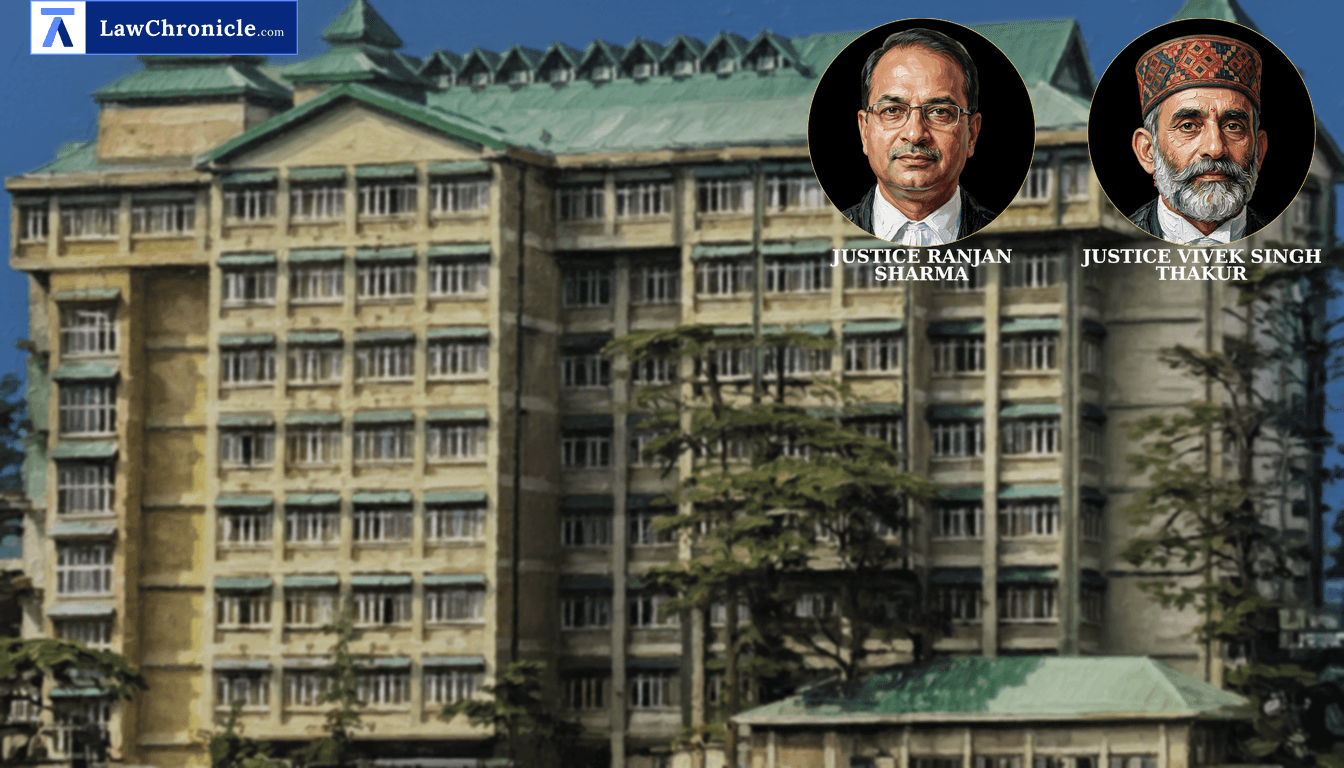
Justice Vivek Singh Thakur and Justice Bhupesh Sharma, presiding over the matter, dismissed the State's appeal against the acquittal of an individual charged under Section 20 of the Narcotic Drugs and Psychotropic Substances Act, 1985. The Court scrutinized the prosecution's claim that 1 kg of 'Charas' was recovered from the accused near Sadhupul, finding the evidence of the police officials to be inconsistent and the independent witness's testimony to be unsupportive of the recovery.
Key Takeaways
Strengthening the Double Presumption
An order of acquittal strengthens the initial presumption of innocence, and appellate courts must be exceptionally cautious before disturbing such findings unless patent perversity is demonstrated.
Strict Scrutiny of Link Evidence
Material contradictions in the movement of police parties and the timing of procedural steps like the registration of FIRs can prove fatal to the prosecution in special statutes like the Narcotic Drugs and Psychotropic Substances Act, 1985.
Reliability of Independent Witnesses
Where a sole independent witness admits their signature on documents but denies the occurrence of the search and seizure in their presence, the prosecution's case becomes highly vulnerable.
Limits of Re-appreciation
Appellate courts cannot overturn an acquittal merely because a different view of the evidence is possible; the trial court's view must be shown to be impossible or legally erroneous.
Analyzing Material Contradictions in Prosecution Evidence
The Court observed significant discrepancies in the testimonies of the official witnesses regarding their movement prior to the apprehension. While one witness claimed the party stayed the night at Solan, another suggested they started from Shimla in the morning. The Court noted, "The element of consistency is completely missing to establish their actual movement after they left from State CID Police Station, Bharari (Shimla)."
Furthermore, the Court found the prosecution's narrative regarding the accused's attempt to flee hard to believe. Since the police officials were in civil dress, the Court reasoned that the accused had no immediate reason to suspect they were law enforcement. The Court also highlighted the logistical improbability of the Code of Criminal Procedure, 1973 (FIR) registration timing, noting the distance between the spot and the police station.
The Court, in its reasoning, observed: "Having considered the aforesaid material discrepancies, material contradictions and inconsistencies in the statements of the prosecution witnesses, the prosecution case is liable to be discarded since the aforesaid contradictions cannot be brushed aside being material to the root of the case, therefore, prosecution evidence apparently does not inspire confidence and cannot be relied upon."
The Court has following directions:
"In view of the provisions of Section 437-A of the Code of Criminal Procedure (Section 481 of Bhartiya Nagarik Suraksha Sanhita, 2023), the appellant is directed to furnish bail bonds in the sum of ₹25,000/- with one surety in the like amount to the satisfaction of learned Registrar (Judicial) within four weeks, which shall be effective for six months with stipulation that in the event of Special Leave Petition being filed against this judgment, or on grant of the leave, the appellants on receipt of notice(s) thereof, shall appear before the Hon’ble Supreme Court."
Ratio
The Appellate Court shall not interfere with a judgment of acquittal unless it suffers from patent perversity or is based on a misreading of material evidence. If the view taken by the Trial Court is a possible and reasonable one based on the record, the presumption of innocence is strengthened, and the high standard of 'proof beyond reasonable doubt' remains solely the burden of the prosecution, which does not shift regardless of the seriousness of the offence.
Background
The State of Himachal Pradesh challenged a 2021 judgment by the Special Judge-III, Solan, which acquitted the respondent of charges involving the possession of 1 kg of 'Charas'. The prosecution alleged that on July 14, 2018, a CID patrolling party apprehended the accused near Sadhupul. However, the trial court acquitted the accused citing contradictions in the testimonies of official witnesses and the fact that the independent witness, PW-1, did not support the recovery narrative.
In dismissing the appeal, the High Court relied on several precedents, including Muralidhar alias Gidda & another vs. State of Karnatka ( "(2014) 5 SCC 730": 2014 CaseBase(SC) 95) and Rajesh Prasad vs. State of Bihar & another, to define the scope of appellate interference. The Court also considered the procedural mandates of the Code of Criminal Procedure, 1973 and the Indian Evidence Act in light of the transition to the Bhartiya Nagarik Suraksha Sanhita, 2023.
Case Details:
Case No.: Cr. Appeal No. : 292 of 2021
Neutral Citation: 2026:HHC:41995
Case Title: State of Himachal Pradesh Versus Sandeep
Appearances:
For the Appellant. : Mr. Raj Negi, Deputy Advocate General.
For the Respondent: Ms. Swetima Dogra, Advocate vice Mr. Shriyek Sharda, Advocate, Legal Aid Counsel.
Source: 2026 CaseBase(HP) 9417
Similar Articles


 Breaking News


