


Eight-Year Delay In Challenging Punishment Order Is Fatal To Writ Petition: Patna High Court
 Copy Link
 Share
 Save
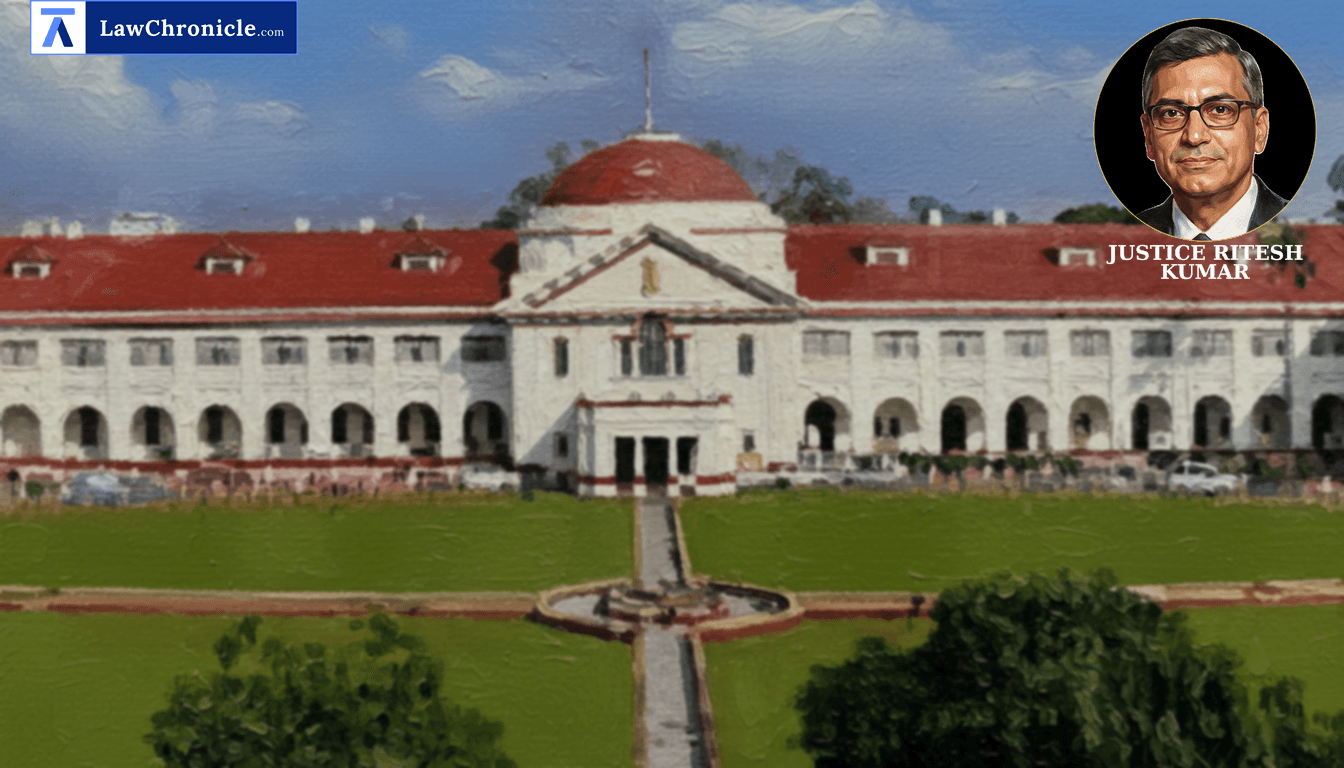
The Patna High Court has slammed the brakes on a belated challenge to disciplinary actions, ruling that a litigant’s 'deep slumber' for eight years over their rights disentitles them to the extraordinary discretionary relief under Constitution of India, 1950. This judgment reinforces the principle that delay defeats equity, especially when a petitioner knowingly suppresses their parent organization's pay scale to obtain higher remunerations during deputation.
In a verdict delivered by Justice Ritesh Kumar, the Court scrutinized the conduct of a petitioner who had transitioned through various state corporations on deputation while allegedly drawing salaries far exceeding his legal entitlement.
Key Takeaways
Delay Defeats Equity
Unexplained delay of eight years in challenging a punishment order is a valid ground for dismissal, as writ courts do not assist the 'tardy and the indolent'.
Deputation and Pay Suppression
Employees on deputation cannot suppress the pay scale of their parent organization to claim higher scales elsewhere; such conduct justifies disciplinary recovery.
Article 226 Discretion
Discretionary powers under Constitution of India, 1950 are not to be exercised if the applicant’s negligence causes the cause of action to 'drift away'.
Employer-Employee Relationship
The termination of an employer-employee relationship via statutory settlement schemes limits the scope of consequential relief in service disputes.
Failure to Disclose Parent Pay Scale Leads to Disciplinary Action
The petitioner, originally a Labour Officer in the Bihar State Sugar Corporation Limited, served on deputation in various institutions including the IGIMS and BIPARD. The controversy erupted when it was discovered that he had submitted a Last Pay Certificate (LPC) from IGIMS rather than his parent corporation to secure a higher pay scale of Rs. 8000-13500. Following a departmental inquiry, he was punished in 2010 with recovery of excess salary and stoppage of increments. However, he chose to challenge this order only in 2018 through an interlocutory application.
The Court noted that the petitioner was fully aware of the proceedings but chose to wait for the outcome of unrelated litigation before approaching the Court for relief against the punishment order.
Court Observations and Directions
The Court, in its reasoning, observed: "An applicant who approaches the court belatedly or in other words sleeps over his rights for a considerable period of time, wakes up from his deep slumber ought not to be granted the extraordinary relief by the writ courts. This Court time and again has held that delay defeats equity. Delay or laches is one of the factors which should be borne in mind by the High Court while exercising discretionary powers under Constitution of India, 1950."
The Court has the following directions:
"The writ petition, filed by the petitioner against the impugned order of punishment dated 24.12.2010, is accordingly dismissed on the ground of delay and laches as well as on merits also, since it is an admitted position that the petitioner did not provide his pay slip of the Corporation, before the BSHPCL or BIPARD and submitted his pay slip of IGIMS, before both the places, which was admittedly in excess of his entitlement in the Corporation, which was his parent organization. Pending application(s), if any, shall also stand disposed of."
Ratio
A party seeking relief under Constitution of India, 1950 must approach the Court without unreasonable delay and must satisfactorily explain the circumstances preventing them from seeking relief earlier. Inordinate delay in moving for a writ, especially where the party has acquiesced to the situation by their conduct, is a sufficient ground for the Court to refuse the exercise of its discretionary jurisdiction.
Background
The petitioner was appointed in 1988 and went on several deputations. Investigations revealed he received excess payments by not disclosing that his parent corporation was under liquidation and had not implemented the 5th or 6th pay revisions. Relying on State of Uttar Pradesh & Ors. VS Arvind Kumar Srivastava & Ors. ( "2015 (1) SCC 347": 2014 CaseBase(SC) 808) and Mrinmoy Maity VS Chhanda Koley & Ors. ( "2024 (15) SCC 215": 2024 CaseBase(SC) 114), the Court held that while there is no fixed period of limitation for writ petitions, they must be filed within a reasonable time. The Court found that the petitioner's silence from 2010 to 2018 constituted a waiver of his right to challenge the disciplinary action. Furthermore, the Court observed that the parent corporation had entered a 'Exit Settlement Scheme' in 2013, effectively ending the employer-employee relationship years before the petitioner sought to implead the corporation as a party.
Case Details:
Case No.: Civil Writ Jurisdiction Case No.16930 of 2013
Case Title: Dr. Rajan Sinha Vs. The State of Bihar & Ors.
Appearances:
For the Petitioner(s): Mr. Kundan Kumar Sinha, Adv
For the Respondent(s): Mr. Gyan Shankar, Adv (For B.S.S.C.L); Mr. Venkatesh, AC to GA-2 (For State)
Source: 2026 CaseBase(PAT) 3955
Similar Articles
 Breaking News


