


Inordinate Delay Limits Writ Remedy Against Labor Court Decision: Gauhati HC
 Copy Link
 Share
 Save
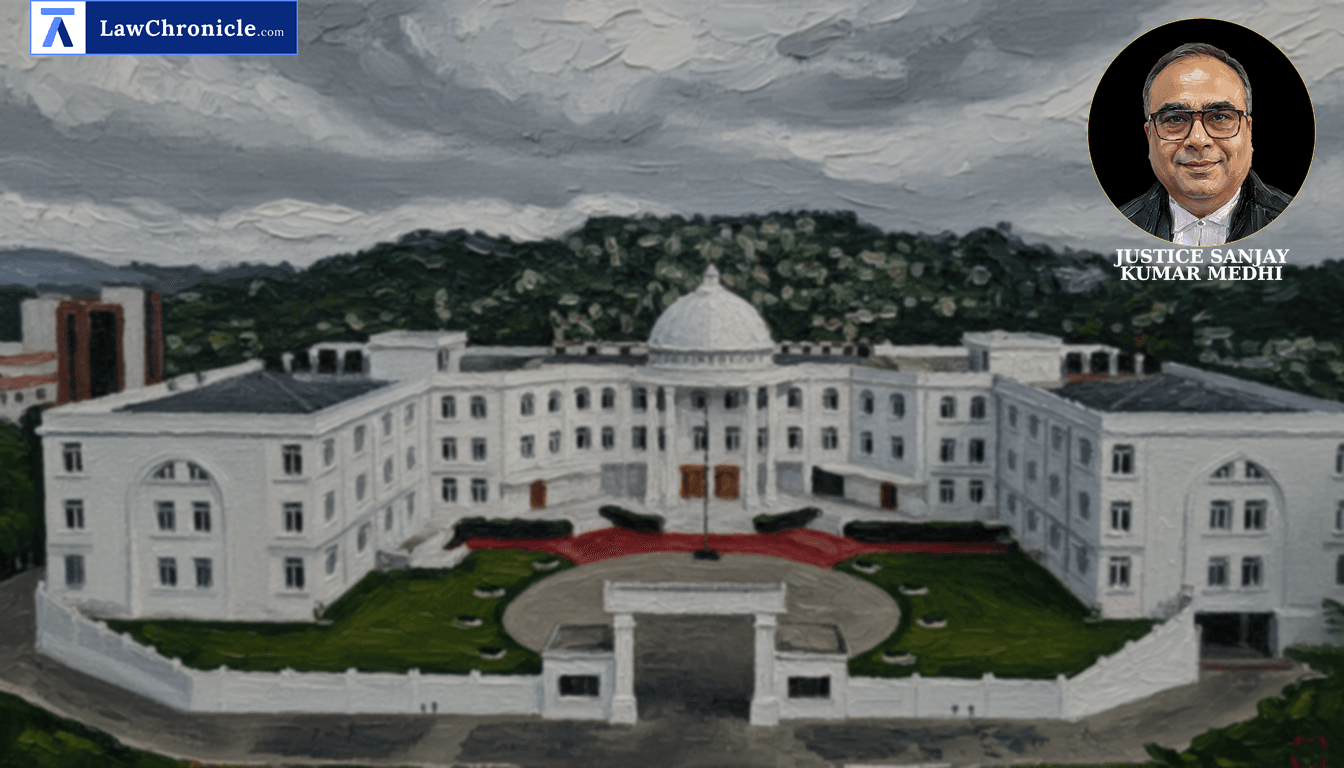
An inordinate delay of eight years in challenging a labor award serves as a fatal blow to writ proceedings, even where the underlying dismissal followed allegations of workplace violence and police firing. The Gauhati High Court has reaffirmed that while the Industrial Dispute Act, 1947 may not prescribe a strict limitation period for challenges, the doctrine of laches operates to prevent litigants from resurrecting dormant disputes after nearly a decade.
Justice Sanjay Kumar Medhi presided over the matter, hearing a challenge against an award that upheld the dismissal of a tea garden worker. The Sangha, representing the workman, contended that the labor court's decision was an ex-parte one, rendered without proper notice after the death of the petitioner's advocate. However, the Gauhati High Court scrutinised the procedural integrity of the lower forum and the significant lapse of time before the petitioner sought judicial intervention.
Key Takeaways
Laches Overrides Lack of Statutory Limitation
While the Industrial Dispute Act, 1947 does not set a specific deadline for filing writ petitions, courts will apply the standards of the Limitation Act, 1963 to determine if a delay is unreasonable.
Procedural Fairness in Ex-Parte Awards
An award is not vitiated merely for being ex-parte if the tribunal demonstrated due diligence by issuing fresh notices to the Union following the death of the workman’s legal counsel.
Commensurate Punishment for Misconduct
Workplace unrest and manhandling of management personnel constitute gross misconduct for which the penalty of dismissal is considered legally proportionate.
Equitable Conduct of Petitioners
Parties approaching the High Court under its extraordinary jurisdiction must demonstrate promptness and clean hands, as the writ court functions primarily as a Court of Equity.
Judicial Scrutiny of Procedural Propriety
The petitioner argued that the domestic enquiry was vitiated by bias because the dismissal order was allegedly signed by the victim of the manhandling. The Bench, however, found this contention "fallacious," noting that the order was issued by a different senior manager and the signature in question only pertained to the service of the copy. Regarding the ex-parte nature of the award, the Gauhati High Court took note that the Labour Court had acted reasonably. After the advocate for the workman passed away, the tribunal issued fresh notices to the Union, which were duly served as evidenced by the return of A/D cards.
The Gauhati High Court, in its reasoning, observed: "The records, more particularly, pages 6 and 7 would show that a date for preliminary hearing was fixed on 04.11.2009 and subsequently, on 28.05.2010 as none had appeared for the workman, fresh notices were issued to the Union. The learned Tribunal had come to a satisfaction that the notice was indeed served as the A/D card had returned after service and this fact has been recorded in the order dated 03.08.2010. As there was still no representation, the learned Tribunal had passed an order dated 18.08.2010 to proceed ex-parte and finally, the impugned Award has been passed on 15.11.2010. Under those circumstances, this Court is of the opinion that the learned Tribunal had acted in accordance with law and had given full opportunity to the workman."
Impact of Inordinate Delay
The Gauhati High Court placed heavy emphasis on the eight-year gap between the 2010 Award and the 2018 Writ Petition. It relied on the Constitutional Bench decision in State of MP Vs. Bhailal Bhai ( "AIR 1964 SC 1006": 1964 CaseBase(SC) 280) to hold that a delay exceeding the period fixed for a civil suit is almost always unreasonable for the purpose of Article 226 of the Constitution of India. The Court noted that in the intervening years, the workman had already reached the age of superannuation, making reinstatement impossible.
Referring to the merits of dismissal for unrest, the Gauhati High Court noted the principles in Krishnakali Tea Estate Vs. Akhil Bhartiya Chah Mazdoor Sangha and Anr., Muriadih Colliery Vs. Bihar Colliery Kamgar Union, and L.K. Verma Vs. HMT Ltd., which establish that abusive language and creation of unrest are sufficient grounds for termination.
Ratio
The Gauhati High Court held that the certiorari jurisdiction under Article 226 of the Constitution is confined to the decision-making process. If a tribunal issues fresh notice after a party's counsel expires and the party still fails to appear, the resulting ex-parte award is procedurally fair. Furthermore, an unexplained delay of eight years constitutes laches, disentitling the petitioner to equitable relief, especially when the statutory limitation for a civil suit has expired.
Background
The dispute originated from an incident on September 24, 2005, involving a bonus payment dispute at Monabari Tea Estate, which escalated into police firing. The management initiated disciplinary proceedings against several workers for manhandling a manager. While some were reinstated, three were dismissed. The petitioner, represented by the Assam Sangramai Chah Sramik Sangha, challenged the dismissal through a reference to the Labour Court.
After the Labour Court upheld the dismissal in 2010, the petitioner waited until 2018 to approach the High Court, citing ongoing discussions with the local management as a reason for the delay. The Gauhati High Court rejected this explanation, finding it insufficient to justify the eight-year gap. The Court distinguished the case from M/s South Assam Roadways Limited Vs. the State of Assam and Ors., noting that in the present matter, service of notice was properly documented.
Case Details:
Case No.: WP(C)/6573/2018
Neutral Citation: 2026:GAU-AS:13622
Case Title: Assam Sangramai Chah Sramik Sangha vs. The State of Assam and Anr.
Appearances:
For the Petitioner(s): Mr. S Das, Mrs. R T Das, Mr. N Boruah, Ms. D Baruah, Mr. H Gogoi
For the Respondent(s): Shri M. Chetia, GA-Assam; Shri K. Kalita, Advocate (R2); Mr. S N Sarma, Senior Advocate (R2); Mr. S Chowdhury (R2)
Source: 2026 CaseBase(GAU) 1273
Similar Articles
 Breaking News


