


Kerala HC: Finality of Litigation Prevails Over Belated Challenge to Disability Pension Order
 Copy Link
 Share
 Save
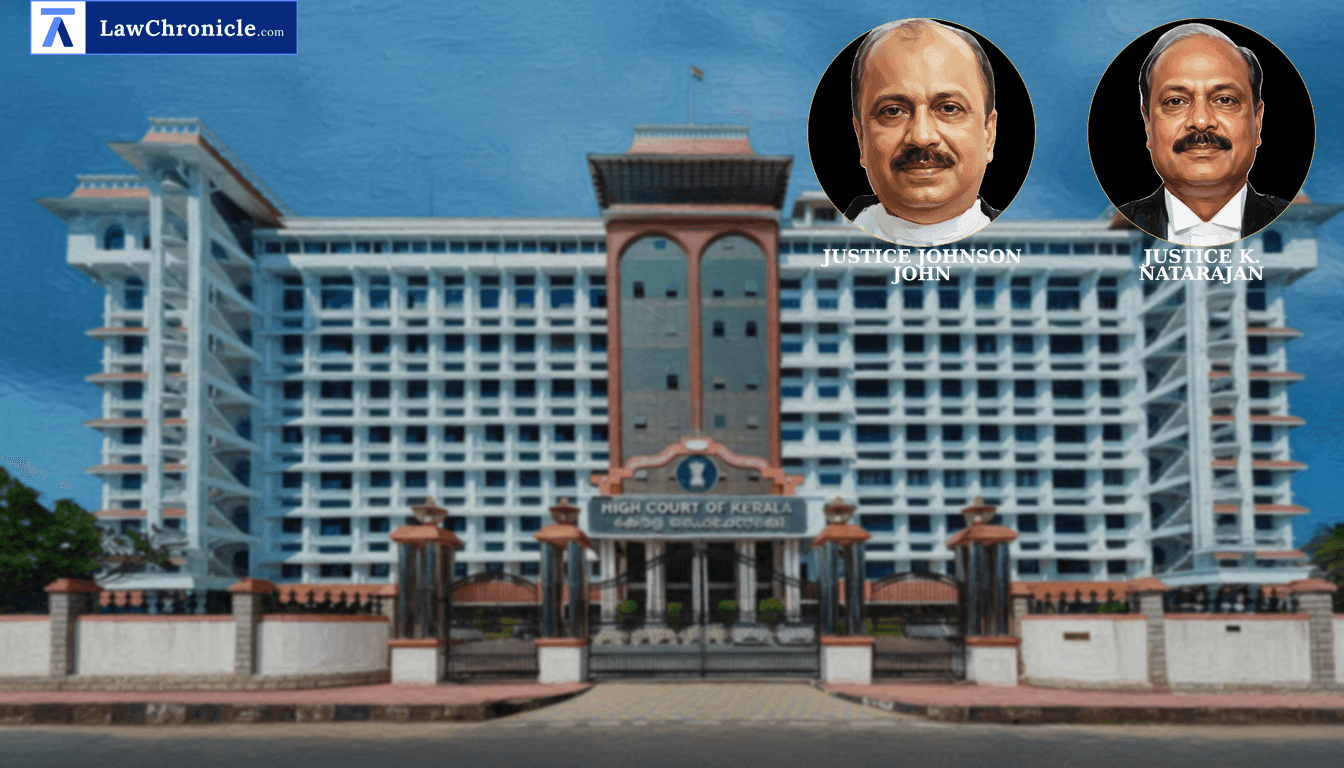
The Kerala High Court has slammed the door on the Union Government's attempt to challenge a disability pension order four years after its implementation, declaring that the principle of finality in litigation outweighs discretionary writ powers when confronted with inordinate, unexplained delays. Ruling that public policy demands an end to litigation, the court refused to entertain the writ petition, emphasizing that once an order has been implemented and attained finality, it cannot be resurrected simply because the legal landscape regarding jurisdiction has evolved.
A bench of Justice K. Natarajan and Justice Johnson John heard the writ petition filed by the Union of India challenging an order of the Armed Forces Tribunal (AFT), Kochi. The Central Government had approached the High Court seeking to set aside the AFT's decision which had granted disability pension to a former Havildar by overriding the findings of the Release Medical Board.
The Limitation of Writ Jurisdiction Over Armed Forces Tribunal Orders
The Union Government contended that the Tribunal exceeded its jurisdiction by substituting its own conclusions for those of the Release Medical Board, which had found the respondent's disability neither attributable to nor aggravated by military service. However, the respondent argued that the challenge was brought 4 years, 1 month, and 13 days after the order, which had already been implemented.
While Section 30 of the Armed Forces Tribunal Act, 2007 provides for an appeal to the Supreme Court within ninety days, the petitioners argued that they chose to file a writ petition under Article 226 of the Constitution of India following the clarification in Union of India and others v. Parashotam Dass ( "MANU/SC/0285/2023": 2023 CaseBase(SC) 212), which affirmed the High Court's jurisdiction over AFT orders.
Court's Rationale on Inordinate Delay and Finality
The Court noted that while there is no strict statutory limitation for writ petitions, they must be filed within a reasonable period. The bench highlighted that the Union had not provided any satisfactory explanation for the delay other than the changing legal position on the forum of appeal. The Court, in its reasoning, observed: "We have no doubt that entertaining a writ petition challenging an order which has attained finality would be contrary to public policy that it is for the public good that there be an end to litigation. In the absence of any satisfactory explanation for the inordinate delay in filing the present writ petition, the maxim interest reipublicae ut sit finis litium would apply and therefore, we are of the opinion that the writ petition is liable to be dismissed."
The Court has following directions:
"In the result, the writ petition is dismissed."
Key Takeaways:
Public Policy Overrides Discretion
Courts will prioritize the principle of 'finality of litigation' over the discretionary power of Article 226 when faced with excessive and unexplained delays.
Implementation as a Bar to Challenge
Once a statutory authority or government body has already implemented a judicial order, challenging it after a multi-year gap becomes nearly impossible without extraordinary justification.
Reasoned Medical Opinions Mandatory
Following Rajumon T.M v. Union of India and others ( "(2025) SCC OnLine SC 1064": 2025 CaseBase(SC) 780), the court reaffirmed that medical board opinions denying disability pension must be supported by clear reasons to withstand judicial scrutiny.
Ratio Decidendi:
The discretionary jurisdiction of the High Court under Article 226 of the Constitution of India cannot be exercised to entertain a writ petition filed after an inordinate delay against an order that has already been implemented and has attained finality, as doing so would violate the public policy principle that there must be an end to litigation (interest reipublicae ut sit finis litium).
Background:
The dispute originated when the respondent, Ex Hav Suresh P, was denied disability pension following his discharge from military service. The Release Medical Board had concluded that his disability was neither attributable to nor aggravated by service. The Armed Forces Tribunal, Kochi, however, allowed the respondent's application in 2021, prompting the Union of India to eventually move the High Court in 2026. The petitioners argued that the AFT had illegally acted as a medical expert. The respondent cited Rajumon T.M v. Union of India and others ( "(2025) SCC OnLine SC 1064": 2025 CaseBase(SC) 780) to argue that unreasoned medical opinions are invalid. Ultimately, the High Court did not delve into the merits of the disability claim, dismissing the petition solely on the grounds of laches and the lack of a sufficient explanation for the four-year delay.
Case Details:
Case No.: WP(C) NO. 15369 OF 2026
NeutralCitation: 2026:KER:50636
Case Title: Union of India and Others v. Ex Hav Suresh P
Appearances:
For the Petitioner(s): Shri. Vishnu J., CGC
For the Respondent(s): Sri. T.R. Jagadeesh, Shri. Adi Narayanan, Smt. Manasi Jagadeesh
Source: 2026 CaseBase(KER) 403
Similar Articles
 Breaking News


