


Supreme Court Holds Section 175(4), BNSS Must Be Read With Section 175(3); Complaint Against Public Servant Must Be Written and Supported by Affidavit
 Copy Link
 Share
 Save
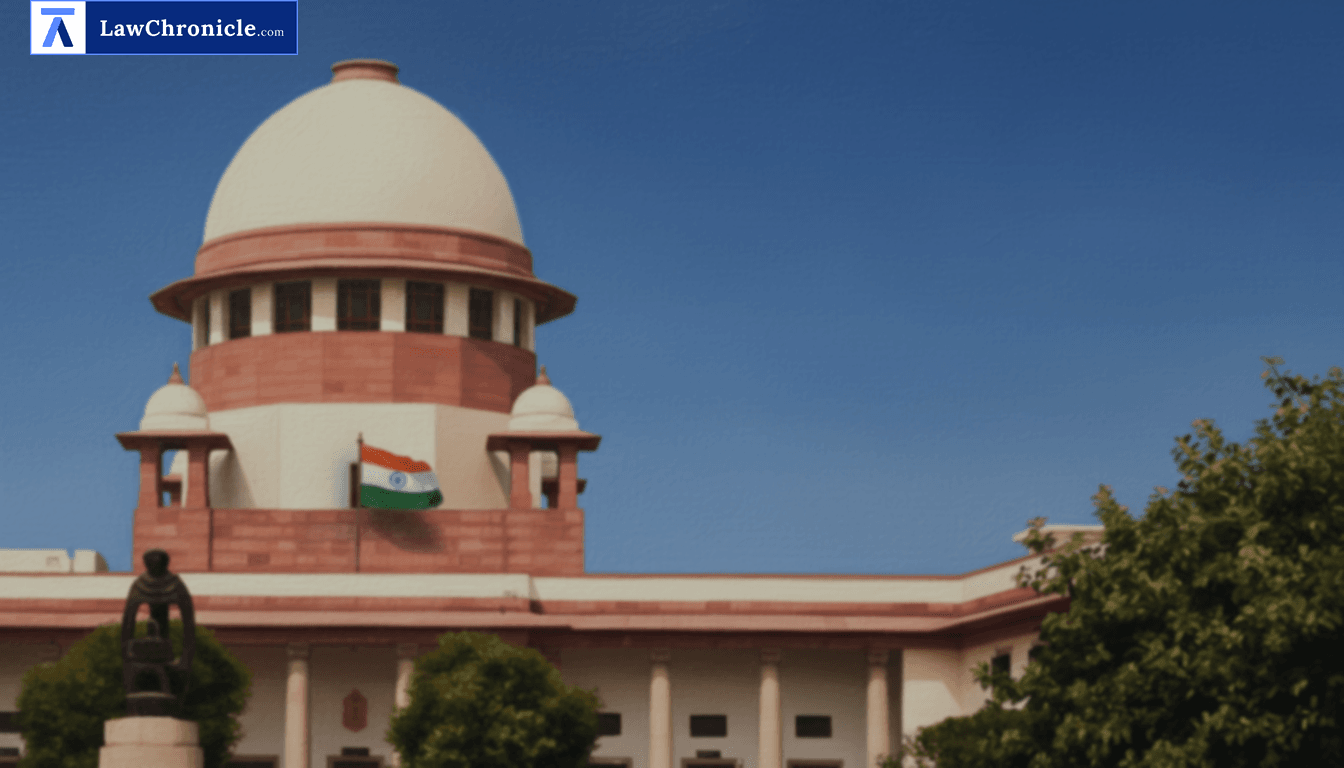
A bench of Justices Dipankar Datta and Manmohan heard an appeal challenging a Division Bench order of the Kerala High Court that had set aside a Single Judge’s direction to register an FIR. The appeals raised questions of statutory interpretation under Sections 173 and 175 of the Bharatiya Nagarik Suraksha Sanhita, 2023 (BNSS), in particular whether sub‑section (4) of Section 175 stood as an independent provision and what procedure a Magistrate must follow when a complaint alleged an offence by a public servant “in course of the discharge of his official duties”.
The Court upheld the Division Bench and clarified the interplay between Section 175(3) and Section 175(4). It held that Section 175(4) was not a freestanding provision nor a mere proviso but had to be read harmoniously with Section 175(3), and that where sub‑section (4) is invoked the complaint must be in writing and supported by an affidavit. The Court emphasised that sub‑section (4) introduced “an additional procedural safeguard” requiring the Magistrate, before ordering investigation, to call for a report from the superior officer and to consider the public servant’s assertions, while retaining judicial discretion because the provision uses “may”. The Court, in its reasoning, observed: “Sub‑section (3) and sub‑section (4) of Section 175 are not isolated silos but must be read in harmony with sub‑section (4) forming an extension of sub‑section (3.”) The Court further held that the opening phrase of Section 175(4) must be purposively read to require “a complaint in writing ... supported by an affidavit” before a Magistrate could proceed under that sub‑section.
Background The dispute arose after the appellant alleged three incidents of sexual assault by police officers while pursuing a property dispute in 2022. An initial complaint in August 2022 was followed by a report from the Deputy Superintendent of Police concluding the allegations were untrue. In September 2024, after change in police incumbency, the appellant submitted complaints to the Station House Officer and the Superintendent of Police and filed an application under Section 210 read with Section 173(4) before the Judicial Magistrate First Class (JMFC) seeking direction for FIR registration. The JMFC, invoking Section 175(4), called for a report from the superior officer.
A Single Judge of the Kerala High Court allowed the appellant’s writ petition in October 2024, holding that compliance with Section 175(4)(a) prior to FIR registration was not mandatory because the alleged rape could not be regarded as in the discharge of official duties; the Magistrate was directed to dispose of the application and an FIR was registered. The Division Bench allowed a writ appeal by one of the accused and set aside the Single Judge’s order and the JMFC’s FIR‑registration order on grounds that the Single Judge had exceeded jurisdiction and that the remedy under BNSS had not been exhausted.
At the Supreme Court, counsel relied on this Court’s rulings in Lalita Kumari and Priyanka Srivastava, Parliamentary Standing Committee reports and case law addressing investigation against public servants. The State and some respondents argued that BNSS introduced sequential remedies and additional safeguards for public servants and that Section 175(4) envisaged reporting and hearing before investigation.
The Supreme Court held that a Magistrate empowered under Section 210 may, upon receiving a complaint against a public servant that prima facie arose in the course of official duty, yet must ensure the complaint is in writing and supported by an affidavit (to satisfy the procedural safeguards traceable to Section 175(3) and the rationale in Priyanka Srivastava). The Court refrained from deciding on merits whether the alleged acts were in discharge of official duties because JMFC proceedings remained pending. The Court left the JMFC’s process intact, noted that the JMFC had issued notice under Section 175(4)(b), and permitted the appellant to participate and raise substantive points. The Court directed that the JMFC must satisfy itself that any application under Section 175(3) is accompanied by an affidavit in the form contemplated by Section 333, BNSS. The appeal was disposed of with parties bearing their own costs.
Case Details: Case No.: CRIMINAL APPEAL NO. 4629 OF 2025 (ARISING OUT OF SLP (CRIMINAL) NO. 5175 OF 2025) Case Title: XXX v. State of Kerala & Ors Appearances: For the Petitioner(s): Mr. R. Basant, Senior Counsel For the Respondent(s): Mr. Ranjit Kumar, Senior Counsel (for Respondents 1–4); Mr. Siddharth Dave, Senior Counsel (for Respondent No.5)
Similar Articles
 Breaking News


