


Exhaust Statutory Remedies Under BNSS Before Approaching High Court: Gauhati HC
 Copy Link
 Share
 Save
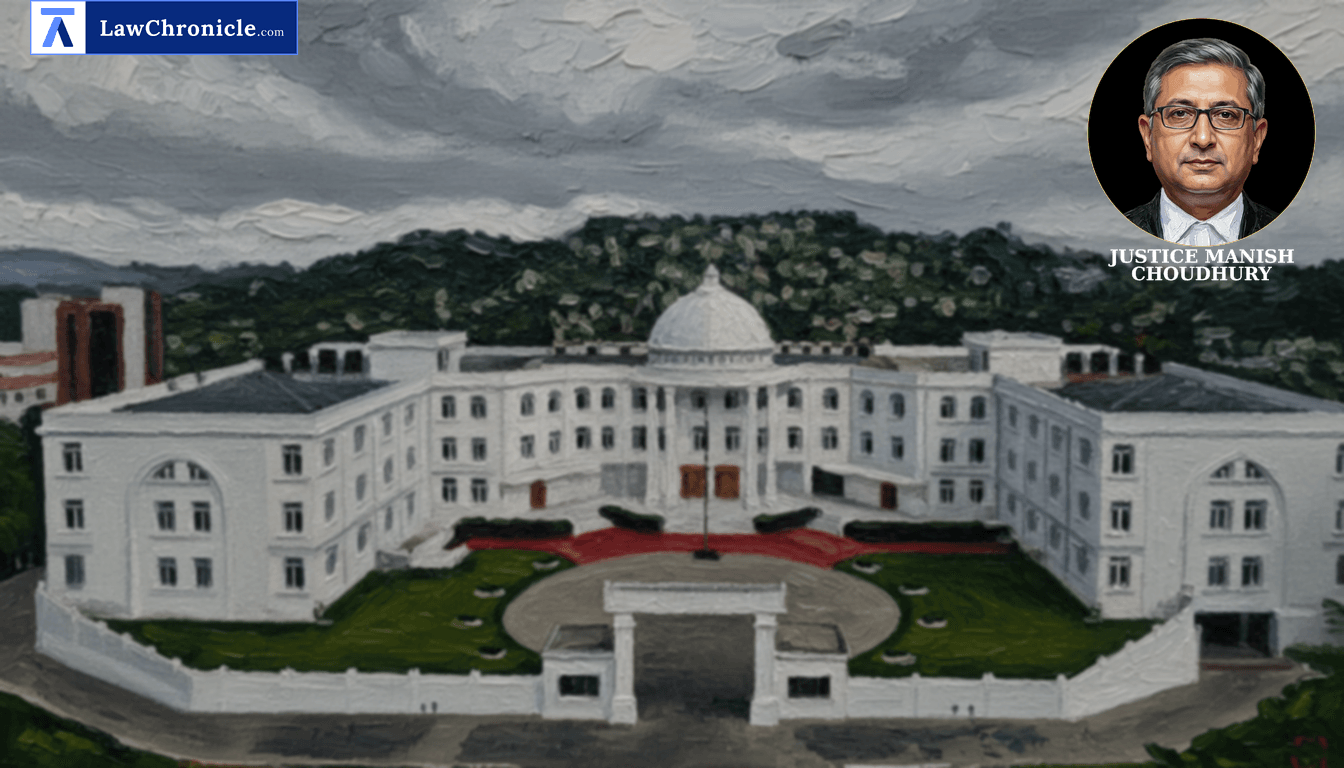
Bypassing statutory procedures under new criminal laws to directly seek police directions from constitutional courts remains impermissible without exhausting sequential remedies first. The Gauhati High Court reaffirmed that aggrieved litigants cannot directly invoke writ jurisdiction for police inaction or non-registration of FIRs without approaching police hierarchy and jurisdictional Magistrates.
In a single-judge bench, Justice Manish Choudhury considered a writ petition filed under Article 226 of the Constitution of India, 1950 seeking directions to state authorities to register an FIR and initiate a criminal investigation into alleged tender irregularities.
Key Takeaways
No Direct Writ Relief: Litigants cannot bypass statutory remedies provided under the code to directly approach High Courts for FIR registration.
Sequential Procedure Mandatory: Aggrieved persons must follow the statutory hierarchy police officers, Superintendent of Police, and then Judicial Magistrates.
Preservation of Judicial Bandwidth: Prevents High Courts from being inundated with routine police inaction petitions that Magistrates are statutory equipped to address.
Scope of Magistrate Powers: Clarifies that Magistrates possess broad powers under the statutory framework to monitor and ensure fair investigations.
Court Observations and Directions
The Gauhati High Court emphasized that writ jurisdiction under Article 226 of the Constitution of India, 1950 is extraordinary and should not act as a forum of first instance for grievances where an efficacious alternative mechanism is prescribed by law.
The Court, in its reasoning, observed: "In the present facts, the complainant company, has not exhausted the sequential statutory remedies available under BNSS. There is, therefore, no foundation to invoke the extraordinary jurisdiction of the High Court for the reason that efficacious and efficient alternative remedies exists. Hence, at this stage, we find the instant writ petition to be premature, and, therefore, not fit to be entertained."
The Court has following directions:
"While not entertaining the present writ petition, it is observed that the petitioner as aggrieved person has the liberty to avail the remedy under the BNSS by approaching the Superintendent of Police at first and thereafter, the jurisdictional Magistrate under Section 173[4] r/w Section 175[3], BNSS by following due procedure and formalities as laid down in those provisions."
Ratio
Where a complete and efficacious statutory mechanism exists under criminal procedural law for addressing non-registration of an FIR or inadequate police investigation, an aggrieved person must exhaust the sequential statutory remedies before invoking the extraordinary writ jurisdiction of the High Court under Article 226 of the Constitution of India, 1950.
Background
The dispute originated from a Tender Notice issued by the Lanka Municipal Board, District Hojai, for the supply of sand gravels. The petitioner submitted a bid quoting Rs. 925 per cubic meter, claiming it was the lowest bid, but alleged that the tender was awarded to another bidder at Rs. 1,250 per cubic meter who failed to submit required tax clearance documents on time. After a prior writ petition seeking criminal investigation was dismissed with liberty to pursue statutory remedies, the petitioner sent an FIR by registered post to the Officer In-Charge of Lanka Police Station. Receiving no response, the petitioner filed an application under the Right to Information Act with the Superintendent of Police, Hojai, which yielded no information.
Consequently, the petitioner directly approached the High Court under Article 226 of the Constitution of India, 1950. The State respondents argued that the petitioner ought to have approached the jurisdictional Magistrate under the provisions of the Bharatiya Nagarik Suraksha Sanhita, 2023, which replaced the Code of Criminal Procedure, 1973.
Examining the framework, the Court noted that Section 173(4) and Section 175(3) of the Bharatiya Nagarik Suraksha Sanhita, 2023 correspond to Section 154(3) and Section 156(3) of the Code of Criminal Procedure, 1973. Referring to Sakari Vasu vs. State of Uttar Pradesh and others ( "[2008] 2 SCC 409": 2007 CaseBase(SC) 968), Sudhir Bhaskarrao Tambe vs. Hemant Yashwant Dhage, and Sujal Viswas Attavar and another vs. State of Maharashtra and others ( "[2026] 5 SCR 273": 2026 CaseBase(SC) 378), the Court highlighted that Magistrates possess wide powers to direct FIR registration and monitor investigations. The Supreme Court in Sujal Viswas Attavar and another vs. State of Maharashtra and others ( "[2026] 5 SCR 273": 2026 CaseBase(SC) 378) had similarly ruled that bypassing the sequential framework of the Bharatiya Nagarik Suraksha Sanhita, 2023 and offences under the Bharatiya Nyaya Sanhita, 2023 without exceptional circumstances as outlined in Radha Krishan Industries vs. State of Himachal Pradesh ( "[2021] 6 SCC 771": 2021 CaseBase(SC) 1575) renders a writ petition premature. Finding that the petitioner never approached the Superintendent of Police or the Judicial Magistrate before filing the writ petition, the High Court dismissed the petition as premature while granting liberty to seek remedies under the Bharatiya Nagarik Suraksha Sanhita, 2023.
Case Details:
Case No.: WP(C)/4405/2026
Neutral Citation: 2026:GAU-AS:11834
Case Title: SATYABRATA DEY v. THE STATE OF ASSAM AND 2 ORS
Appearances:
For the Petitioner(s): MR. N H MAZARBHUIYAN, MR. D DOLEY, MR. YEKA AWOMI, MS. L WAJEEDA, MR. M H SAIKIA, I S MAZARBHUIYAN, MR. R NILLING, OSINAM TAYENG
For the Respondent(s): GA, ASSAM
Source: 2026 CaseBase(GAU) 1144
Similar Articles
 Breaking News


