


Factual Findings In Tribal Belt Land Disputes Immune From Second Appeal: Gauhati HC
 Copy Link
 Share
 Save
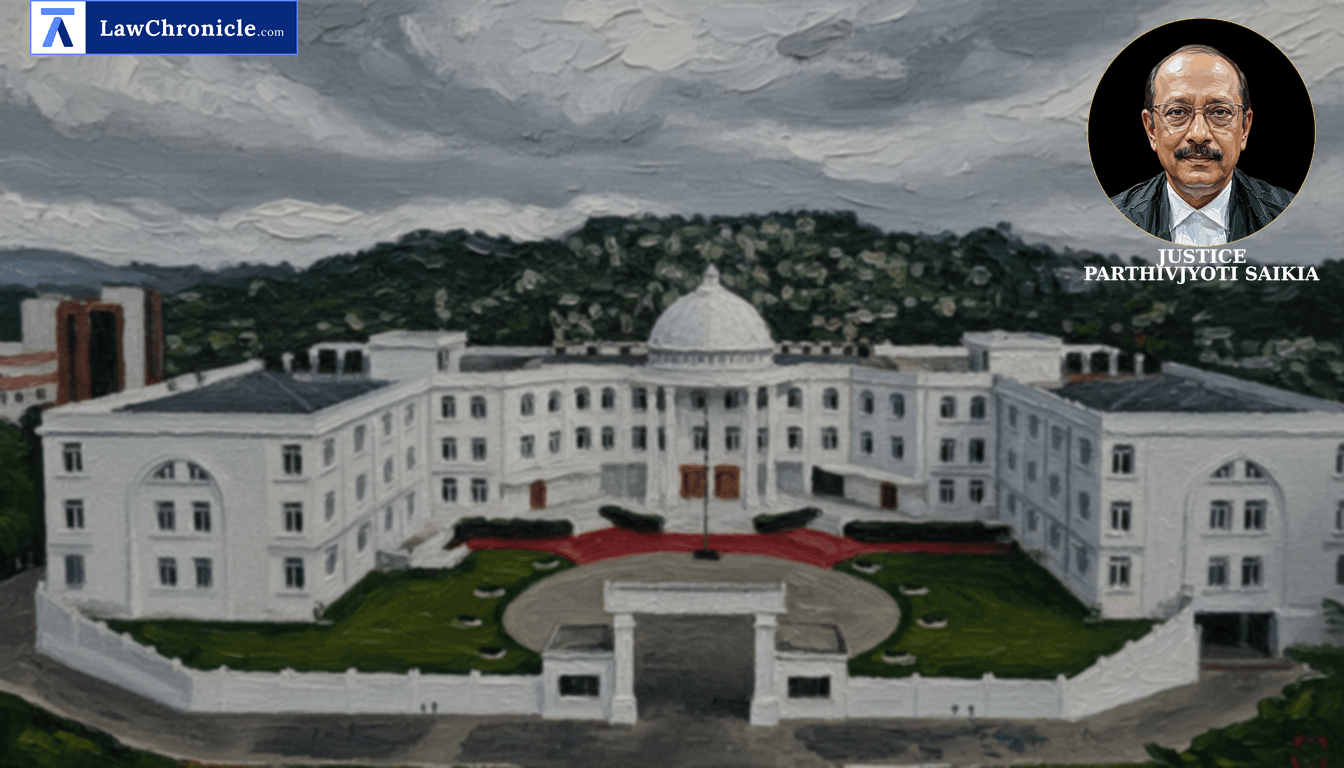
The Gauhati High Court has reinforced the sanctity of factual findings regarding tribal land protections, ruling that issues concerning the eligibility of parties to hold land within tribal belts are pure questions of fact that cannot be reappreciated in a second appeal. The court clarified that once lower courts establish the tribal status of a community and the location of a suit land within a reserved block, such findings remain immune from challenge under the limited jurisdiction of Section 100 of the Civil Procedure Code.
A single-judge bench of Justice Parthivjyoti Saikia heard the Regular Second Appeal challenging the concurrent findings of the lower courts in a dispute involving land within a tribal belt in Nagaon, Assam. The Court examined whether the lower courts' failure to explicitly categorize the defendants' status within the tribal block constituted a perverse finding or a substantial question of law.
Key Takeaways
Finality of Factual Findings
Lower courts' determinations on whether a specific plot falls within a tribal belt and the community status of the parties are findings of fact that cannot be reopened in a second appeal.
Limited Scope of Section 100 CPC
High Courts are barred from reappreciating evidence in second appeals unless a substantial question of law one that is debatable or not previously settled is clearly established.
Protection of Tribal Land Rights
Verified tribal community status (such as the 'Garo' community) and statutory land protections in reserved blocks provide a robust legal foundation for recovery of possession against non-eligible occupants.
Immunity of Factual Findings in Second Appeals
The Court observed that the respondents had successfully proven before the trial court that the suit land, measuring 8 Bighas 17 Lechas, fell within a tribal belt and that they belonged to the "Garo" community, a notified Scheduled Tribe. The Court emphasized that a second appellate court lacks the jurisdiction to reappreciate evidence already considered by the trial and first appellate courts.
The Court, in its reasoning, observed: "Pure findings of fact remain immune from challenge before the High Court in second appeal. The substantial question of law framed in this appeal does not involve any debatable questions. Rather, it contains some factual issues which are already answered by the trial court as well as the first appellate court."
Citing the precedent in Santosh Hazari v. Purushottam Tiwari, the Court noted that for a question of law to be "substantial," it must be debatable and have a material bearing on the decision, rather than being a settled proposition or a purely factual inquiry.
The Court has the following directions:
"This Court is of the opinion that this appeal is without any merit and stands dismissed accordingly. Send back the TCR."
Ratio
Findings concerning the location of land within tribal belts and the reserved category status of litigants are pure findings of fact; such findings, once concurrently arrived at by lower courts, are immune from reappreciation by the High Court under Section 100 of the Civil Procedure Code unless they involve a debatable and unsettled substantial question of law.
Background
The dispute originated from a suit filed by the respondents, the legal heirs of the late Surendra Sangma, who owned land in Karikhana Bilgaon under Lanka Mouza. The respondents alleged they had permitted the appellants to stay on and look after the land, but the appellants refused to vacate when asked in 2003. The respondents sought a declaration of right, title, and interest, along with recovery of possession.
The appellants contested the suit, claiming they had cleared the land themselves and raised issues regarding the Limitation Act. They also challenged whether they were entitled to hold land in the tribal belt. Both the Munsiff Court at Hojai and the Civil Judge at Nagaon ruled in favor of the respondents, decreeing the suit and affirming that the land was protected tribal property. The High Court, finding no substantial question of law, dismissed the second appeal and upheld the lower courts' judgments.
Case Details:
Case No.: RSA/15/2018
Neutral Citation: 2026:GAU-AS:12735
Case Title: Jatindra Biswas & Anr. v. Smti Sonali Sangma & Ors.
Appearances:
For the Petitioner(s): Mr. M. Alamgeer, Advocate
For the Respondent(s): Mr. A.C. Sarma, Sr. Advocate; Mr. G. Bharadwaj, Advocate
Source: 2026 CaseBase(GAU) 1172
Similar Articles
 Breaking News


