


Gauhati HC Rebukes Arbitrary Rejection of Evidence in Determination of Citizenship Status
 Copy Link
 Share
 Save
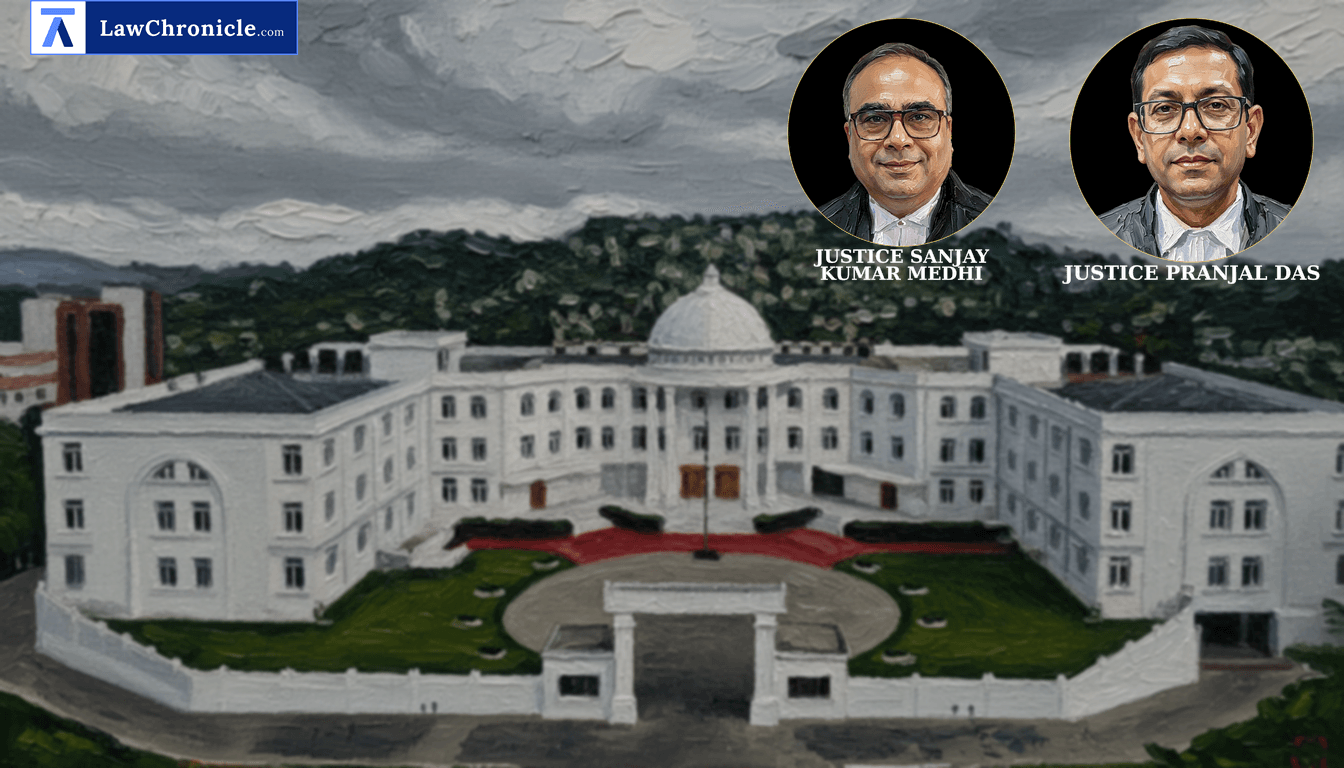
The Gauhati High Court has intervened to protect procedural fairness in disputes concerning determination of citizenship status, ruling that the summary dismissal of educational and land records as 'fraudulent' without proper verification constitutes a grave misreading of evidence. The Bench asserted that tribunals must conduct a comprehensive appreciation of linkage documents rather than discarding them on superficial grounds, ensuring that the heavy burden of proof under the Foreigners (Tribunals) Order, 1964 does not become an instrument of procedural injustice.
A division bench comprising Justice Sanjay Kumar Medhi and Justice Pranjal Das heard the writ petition challenging an opinion of the Foreigners Tribunal. The petitioner, Omar Ali, was declared a foreigner by the Tribunal which had characterized his school certificate as 'fraudulent' simply because it was issued by a Girls’ Madrassa, despite his explanation regarding the school's amalgamation.
Key Takeaways
Curbing Arbitrary Evidence Rejection
Tribunals cannot label documents as fraudulent without investigating the underlying facts, such as school amalgamations or historical name variations.
Holistic Evidence Appreciation
Legal linkage must be determined by reading land records, voter lists, and oral testimonies collectively rather than in isolation.
Clarification on Name Discrepancies
Minor variations in names (e.g., 'Omar Bepari' vs 'Omar Ali') or titles (e.g., 'Alhaj') should be evaluated against consistent family patterns in official records.
Remand as a Remedial Measure
Where a Tribunal misreads evidence or overlooks relevant documents, the High Court will exercise its certiorari jurisdiction to mandate fresh adjudication.
Summary Findings of Fraud for Determination of Citizenship Status
The Gauhati High Court found that the Tribunal erred significantly in its treatment of Exhibit-N (the school certificate). The petitioner had provided a cogent explanation that the L.P. school he attended was later amalgamated with the Girls’ M.E. Madrassa, which issued the certificate. The Bench noted that this testimony stood its ground during cross-examination. Furthermore, the Gauhati High Court analyzed a series of voter lists from 1966 to 2017 and land records from 1957. It observed that the presence of the petitioner's projected father, Abdul Hakim @ Hakim Ali, was documented well before the 25-03-1971 cutoff date. The bench noted that while individual pieces of evidence might not be sufficient, the cumulative effect of legacy and linkage evidence can fortify a claim of citizenship.
The Court, in its reasoning, observed: "We are of the opinion that the overlooking of the relevant evidence and the misreading of the evidence would make it justified on our part to set aside the impugned judgment and opinion in exercise of certiorari jurisdiction in this writ petition under Constitution of India, and it would be correct to remand the matter to the learned Tribunal for a fresh adjudication."
The Gauhati High Court set aside the impugned judgment and sought fresh adjudication of the matter by the Tribunal.
Ratio
The misreading or overlooking of relevant linkage evidence by a Foreigners Tribunal constitutes a jurisdictional error remediable under Article 226. When a proceedee provides a plausible explanation for document discrepancies, such as school amalgamations or religious title additions, the Tribunal is duty-bound to evaluate the evidence holistically rather than summarily discarding it as fraudulent.
Background
The matter originated from a reference against Omar Ali, initially registered under the I.M.D.T. Act before it was struck down by the Supreme Court in I.M.D.T. Act case (implied reference to Sarbananda Sonowal v. Union of India). The case was subsequently re-registered under the Foreigners (Tribunals) Order, 1964. The petitioner relied on 17 documents, including Jamabandi records from 1957 and various voter lists showing his father’s residence in India since 1966.
The State had argued that linkage evidence was missing and highlighted discrepancies in the names of the petitioner and his father. However, the Gauhati High Court found that the Tribunal had failed to appreciate the consistency in the names of the petitioner's mother and stepmother across decades of voter lists, which established a clear family unit. Consequently, the Gauhati High Court set aside the foreigner declaration and remanded the case for fresh Gauhati High Court reprimanded authorities for arbitrary rejection of evidence in Gauhati HC Rebukes Arbitrary Rejection of Evidence in determination of Citizenship status.
Case Details:
Case No.: WP(C)/1668/2020
Case Title: Omar Ali @ Omar Bepari v. The Union of India and 5 Ors.
Appearances:
For the Petitioner(s): Shri. S. Alim, Advocate
For the Respondent(s): Shri. H.K Baishya, CGC; Shri. G. Sarma, SC, Home and NRC; Shri. A.I Ali, SC, ECI; Shri. P. Sarma, Govt. Adv.
Source: 2026 CaseBase(GAU) 1282
Similar Articles

 Breaking News


