Voter ID and PAN Card Insufficient to Prove Citizenship: Gauhati HC
 Copy Link
 Share
 Save
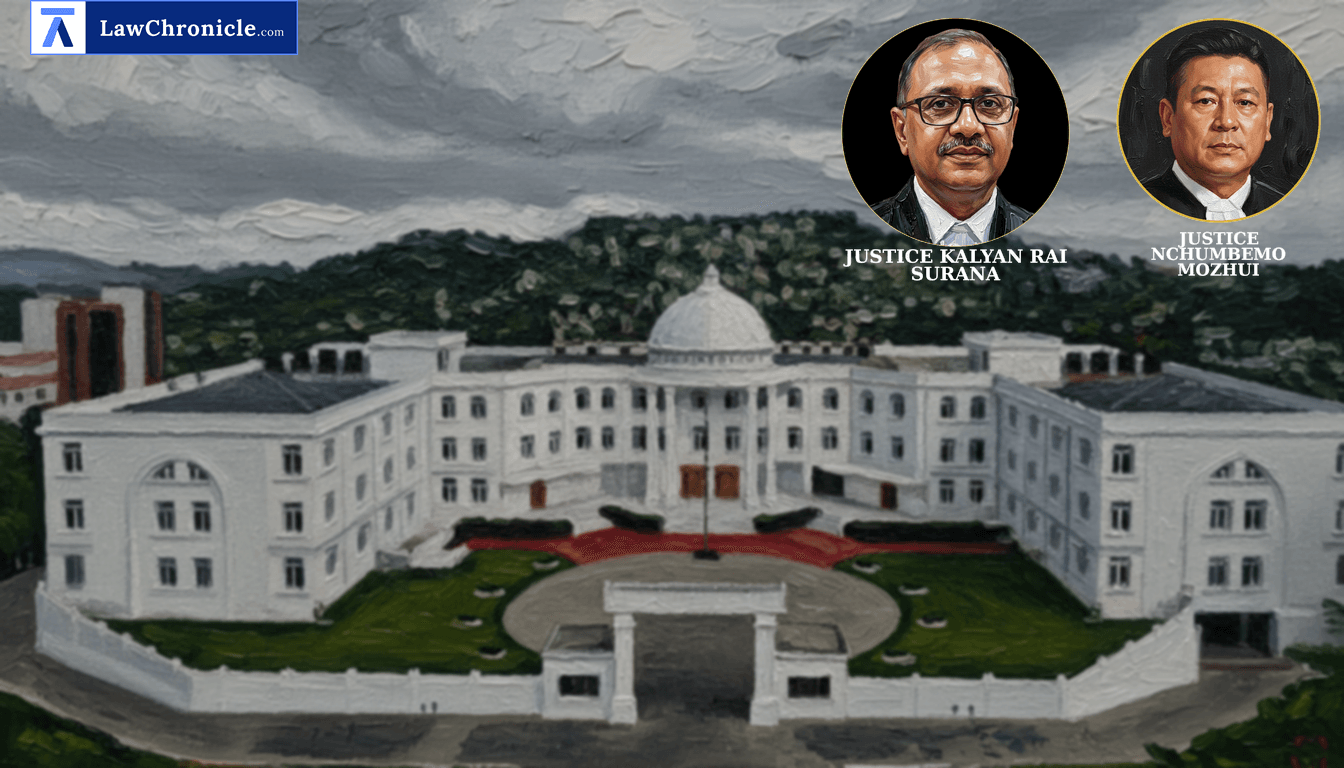
In a decisive reinforcement of evidentiary standards for citizenship, the Gauhati High Court has ruled that Elector Photo Identity Cards (EPIC) or Voter ID, and PAN cards are not conclusive proof of Indian citizenship without robust supporting documentation establishing a clear parental link. The Bench held that significant inconsistencies in oral testimony and age discrepancies in electoral records are fatal to a petitioner's claim of being a native citizen under the Constitution of India, 1950 framework.
A Division Bench comprising Justice Kalyan Rai Surana and Justice Nchumbemo Mozhui delivered this judgment while adjudicating a writ petition challenging a Foreigners’ Tribunal opinion. The petitioner had been declared a foreigner of the post-25.03.1971 stream after failing to establish a verifiable link with his projected ancestors through the produced documentary and oral evidence.
Key Takeaways
Documentation Threshold
EPIC Voter ID and PAN cards are considered post-1971 documents and do not constitute primary proof of citizenship in the absence of corroborative evidence showing ancestral lineage.
Testimonial Consistency
Contradictions between the testimony of the proceedee and their projected parents regarding family structure, education, and dates of birth can lead to the total rejection of the defense.
Gaonburah Certificates
Certificates issued by village heads (Gaonburah) lack evidentiary value if issued solely based on EPICs without spot verification or personal knowledge of the family's history.
Burden of Proof
Merely citing voter lists containing similar names is insufficient to discharge the burden of proof under Section 9 of the Foreigners Act if the physical identity of the individuals cannot be reconciled.
Legal Scrutiny of Linkage Documents
The Gauhati High Court examined the reliance placed on voter lists from 1965, 1970, and 1997. While the petitioner claimed his father Kader Ali appeared in these lists, the Bench observed that the age disclosed in the 1997 list (30 years) and the oral testimony of the projected father (claiming to be 72 years in 2019) created an irreconcilable gap. Paraphrasing the principle from Aziz Mia @ Md. Aziz Mia v. Union of India & Ors., the Gauhati High Court noted that a mere claim by a suspected person by referring to a voter list is not conclusive proof of discharging the burden that they are not a foreigner.
Referring to Md. Babul Islam v. Union of India & Ors. ( "WP(C) 3547/2016": 2015 CaseBase(GAU) 418), the Bench reiterated that Voter ID-EPIC and PAN cards are issued based on self-declarations and cannot be treated as proof of citizenship. Furthermore, the Court relied on Basiron Bibi v Union of India & Ors. to emphasize that while minor age discrepancies might be overlooked in established families, they cannot be ignored when the petitioner fails to disclose his entire family structure correctly.
The Gauhati High Court observed that "This is not a case where there is some minor discrepancy in the disclosure of names and age of the concerned persons with whom the petitioner is seeking to establish a link. There is a total mismatch of the description of the family insofar as the siblings of the petitioner and children of DW-2 are concerned. There is a difference between the evidence of the petitioner and that of DW-2 as regards the class up to which the petitioner had studied in school. Therefore, the discrepancies in this case amount to inconsistency and contradiction in the evidence."
Ratio
Documentary evidence in citizenship proceedings must be proved from the record and not solely by oral testimony. Where there are material contradictions in oral evidence and irreconcilable age differences between electoral records and testimony, the proceedee fails to establish the mandatory link under the Foreigners Act, rendering post-1971 documents like EPIC and PAN card inadmissible as proof of Indian citizenship.
Background
The petitioner was referred to the Foreigners’ Tribunal (10th), Barpeta, where he was declared a foreigner of the post-1971 stream on October 31, 2019. He claimed citizenship through his grandfather Osman Ali and father Kader Ali, citing voter lists from 1965 and 1970. However, the Tribunal found that the petitioner’s father (DW-2) gave testimony that contradicted the electoral records. Specifically, DW-2 claimed to be a "small boy" when his father died in 1970, whereas the 1970 voter list recorded his age as 21 years.
The Gauhati High Court also noted that the Gaonburah certificate was issued without spot verification, relying on the ratio in Basiron Nessa v. Union of India which held that such certificates must be backed by record rather than just oral testimony. Finding no merit in the challenge against the Tribunal's findings, the Gauhati High Court dismissed the writ petition and revoked the petitioner’s bail.
Case Details:
Case No.: WP(C)/5813/2020
Neutral Citation: 2026:GAU-AS:14344-DB
Case Title: MD. JAGER ALI @ JAGIR ALI VS. THE UNION OF INDIA AND 5 ORS
Appearances:
For the Petitioner(s): Mr. A. Dasgupta, Senior Advocate; Ms. B. Das, Advocate
For the Respondent(s): Mr. C.S. Baruah, CGC; Mr. G. Sarma, SC, FT & Border; Mr. P. Sarmah, Addl. Sr. Govt. Advocate; Mr. A.I. Ali, SC, ECI
Source: 2026 CaseBase(GAU) 1450
Similar Articles

 Breaking News