


Alternative Remedy Bars Article 226 Writs In SARFAESI Actions: Patna HC
 Copy Link
 Share
 Save
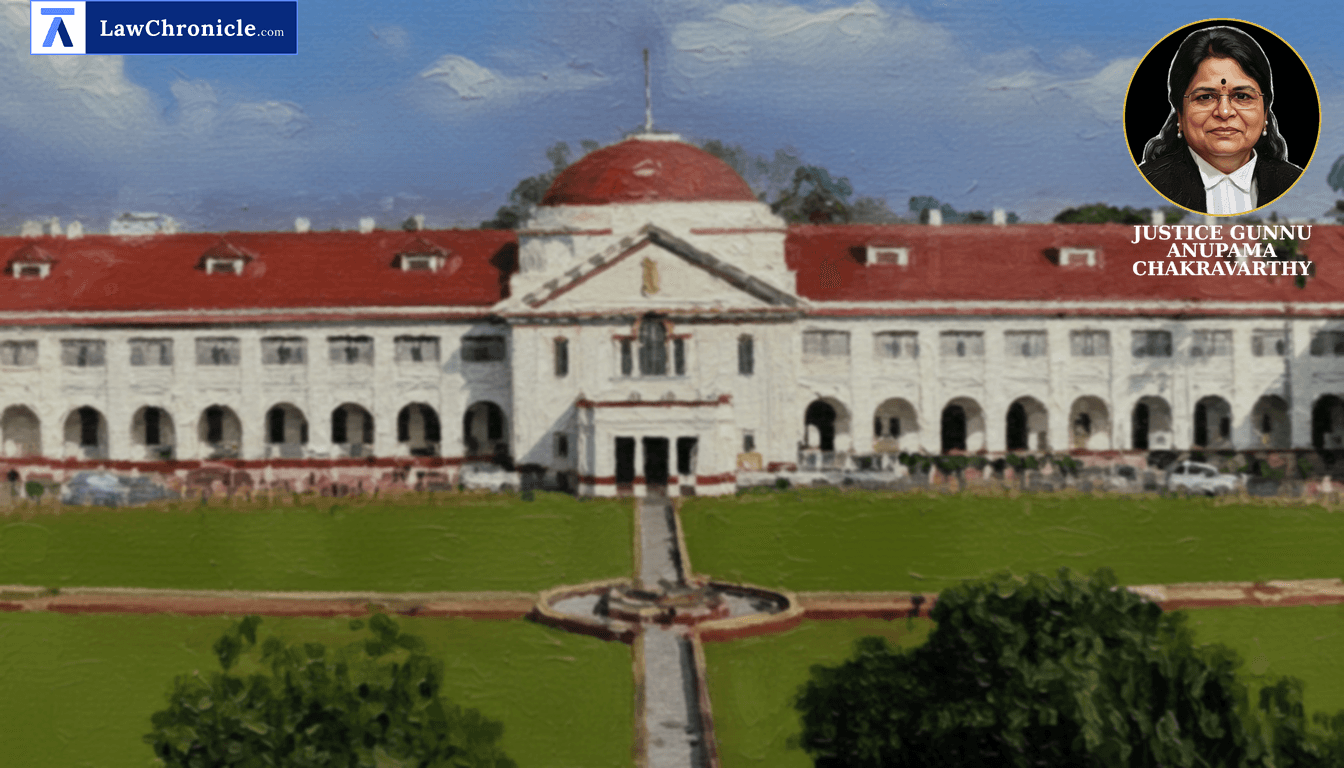
The Patna High Court has slammed the door on direct writ interventions in recovery proceedings, ruling that the existence of a specialized statutory forum under the SARFAESI Act acts as an absolute hurdle to exercising extraordinary constitutional jurisdiction. This decision reaffirms that even third parties claiming no connection to a debt must exhaust specialized tribunal remedies before seeking relief from the High Court.
Justice G. Anupama Chakravarthy presided over the matter, evaluating whether a petitioner who claims to be neither a borrower nor a guarantor can bypass the statutory hierarchy to challenge possession orders issued by a District Magistrate.
Key Takeaways
Statutory Supremacy Over Writ Jurisdiction
Reiterates that Article 226 cannot be used as a shortcut when a comprehensive recovery code provides a dedicated quasi-judicial redressal mechanism.
Burden on Non-Borrowers
Clarifies that even persons other than the borrower must approach the Debt Recovery Tribunal (DRT) first if they are aggrieved by measures taken by secured creditors.
Mandatory Exhaustion of Remedies
Strengthens the principle that financial recovery matters involving public money require strict adherence to statutory timelines and forums to prevent judicial overreach.
Judicial Restraint in Financial Recovery
The Court emphasized that the High Court's discretion under Constitution of India is significantly curtailed in matters involving the recovery of dues by banks and financial institutions. By refusing to entertain the merits of the dispute regarding the identity of the property, the Court directed the petitioner to the appropriate statutory forum.
The Court has the following directions:
"In view of the above, this Court is of the considerable view that the Writ petition is not maintainable when an alternative and effective remedy is available to the petitioner. However, the petitioner is at liberty to approach the appropriate forum for availing his remedy, and the concerned authority shall also consider the aspect of limitation. With the aforesaid observations, the Writ petition stands disposed of."
The Court, in its reasoning, observed: "It is well settled that, if an effective alternative remedy is available under the relevant statute, a petition under Article 226 of the Constitution shall not be entertained. ... the High Court must keep in mind that the legislations enacted by Parliament and State Legislatures for recovery of such dues are a code unto themselves inasmuch as they not only contain comprehensive procedure for recovery of the dues but also envisage constitution of quasi-judicial bodies for redressal of the grievance of any aggrieved person."
Ratio
The High Court cannot entertain a petition under Article 226 of the Constitution of India when an effective alternative remedy is available under Section 17 of the Securitisation and Reconstruction of Financial Assets and Enforcement of Security Interest Act, 2002. This rule of restraint applies with greater rigour in matters involving the recovery of public money and bank dues, requiring all aggrieved persons, including those who are not the primary borrowers, to approach the Debts Recovery Tribunal first.
Background
The petitioner, Ummatun Nisha, approached the High Court challenging an order dated January 11, 2019, passed by the District Magistrate, Darbhanga, in a case filed under Section 14 of the SARFAESI Act. The petitioner contended that although she was neither a borrower nor a guarantor, the bank sought to take physical possession of her dwelling house, which she claimed was distinct from the property actually mortgaged by the debt borrower. She argued that the District Magistrate failed to verify the identity of the property, thereby violating principles of natural justice and the provisions of the Act.
The Court relied on the landmark judgment in United Bank of India v. Satyawati Tondon ( "(2010) 8 SCC 110": 2010 CaseBase(SC) 387), which established that High Courts should not interfere in matters where a comprehensive recovery procedure exists. This principle was further bolstered by references to Celir LLP v. Bafna Motors (Mumbai) (P) Ltd. and PHR Invent Educational Society Vs UCO Bank & Ors, where the Supreme Court reiterated that High Courts must refrain from entertaining Constitution of India petitions in the face of SARFAESI Act remedies.
Case Details:
Case No.: Civil Writ Jurisdiction Case No.1265 of 2023
CNR No. BRHC010081842023
Case Title: Ummatun Nisha v. Punjab National Bank & Ors.
Appearances:
For the Petitioner(s): Mr. Kedar Jha, advocate
For the Respondent(s): Mr. Brajesh Kr. Chopra, SC25; Mr. Aditya Kr. Singh, AC to SC 25
Source: 2026 CaseBase(PAT) 3290
Similar Articles
 Breaking News


