


Karnataka HC: Domestic Violence Act Protects Spouses Even Without Documented Proof of Marriage
 Copy Link
 Share
 Save
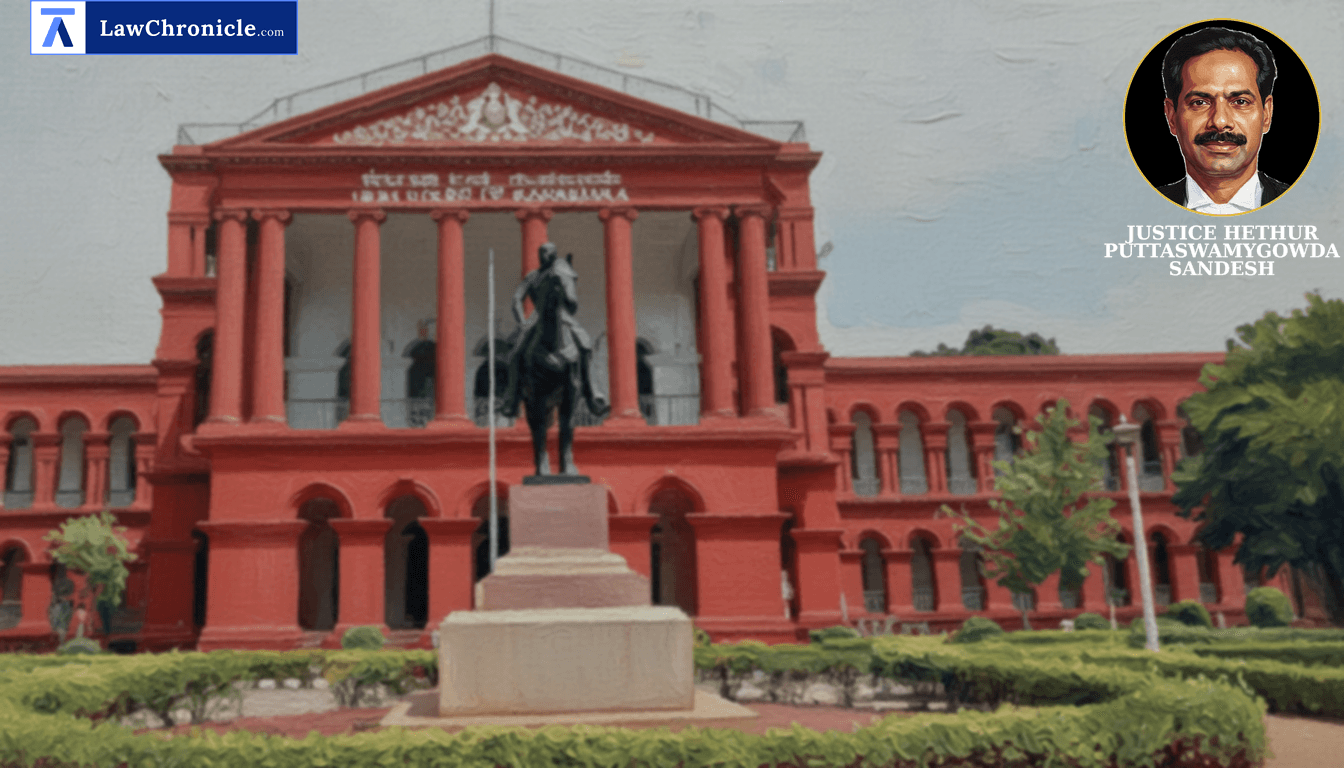
The Karnataka High Court has fortified the protective reach of the domestic violence framework, ruling that a husband cannot escape liability for compensation by merely denying the existence of a marriage where a long-term domestic relationship and engagement are admitted. This decision underscores that technical absences of marriage certificates do not insulate respondents from the consequences of physical and emotional abuse under the Protection of Women from Domestic Violence Act, 2005.
In a decisive ruling, a single-judge bench of Justice H.P. Sandesh dismissed a revision petition filed by a husband challenging a compensation award of ₹10,00,000. The Court emphasized that when domestic relationships are established through conduct and admissions, the remedial nature of the Protection of Women from Domestic Violence Act, 2005 takes precedence over technical evidentiary gaps.
Establishing Domestic Relationship Through Conduct
The High Court observed that the petitioner (husband) could not plausibly deny the domestic relationship given his own admissions regarding a love affair, a formal engagement, and his financial assistance in securing a residence for the wife in Bengaluru. Despite the husband's claim that no formal marriage took place and that his signatures were obtained on blank papers in a Church, the Court found his status as a "prudent person" and a Financial Consultant made such defenses untenable.
The Court noted that the trial court correctly analyzed Section 2(f) and Section 2(q) of the Protection of Women from Domestic Violence Act, 2005 to conclude that the parties shared a domestic relationship. It further held that even if the marriage certificate was not produced, the digital evidence including Facebook printouts and WhatsApp chats sufficiently established the bond.
Trial Court's Directions and Monetary Compensation
The Court upheld the directions for compensation and protection orders, noting that the husband's failure to subject himself to full cross-examination allowed the court to draw an adverse inference. The Court has the following directions:
"The petition filed by the wife under Section 12 of Protection of Women from Domestic Violence Act, 2005 was allowed-in-part granting compensation of Rs.10,00,000/- directing the respondent/ petitioner herein to pay the compensation restraining the respondent to visit premises where aggrieved person resides and also restrained to communicate with petitioner in any form."
The Court, in its reasoning, observed: "The revisional jurisdiction can be invoked where the decisions under challenge are grossly erroneous, there is no compliance with the provisions of law, the finding recorded is based on no evidence, material evidence is ignored or judicial discretion is exercised arbitrarily or perversely... In the case on hand, the respondent specifically admitted that there was love affair between them and with the consent of both the families, engagement has also taken place... he is very much prudent person to understand the acts and consequences of the same."
Background:
The dispute arose from a petition filed under Section 12 of the Protection of Women from Domestic Violence Act, 2005 by a woman asserting she married the petitioner in 2005 as per Christian rites. She alleged that after moving to Bengaluru, the husband harassed her for money and eventually deserted her in 2008 to live with another woman, with whom he had a child.
The husband contested the petition, arguing that they were only engaged and never lived as husband and wife. He claimed the wife was involved with another man and that he was acquitted in previous criminal cases filed by her. However, the trial court and the First Appellate Court (LXXIV Addl. City Civil and Sessions Judge) both found in favor of the wife, citing that the husband's own admissions in his written statement corroborated a domestic relationship. The husband then moved the High Court in a revision petition under Section 397 of the Code of Criminal Procedure.
Justice Sandesh relied on the principles laid down in AMIT KAPOOR vs. RAMESH CHANDER & ANR. ( "AIR ONLINE 2012 SC 668": 2012 CaseBase(SC) 833) and KRISHNAN AND ANOTHER vs. KRISHNAVENI AND ANOTHER ( "(1997) 4 SCC 241": 1997 CaseBase(SC) 1215) to define the limited scope of revisional jurisdiction, noting that the High Court should only intervene in cases of patent defects or grave miscarriage of justice. Finding no such error in the lower courts' concurrent findings, the revision was dismissed.
Key Takeaways:
Substance Over Form in Domestic Ties
The Court clarified that the absence of a formal marriage certificate does not bar relief under the Protection of Women from Domestic Violence Act, 2005 if a domestic relationship is otherwise evident through admissions and conduct.
Adverse Inference from Lack of Cross-Examination
Parties who do not tender themselves for full cross-examination risk having the Court draw adverse inferences against their defense, particularly regarding their financial capacity to pay compensation.
Broad Interpretation of Domestic Violence
Consistent with Indra Sarma vs V.K.V. Sarma, the Court reiterated that 'relationship in the nature of marriage' (live-in relationships) qualifies for protection, ensuring that husbands cannot bypass monetary obligations through desertion.
Ratio Decidendi:
A domestic relationship under Section 2(f) of the Protection of Women from Domestic Violence Act, 2005 can be established through the admission of a love affair, engagement, and shared residence, even in the absence of a marriage certificate. Where such a relationship and subsequent domestic violence (including emotional and economic abuse) are proven, the Court is empowered to grant substantial compensation, and concurrent findings of lower courts on these facts will not be disturbed in revision unless perversity is shown.
Case Details:
Case No.: Criminal Revision Petition No.127 Of 2026
Case Title: Mr. Shiva Prasad Vs. Janith Flavia Sequeria & Anr.
Appearances:
For the Petitioner(s): Sri. Nithin A.M., Advocate
For the Respondent(s): Sri Freddy Charles Ravi Kumar G, Advocate For R1
Source: 2026 CaseBase(KAR) 225
Similar Articles

 Breaking News


