


No Article 226 Writ When Statutory Remedy Available Under SARFAESI Act: Patna HC
 Copy Link
 Share
 Save
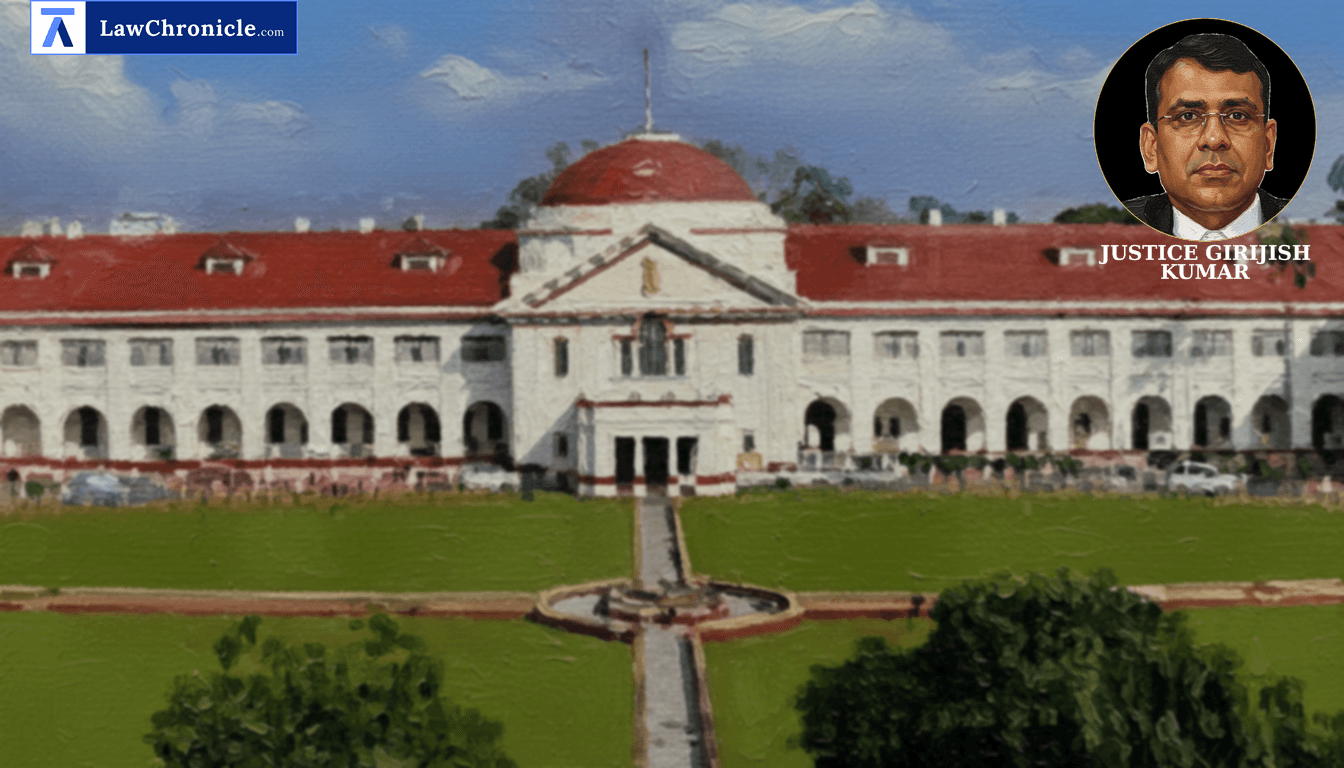
Refusing to bypass statutory mechanisms established for bank recovery proceedings, the High Court has firmly closed the doors on direct writ challenges against auction notices issued by financial institutions. Reaffirming the primacy of specialized tribunals, the ruling reinforces that litigants must exhaust statutory remedies before invoking constitutional jurisdiction.
In a single-judge bench ruling, Justice Girijish Kumar addressed a writ petition seeking to quash an E-auction notice issued under the provisions of the securitization law.
Key Takeaways
No Direct Writ Petitions: Aggrieved borrowers cannot bypass statutory forums to challenge recovery notices under the SARFAESI Act 2002.
Greater Rigour in Financial Dues: Courts must exercise heightened restraint under Article 226 of the Constitution of India, 1950 when dealing with public money and bank recoveries.
Liberty with Limitation Protection: Debtors retain the right to approach the competent statutory forum, with directions to authorities to consider limitation sympathetically.
Exhaustion of Alternative Remedies in SARFAESI Matters
The court emphasized that established statutory frameworks for debt recovery act as complete codes in themselves, precluding routine judicial intervention under extraordinary writ jurisdiction.
The Court, in its reasoning, observed: "The High Court overlooked the settled law that the High Court will ordinarily not entertain a petition under Article 226 of the Constitution if an effective remedy is available to the aggrieved person and that this rule applies with greater rigour in matters involving recovery of taxes, cess, fees, other types of public money and the dues of banks are other financial institutions."
In reinforcing this principle, the bench referred to binding precedents including United Bank of India v. Satyawati Tondon ( "(2010) 8 SCC": 2010 CaseBase(SC) 387), Celir LLP v. Bafna Motors (Mumbai)(P) Ltd. ( "(2024) 2 SCC 1": 2023 CaseBase(SC) 630), and PHR Invent Educational Society V UCO Bank & Ors, which consistently established that High Courts must not entertain petitions under Article 226 of the Constitution of India, 1950 when an effective alternative remedy is available under the SARFAESI Act 2002.
The Court has following directions:
"However, the petitioner is at liberty to approach the appropriate forum for availing the remedy, and the concerned authority shall also consider the aspect of limitation."
Ratio
A writ petition under Article 226 of the Constitution of India, 1950 is not maintainable against recovery actions taken by financial institutions when an alternative, effective, and statutory remedy is available under the SARFAESI Act 2002.
Background
The dispute arose when the petitioner filed a writ petition seeking the quashing of an E-auction notice dated 06.08.2026 published in a daily newspaper under the SARFAESI Act 2002 concerning certain land property. The respondent bank raised a preliminary objection regarding maintainability, contending that the petitioner directly approached the High Court without invoking the alternative statutory remedy available under the law.
Accepting the bank's contention and relying on settled jurisprudence from the Supreme Court, the High Court held that the writ petition was not maintainable due to the availability of an efficacious alternative forum. Consequently, the High Court disposed of the writ petition, granting liberty to the petitioner to approach the appropriate statutory forum.
Case Details:
Case No.: Civil Writ Jurisdiction Case No.11779 of 2026
Case Title: Deepak Kumar v. The Authorised Officer cum Regional Manager, Bank of Baroda & Ors.
Appearances:
For the Petitioner(s): Mr. Vibhakar Kumar, Advocate; Mr. Kaushal Kishore, Advocate; Mr. Manish Kumar, Advocate
For the Respondent(s): Mr. Nishi Nath Ojha, Advocate
Source: 2026 CaseBase(PAT) 2655
Similar Articles
 Breaking News


