


Kerala High Court Quashes Preventive Detention Over Unexplained Delay by Central Government
 Copy Link
 Share
 Save
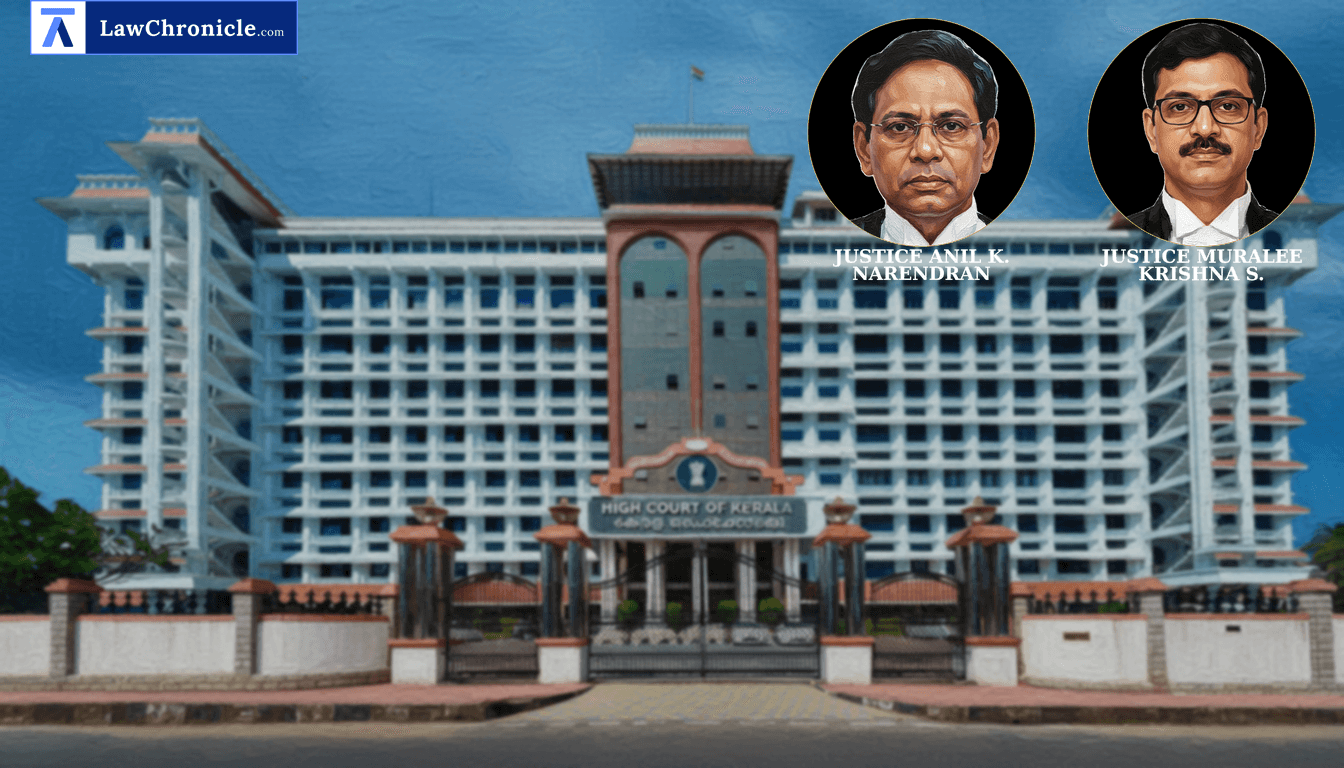
Indifferent delays in considering representations under preventive detention laws constitute a fatal violation of constitutional safeguards, rendering the custody void. The Kerala High Court has quashed a preventive detention order after the Union of India failed to explain a months-long silence on a detenue's plea, emphasizing that the liberty of a citizen cannot be sacrificed at the altar of administrative apathy.
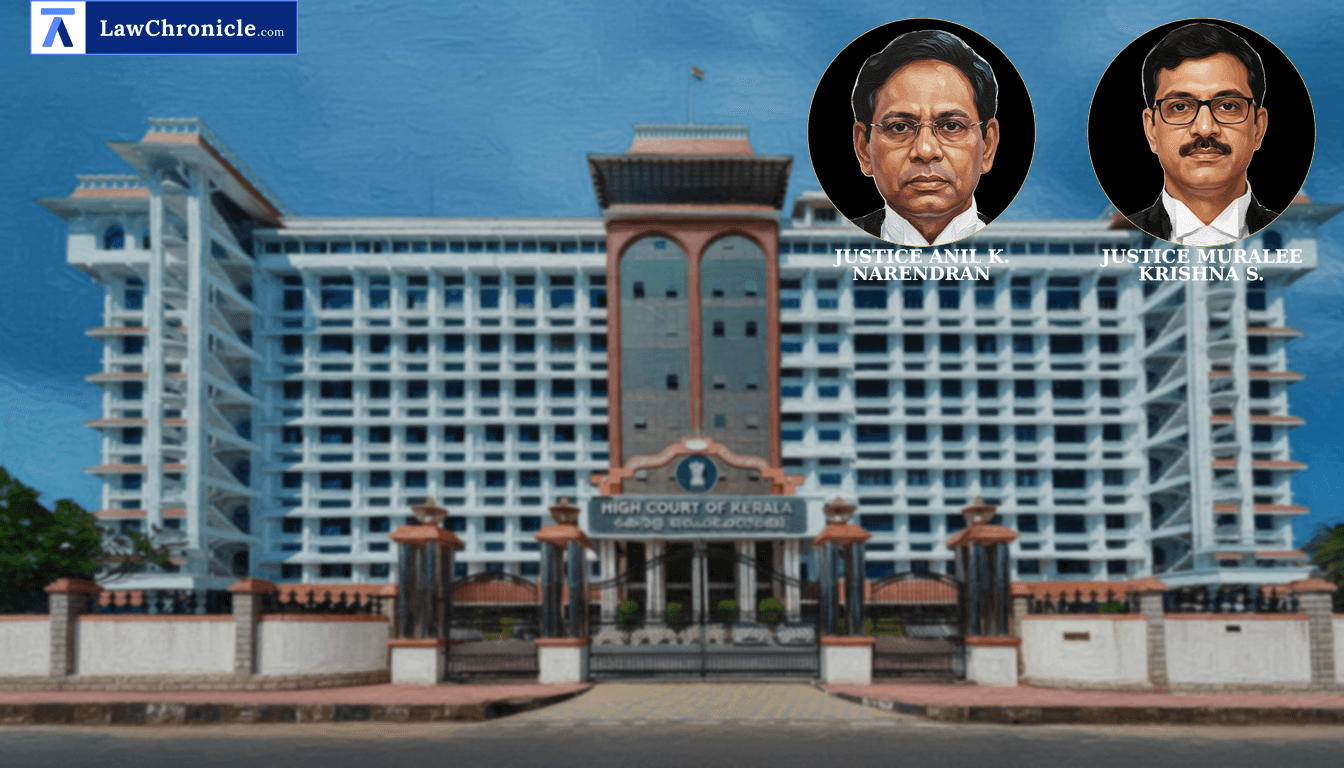
A Division Bench comprising Justice Anil K. Narendran and Justice Muralee Krishna S. adjudicated upon a writ petition (criminal) filed by the wife of a detenue. The petitioner challenged the detention of her husband under Section 3(1) of the Prevention Of Illicit Traffic In Narcotic Drugs And Psychotropic Substances Act, 1988, contending that the procedure followed was marred by delays and lacked effective communication.
Key Takeaways
Constitutional Primacy of Representations
Central and State authorities are under a non-negotiable obligation to consider a detenue's representation with the utmost expedition under Article 22(5) of the Constitution of India, 1950.
Delay as a Ground for Release
Any unexplained or inordinate delay by the Government in deciding a representation violates fundamental rights and serves as a sufficient sole ground to set aside a detention order.
Independent Consideration Mandated
Authorities must demonstrate an independent application of mind; mechanical rejections or waiting indefinitely for Advisory Board reports without justification can snap the 'live link' of detention legality.
Procedural Rigor in PITNDPS Cases
Even if initial detention procedures regarding bail and sponsoring reports are justified, subsequent administrative lapses in the representation process are incurable.
Court Observations on Administrative Apathy
The Court examined the timeline of the detention, noting that while the initial delay in passing the order was explained by the need to verify forensic materials and records across districts, the subsequent silence by the Central Government was inexcusable. The Bench highlighted that the right to make a representation is a vital constitutional safeguard.
The Court, in its reasoning, observed: "The authority of the 1st respondent to consider the representation in the matter of detention under the provisions of the PITNDPS Act, even in the case of ordering of preventive detention by the State Government, is derivable from Article 22(5) read with Sections 12 and 13 of the PITNDPS Act. It is trite that when a representation is submitted by the detenue to the Central Government, its independent consideration is mandated as expeditiously as possible. The delay in consideration of the representation is a denial of a constitutional safeguard guaranteed to the detenue."
The Court further clarified the distinction between the roles of the detaining officer and the Government, noting that while some authorities must wait for the Advisory Board, the lack of any explanation for the delay in this specific case was fatal to the prosecution's stance. It referred to the principles in Pramod Singla v. Union of India ( "2023 SCC Online SC 374": 2023 CaseBase(SC) 836) to harmonize the duties of various authorities under the Act.
Court Directions
The Court issued following directions:
"In the result, the writ petition is allowed by setting aside the impugned Exts.P1 and P2 orders under challenge in this writ petition. The 7th respondent, Superintendent of Central Jail, Poojapura, is directed to release the detenue Sarath Mohan forthwith if his detention is not required in connection with any other case. The Registry shall communicate this order to the 7th respondent by e-mail at once."
Ratio
Under Article 22(5) of the Constitution, the appropriate government has a two-fold obligation: to afford the detenue the earliest opportunity to make a representation and to consider that representation without unreasonable delay. The non-consideration or unreasonably belated consideration of a representation by the Central Government, especially when no explanation is offered for such delay, violates the constitutional safeguard and renders the preventive detention void, notwithstanding the merits of the initial grounds for detention.
Background
The dispute originated from the preventive detention of Sharath Mohan, who was involved in two cases involving the seizure of Methamphetamine and other narcotic drugs under the Prevention Of Illicit Traffic In Narcotic Drugs And Psychotropic Substances Act, 1988. The last prejudicial activity occurred in September 2025 (Crime No. 1591 of 2025). Although the detenue secured bail in the criminal cases, the State Government issued a detention order (Ext.P1) in March 2026, which was later confirmed in May 2026 (Ext.P2).
The petitioner argued that there was an unexplained delay of 60 days between the bail and the detention order, and more critically, that a representation sent to the Central Government on April 21, 2026, remained unaddressed. The State defended the detention by relying on Rajendrakumar Natvarlal Shah v. State of Gujarat ( "(1988) 3 SCC 153": 1988 CaseBase(SC) 62) and MST. L.M.S. Ummu Saleema v. B. B Gujaral ( "(1981) 3 SCC 317": 1981 CaseBase(SC) 420), arguing that bail conditions were insufficient to prevent repeated offences. However, the Court found that while the initial procedural delays were accounted for, the failure of the Union of India to respond to the detenue's representation was a breach of Dr. Rahamatullah v. State of Bihar ( "(1981) 4 SCC 559": 1981 CaseBase(SC) 46) and Golam Biswas v. Union of India. Citing the Division Bench ruling in W.P.(CRL)No.524 of 2026, the Court held that the detention could not be sustained.
Case Details:
Case No.: WP(CRL.) NO. 909 OF 2026
Neutral Citation: 2026:KER:66369
Case Title: Anitha B v. Union of India and Others
Appearances:
For the Petitioner(s): Shri. M.H. Hanis, Smt. T.N. Lekshmi Shankar, Smt. Nancy Mol P., Smt. Neethu.G.Nadh, Shri. Sahad M. Hanis, Shri. Muhammad A. P., Smt. Ajinraj V.T. (Advocates)
For the Respondent(s): Shri. Achuth Krishnan R. (CGC), Smt. Reeha Khader K. (Sr. G.P.)
Source: 2026 CaseBase(KER) 18585
Similar Articles
 Breaking News


