


Unexplained Delay In Deciding Representation Vitiates Preventive Detention: Jammu & Kashmir and Ladakh HC
 Copy Link
 Share
 Save
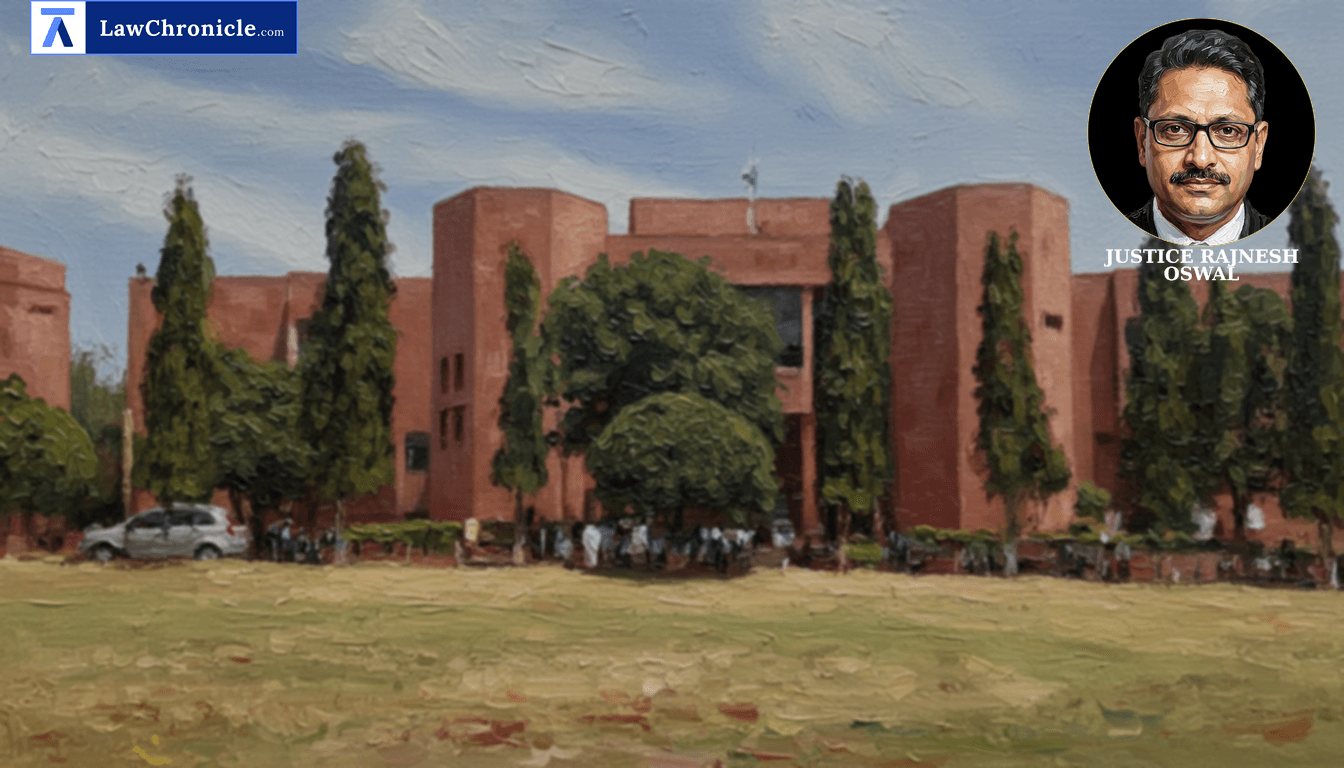
The High Court of Jammu & Kashmir and Ladakh has delivered a resounding blow to executive negligence, ruling that an unexplained delay of 43 days in deciding a detenue's representation constitutes a fatal violation of procedural safeguards, rendering preventive detention legally unsustainable.
In a decisive intervention for personal liberty, a single-judge bench comprising Justice Rajnesh Oswal quashed a detention order issued by the District Magistrate of Rajouri under the J&K Public Safety Act, 1978. The Court emphasized that the state cannot expect judicial validation of its subjective satisfaction while simultaneously trampling upon the fundamental procedural guarantees enshrined in the Constitution.
Key Takeaways
Sanctity of Procedural Timelines
Failure by the State to dispose of a detenue's representation with 'utmost expedition' creates a constitutional breach that necessitates immediate release.
Mandatory Explanation for Delay
Any significant gap in this case, 43 days between the submission of a representation and its disposal must be backed by a cogent and convincing explanation.
Limits on Subjective Satisfaction
The Court clarified that the executive's power to detain a person without trial is strictly conditional upon adhering to the procedural safeguards of Constitution of India.
Fundamental Right to Expeditious Consideration
The Bench examined the critical issue of whether the representation submitted by the petitioner was handled with the urgency mandated by Article 22(5) of the Constitution of India. The records indicated that the representation was submitted on January 15, 2026, but was only rejected on March 5, 2026. The Court noted with concern that the respondents failed to provide any satisfactory explanation for this 43-day delay.
The Court, in its reasoning, observed: "Preventive detention constitutes an exceptional curtailment of personal liberty, and the safeguards engrafted in Article 22(5) cannot be treated as matters of mere formality. Where the constitutional obligation to consider the representation expeditiously is breached and the delay remains unexplained, the continued detention cannot be sustained."
Judicial Precedents on Executive Delay
Referring to established jurisprudence, the Court cited K.M. Abdulla Kunhi v. Union of India to reiterate that a detenue’s representation must be considered as expeditiously as possible. The Bench further relied on the principles laid down in Sarabjeet Singh Mokha v. DM, Jabalpur, where the Supreme Court held that the delay by the State Government in disposing of the representation strikes at the heart of the procedural rights granted to the detenue.
Court Directions
The Court has the following directions:
"The present petition is allowed and order No. DMR/PSA/01 of 2026 dated 01.01.2026 passed by respondent No. 3-the District Magistrate, Rajouri, is hereby quashed. The respondents are directed to release the petitioner forthwith from preventive custody, provided he is not required in connection with any other case."
Ratio
The constitutional obligation of the competent authority to consider a representation against preventive detention under Article 22(5) of the Constitution of India is not a mere formality; any unexplained delay in the disposal of such representation violates the fundamental rights of the detenue and vitiates the legality of the detention order, regardless of the merits of the case.
Background
The petitioner, Basharat Mehmood, was detained via an order dated January 1, 2026, issued by the District Magistrate, Rajouri, under Section 8 of the J&K Public Safety Act, 1978. The detention was based on a police dossier alleging the petitioner was a habitual offender involved in multiple FIRs, posing a threat to public order. The petitioner challenged the order through his mother, arguing that the grounds were vague, redundant, and a verbatim reproduction of the police dossier. Most crucially, the petitioner argued that his representation under Article 22(5) of the Constitution of India read with Section 13(1) of the J&K Public Safety Act, 1978 was not decided with promptitude. The State contended that all statutory safeguards were followed and that the detention was necessary as ordinary criminal law was insufficient. However, the High Court found the procedural lapse regarding the 43-day delay to be an insurmountable legal error.
Case Details:
Case No.: HCP No. 08/2026
Neutral Citation: 2026:JKLHC-JMU:2864
Case Title: Basharat Mehmood v. Union Territory of Jammu and Kashmir and others
Appearances:
For the Petitioner(s): Mr. C. S. Azad, Advocate
For the Respondent(s): Mr. Dewakar Sharma, Dy. AG
Source: 2026 CaseBase(JK) 871
Similar Articles
 Breaking News


