


Maintenance Entitlement Commences From Date of Actual Unemployment: Delhi HC
 Copy Link
 Share
 Save
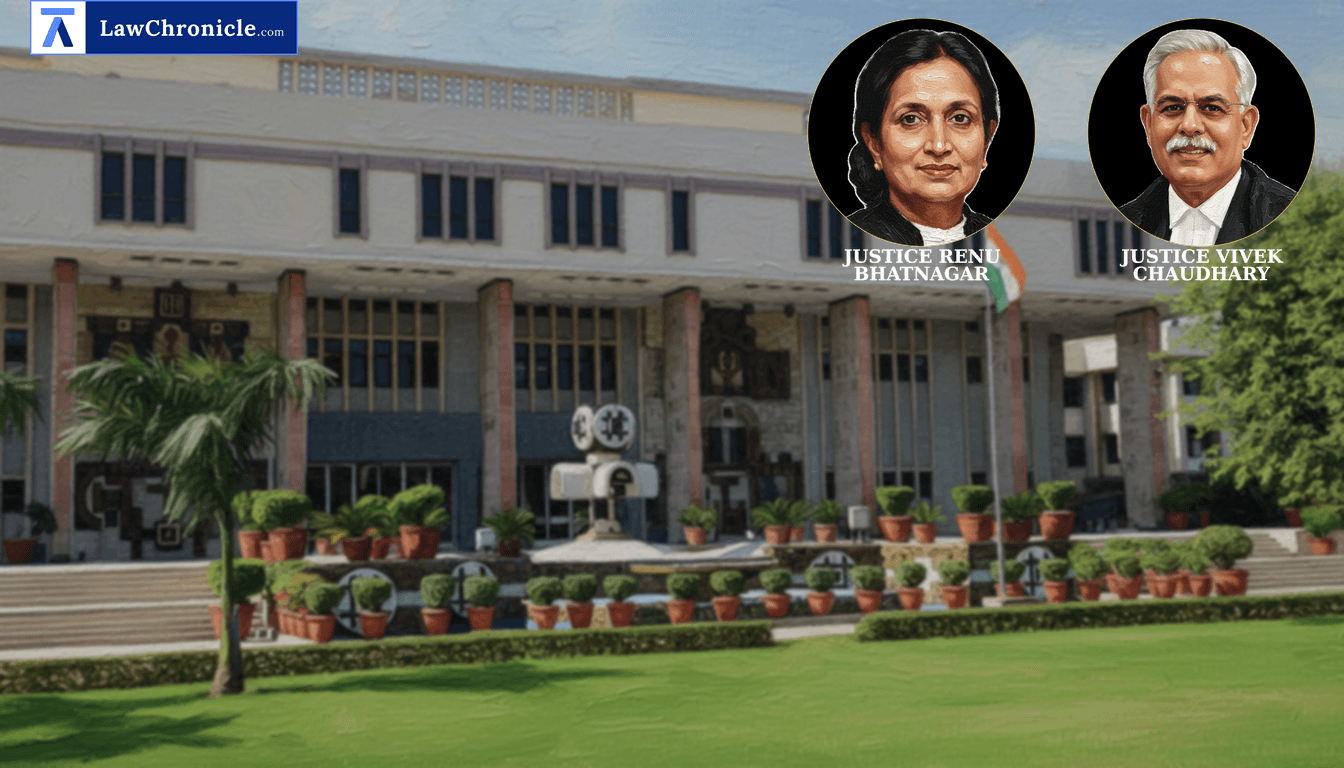
The Delhi High Court has significantly refined the application of interim maintenance, ruling that a spouse who remains gainfully employed during the pendency of litigation cannot claim pendente lite support for that period. This decision underscores that financial independence, even at a modest level, precludes the immediate award of maintenance from the date of application, shifting the focus to the actual date of job loss.
A division bench comprising Justice Vivek Chaudhary and Justice Renu Bhatnagar adjudicated the appeal challenging a Family Court order that had directed a husband to pay maintenance from the date of filing the application. The High Court modified this direction, aligning the liability to pay with the period the wife was actually without a livelihood.
Key Takeaways
- Curbing Retroactive Liability: Husbands are not liable to pay maintenance for periods where the wife is proven to have been gainfully employed, even if a maintenance application was pending.
- Primacy of Earning Capacity: The court reaffirms that under Section 24 of the Hindu Marriage Act, 1955, the actual financial status and independent income of the claimant are pivotal for granting relief.
- Validation of Guesswork in Income Assessment: The judgment reinforces that courts can utilize "guesswork" and draw adverse inferences when spouses fail to truthfully disclose their income.
- Minimum Wage Uniformity: The Court accepted the application of Delhi's minimum wage standards to a resident of Haryana, noting the broad similarity in wage notifications across these neighbouring regions.
Court Observations on Income Assessment and Precedents
The Court noted that in matrimonial disputes, parties frequently suppress their true financial standing. Relying on the principles in Jasbir Kaur Sehgal v. District Judge Dehradun & Ors., the bench observed that mathematical precision is often impossible. The Court, in its reasoning, observed: "Considering the diverse claims made by the parties, one inflating the income and the other suppressing, an element of conjecture and guesswork does enter for arriving at the income of the husband. It cannot be done by any mathematical precision."
Furthermore, the Court referred to the guidelines laid down in Rajnesh v. Neha ( "(2021) 2 SCC 324": 2020 CaseBase(SC) 717), which incorporated the factors from Bharat Hedge v. Saroj Hedge, to emphasize that the status of parties and independent income must be balanced against the payment capacity of the non-applicant.
Regarding the husband's challenge to the income assessment based on Delhi’s minimum wage notifications, the Court found no infirmity. It observed that despite being an operator in his father's shop in Haryana, the appellant failed to provide cogent documentary evidence beyond a self-serving salary certificate to prove a lower income. The Court noted that in the unorganized sector, truthful income rarely surfaces, necessitating a general view of financial capacity.
Directions Issued by the Court
The Court has the following directions:
"Accordingly, the present appeal is allowed to the extent that the monthly maintenance shall be awarded to the respondent w.e.f. 01.07.2024, i.e., from the date that she became unemployed. The appellant is thus, directed to continue paying the interim maintenance of Rs. 5,000/- per month to the respondent, in terms of the order of the learned Family Court w.e.f. 01.07.2024. Other terms and conditions imposed in the impugned order by the learned Family Court shall continue."
Ratio
The right to receive pendente lite maintenance under Section 24 of the Hindu Marriage Act, 1955 is not an automatic entitlement from the date of application if the claimant spouse is gainfully employed during the intervening period. The commencement of maintenance liability must synchronize with the actual cessation of the claimant's independent income to ensure the provision serves its remedial purpose without resulting in unjust enrichment.
Background
The marriage between the parties was solemnized in 2015, and they have been living separately since 2020. The respondent-wife filed for divorce under Section 13(1)(ia) of the Hindu Marriage Act, 1955 and sought interim maintenance. The Family Court had originally assessed the husband's income at Rs. 22,000/- per month based on Minimum Wages Act, 1948 notifications and directed a payment of Rs. 5,000/- per month effective from January 8, 2021.
The appellant-husband challenged this, arguing that the wife was employed at a footwear showroom until June 2024, a fact admitted in her own pleadings in proceedings under the Guardians and Wards Act, 1890 and Protection of Women from Domestic Violence Act, 2005. The High Court found merit in this argument, noting that since the wife was earning Rs. 7,000/- per month as a sales helper until June 2024, she was not entitled to maintenance for that specific duration. Consequently, the High Court shifted the starting date of the maintenance award to July 1, 2024.
Case Details:
Case No.: MAT.APP.(F.C.) 439/2024
Case Title: Mr Brijesh Rajkumar Suiri V. Mrs. Navita Brijesh Suri
Appearances:
For the Petitioner(s): Mr. Prakash Chandra, Advocate
For the Respondent(s): None.
Source: 2026 CaseBase(DEL) 5700
Similar Articles

 Breaking News


