


Proof of Demand for Bribe is Pre-condition for PC Act Conviction: Jharkhand HC
 Copy Link
 Share
 Save
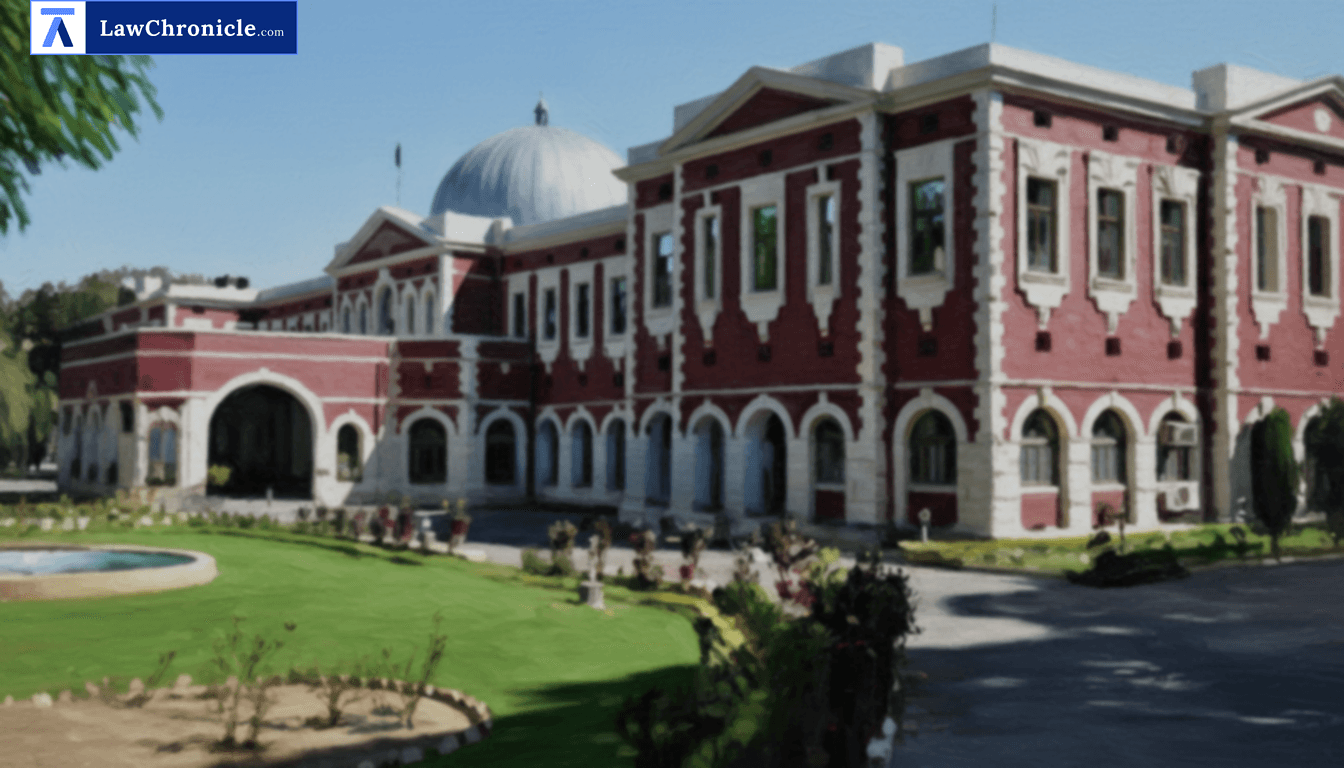
The Jharkhand High Court has set aside the conviction of a former Assistant Labour Commissioner, ruling that the mere recovery of tainted money is insufficient for a conviction under the Prevention of Corruption Act, 1988 without concrete proof of a prior demand. In a verdict that reinforces the standard of evidence required in corruption cases, the Court emphasized that a prosecution cannot succeed if the foundational facts of illegal gratification remain unproven.
A Single Judge bench of Hon'ble Mr. Justice Pradeep Kumar Srivastava adjudicated the criminal appeal filed against the judgment of conviction passed by the Special Judge, C.B.I., Dhanbad. The Court examined the legality of the trial court's decision to sentence the appellant to rigorous imprisonment for offences under Section 7 and Section 13(2) read with Section 13(1)(d) of the Prevention of Corruption Act, 1988.
Key Takeaways
Foundational Facts Mandatory
Proof of both demand and acceptance is a sine qua non to establish guilt; mere recovery of money from the ground or possession does not suffice.
Presumption under Section 20
Legal presumptions against an accused can only be drawn after the prosecution proves the foundational facts of the demand through cogent evidence.
Effect of Complainant's Non-Examination
While a trial does not necessarily fail if a complainant is not examined, the prosecution must then establish the demand through high-quality circumstantial or alternative oral evidence.
Malicious Prosecution Shield
Courts must scrutinize the underlying motive of the complainant, especially when the legal claim (like gratuity) for which a bribe was allegedly demanded is itself legally unsustainable.
Prosecution Fails to Establish Demand and Conscious Acceptance
The Court observed that while the appellant was a public servant, the prosecution failed to provide evidence of a clear conversation regarding a demand for a bribe. It was noted that the shadow witnesses, Deepak Kumar and Sanjeev Sudhakar, could not hear the specific conversation or prove that the appellant consciously accepted the money. The Court highlighted that the complainant had allegedly arranged a lesser amount than what was purportedly demanded, with no evidence showing the accused agreed to such a reduction.
The Court has following directions:
"Accordingly, impugned judgment of conviction and order of sentence of the appellant passed by the learned Trial Court is hereby set aside. This appeal is allowed. Pending I.A.(s), if any, stands disposed of. The appellant is on bail. He is discharged from the liability of bail bond and sureties are also discharged."
The Court, in its reasoning, observed: "The materials brought on record by the prosecution does not establish the very foundational facts of demand of any bribe by the appellant, which is sine quo non for establishing the guilt of the appellant for the charges levelled against him. In my considered view, the learned Trial Court has miserably failed to properly appreciate the evidence available on record in the factual background of the case and without recording any reason for arriving at the conclusion of the guilt of the appellant, has simply held the appellant guilty for the charges levelled against him."
Ratio
Proof of demand and acceptance of illegal gratification is a mandatory prerequisite for conviction under Sections 7 and 13(1)(d) of the Prevention of Corruption Act, 1988. In the absence of direct or reliable circumstantial evidence establishing such a demand, the statutory presumption under Section 20 of the Act cannot be invoked against the public servant, and the benefit of doubt must accrue to the accused.
Background
The appellant was an Assistant Labour Commissioner (Central) in Dhanbad. The complainant, Kara Bhuian, alleged that the appellant demanded Rs. 5,000 for processing the gratuity claims of his deceased parents. A trap was laid by the CBI on May 22, 2002, where Rs. 3,750 was allegedly recovered after being thrown by the accused. The defense argued that the complainant was not even the legal heir of the deceased employees as per service records, and the claims were time-barred and previously dismissed.
The High Court relied on the principles summarized in Neeraj Dutta vs. State (NCT of Delhi), noting that since the complainant did not testify and the shadow witnesses failed to corroborate the demand or conscious acceptance, the trial court's judgment was "devoid of reasons." The Court found the genesis of the complaint to be potentially malicious, as the complainant failed to provide any documents proving his relationship to the deceased BCCL employees during the departmental proceedings.
Case Details:
Case No.: Cr. Appeal (S.J.) No. 1217 of 2016
Neutral Citation: 2026:JHHC:27314
Case Title: Anil Kumar Singh vs. The State of Jharkhand through C.B.I.
Appearances:
For the Petitioner(s): Mr. A. K. Kashyap, Sr. Advocate; Mrs. Lina Shakti, Advocate
For the Respondent(s): Mr. Deepak Kumar Bharti, Advocate
Source: 2026 CaseBase(JHKD) 2747
Similar Articles
 Breaking News


